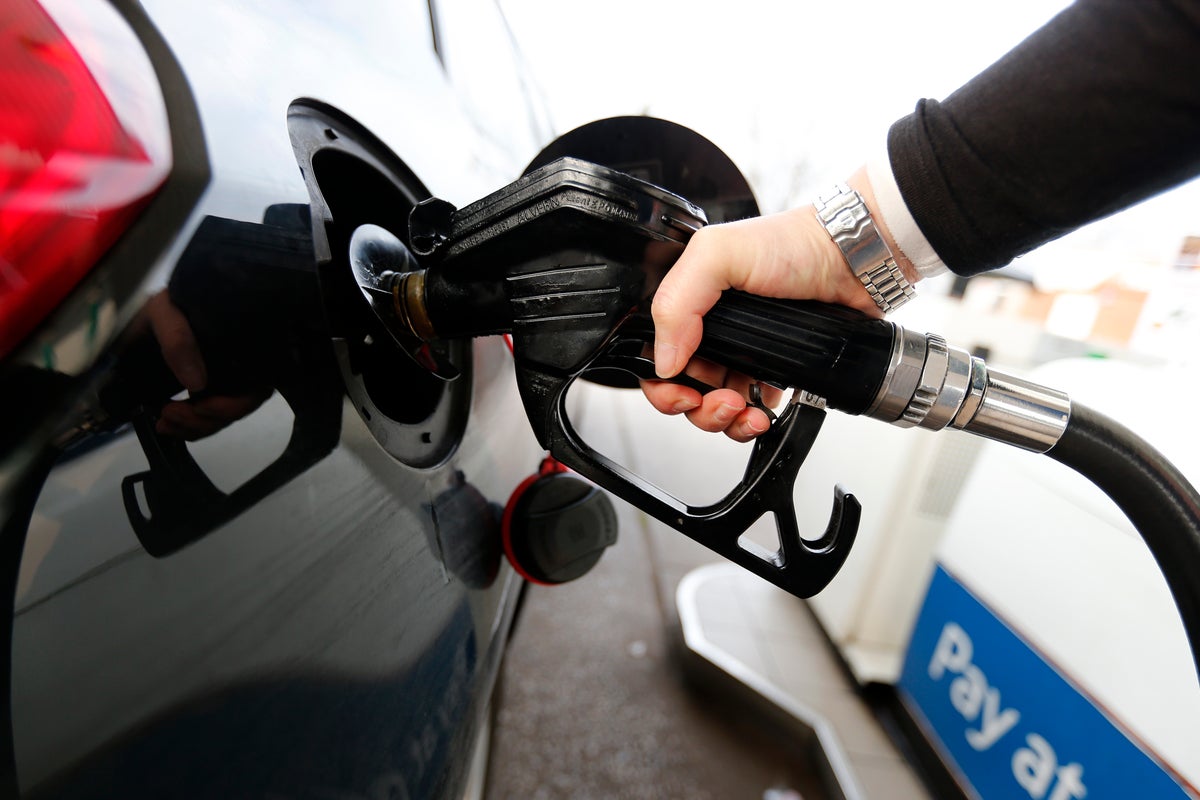
The sun hadn’t yet cleared the High Tatras, but the line of heavy Scania trucks already stretched past the bend in the road near Rajka. If you were to walk along that line of idling engines, you would hear a symphony of languages—Hungarian, Polish, Czech, Austrian—but very little Slovak. The drivers lean against their cabs, nursing lukewarm coffee from thermoses, waiting for their turn at the nozzle. They aren’t here for the scenery. They are here because, in the strange geography of European economics, a few cents per liter is worth a two-hour detour.
This is fuel tourism. It sounds like a leisure activity. It isn't.
For the people living in Slovak border towns, it looks more like a slow-motion siege. When a gas station runs dry by noon on a Tuesday, the local baker can't deliver bread. The nurse can't get to the clinic. The infrastructure of a quiet life begins to fray because the "big rigs" from across the border have sucked the underground tanks bone-dry.
The Calculus of the Border
Imagine you are Peter. He owns a small logistics firm in Bratislava. He has three trucks and a razor-thin margin. Every morning, Peter looks at the price boards. Across the Danube in Austria, diesel is soaring. To the south in Hungary, price caps have shifted and buckled, creating a chaotic market. But in Slovakia, the prices have remained just stable enough, just low enough, to act as a magnet.
Peter sees the tankers arriving at his local station more frequently now. Yet, the "Out of Service" bags are draped over the diesel handles more often than ever before.
The Slovak government is watching Peter, and they are watching the thousands of foreign plates filling up and heading right back across the border. They see the data. It tells a stark story: domestic consumption hasn't spiked, but sales have. The math is simple. Slovakia is subsidizing the transport costs of its neighbors, and its own citizens are paying the price in scarcity.
The solution being hammered out in the halls of Parliament in Bratislava isn't a gentle suggestion. It is a dual-pricing system. It is a digital line in the sand. If you carry a Slovak ID or a domestic registration, you pay the local rate. If you are passing through from Vienna or Budapest to shave twenty Euro off your long-haul costs, the price at the pump is about to get much heavier.
The Friction of Fairness
Economists call this "price arbitrage." To the guy standing in the rain in a village near the border, it’s just a shortage.
Implementing a two-tier system is a logistical nightmare. It requires every gas station to become a border checkpoint of sorts. You scan a card, or you show a registration, and the machine recalculates. It adds friction to a process that we usually want to be invisible. We want to pull in, click the trigger, and leave. Now, there is a conversation. There is a verification.
Why take such a drastic step? Because the invisible hand of the market is currently grabbing Slovak fuel and moving it elsewhere.
When a commodity is cheaper in one spot than it is five miles away, humanity will find a way to move it. This isn't greed; it's gravity. But gravity can be destructive. The Slovak Ministry of Finance isn't trying to be cruel to the Polish trucker or the Austrian commuter. They are trying to stop a leak. Every liter of diesel sold at a lower price to a foreign vehicle is a liter that the Slovak state effectively helped pay for through its specific tax structures and strategic reserves.
Consider the "tank volume" problem. Modern long-haul trucks can carry upwards of 1,200 liters of fuel. That isn't just a fill-up; it's a mobile warehouse. When fifty of those trucks hit a single station in a day, they carry away enough fuel to power a small Slovak village’s entire transport needs for a week.
The Ghost of the Open Border
We grew up believing the borders were gone. The Schengen Agreement was supposed to make the lines on the map as irrelevant as the lines between two rooms in a house. You walk through. You trade. You live.
But fuel is different. Fuel is energy. Energy is sovereignty.
When the pumps go click-click-click and nothing comes out, the illusion of the borderless world vanishes. Suddenly, the border matters very much. The Slovak government’s plan to hike prices for foreigners is a reluctant admission that the European experiment still has friction points. You cannot have a common market with wildly uncommon prices for the lifeblood of the economy.
The tension is palpable at the stations near the border crossings of Jarovce-Berg. You see it in the eyes of the attendants. They are tired of explaining to angry locals why there is no diesel left. They are tired of the paperwork. They are the frontline soldiers in a price war they didn't ask for.
The proposed system would likely use the "fuel card" or "loyalty app" infrastructure already in place. It’s a digital solution to a physical problem. If you live here, your app tells the pump you are one of us. If you don't, the pump charges you the "real" market rate—the one your own country is likely already charging you. It levels the playing field, but it leaves a bitter taste for those used to the windfall.
The Human Cost of a Cent
It is easy to look at a spreadsheet and see "excess demand." It is harder to see the retiree who can't get to her doctor's appointment because the local station ran out of fuel while she was waiting behind a line of foreign SUVs.
The stakes are higher than just the price of a commute. This is about the stability of a nation's internal supply chain. If the trucks that bring the milk can't find diesel, the milk doesn't arrive. If the milk doesn't arrive, the price of milk goes up. Fuel tourism creates a ripple effect that touches the breakfast table of every family in the country.
Slovakia is essentially saying: "We are not your gas station."
It is a bold move, and it will likely draw the ire of European Union regulators who frown upon price discrimination based on nationality. But Slovakia is betting that the right to supply its own people outweighs the technicalities of the single market. They are choosing the baker in Komárno over the freight company in Munich.
The policy is a defensive crouch. It is a way of saying that in a world of volatile energy prices, a small nation must protect its own reserves first. We often think of "national security" in terms of tanks and planes. In 2026, national security is a full tank of diesel at a price a local worker can afford.
The End of the Cheap Ride
As the sun sets over the Danube, the lights of the gas stations flick on. They look like beacons. For years, they were beacons of a bargain. Now, they are becoming symbols of a new reality.
The era of the "easy save" is closing. The digital systems are being tested. The pumps are being recalibrated. Soon, the driver with the foreign plate will look at the display and realize the math no longer works. The two-hour detour will be a waste of time. The lines will shorten. The local baker will find the nozzle is wet again.
The trucks will stop circling the border towns like vultures around a kill. They will stay on the highways, fueling up where they work, paying the price of the ground they stand on.
It is a return to a more honest kind of geography. A liter of fuel will cost what it costs, and the "tourism" will have to find a new, less essential commodity to chase. Until then, the people of Slovakia wait for the law to catch up with the reality at the pump, hoping that soon, a "Slovak price" will mean more than just a number on a board—it will mean a guarantee that they can actually keep moving.
The idling engines at the border are getting louder, but for the first time in a long time, the locals aren't the ones who are worried about being left behind.
Would you like me to analyze how this dual-pricing policy might impact the broader European Union trade regulations or explore the specific technology being used to implement the domestic discount cards?