The room was quiet, the kind of stillness that only exists in the wake of a storm. For Kamala Harris, the months following the 2024 election weren't just a period of professional transition; they were a forced reckoning with the mechanics of public life. She had been the sitting Vice President, the torchbearer of an administration, and then, in a flurry of weeks, she was a candidate standing on a stage in Washington D.C., conceding the most consequential race of her life.
Power has a peculiar way of evaporating. One day, the motorcade clears the path; the next, you are looking at the road ahead through a different lens. Also making news lately: The Island the World Forgot to Return.
For most politicians, a loss of that magnitude is a closing door. It is a signal to retreat to the lecture circuit or the boardroom. But as Harris sat for her most expansive interview since the election, she didn't sound like a woman preparing for a quiet exit. She sounded like someone checking the weather before a long, difficult hike.
When asked about 2028, her response wasn't the standard, polished dodge. It was sharper. More intentional. She didn't just leave the door open; she propped it with a heavy stone. More information into this topic are covered by The Guardian.
The Weight of the "Not Yet"
There is a specific tension in the life of a public servant who has come within inches of the ultimate goal. Imagine a marathon runner who trips ten feet from the finish line. The crowd is already looking at the winner, the cameras have pivoted, and the lactic acid is screaming in the runner's legs. The instinct is to stay down. But the elite—the ones who are built differently—are already calculating the date of the next race before they’ve even stood up.
Harris’s recent statements suggest she is deep in that calculation. She spoke about the "unfinished work" and the "clear-eyed understanding" of what the country faces. These aren't the words of a retiree. They are the tactical phrases of a commander assessing a new battlefield.
The political reality is brutal. In the modern era, losing a presidential bid usually marks the end of a trajectory. Think of the names that filled our screens and then faded into footnotes. Yet, Harris occupies a unique space. She earned over 70 million votes. She inherited a fractured party and, in a matter of days, unified it. That isn't just a fact on a spreadsheet; it's a reservoir of political capital that few others possess.
But capital devalues if it isn't spent.
The Ghosts of Elections Past
Political history is littered with the stories of those who tried to return. Some, like Richard Nixon, managed the "Great Comeback," reinventing themselves after a crushing loss to John F. Kennedy. Others, like Hillary Clinton or Al Gore, found that the window, once closed, is rarely pried open again.
The struggle for Harris isn't just about her opponent; it’s about the narrative of her own party. The Democratic donor class is already whispering about "new blood" and "fresh faces." Names like Josh Shapiro or Gretchen Whitmer are being floated as the inevitable successors. In these conversations, Harris is often treated as the past.
She knows this.
Her recent rhetoric seems designed to counter that "past tense" label. By leaning into her role as a fighter for specific, granular issues—reproductive rights, voting access, the protection of democratic norms—she is attempting to remain the "present tense" leader of the opposition.
It is a high-stakes gamble. If she stays too active, she risks becoming a lightning rod for the grievances of the previous cycle. If she stays too quiet, she disappears.
The Private Cost of Public Ambition
We often forget that beneath the navy suits and the choreographed speeches, there is a person who has spent four years under a microscope. Harris has been critiqued for her laugh, her word choice, her staff turnover, and her policy shifts. The sheer volume of noise surrounding her identity—as the first woman of color in her office—is enough to make anyone crave the anonymity of a private life.
Yet, when she speaks now, there is a lack of fatigue. There is a steeliness that wasn't always visible when she was tethered to the Biden administration’s specific talking points.
Consider a hypothetical voter named Sarah. Sarah is a teacher in Pennsylvania who knocked on doors for Harris in October. In November, Sarah felt the hollow ache of defeat. She turned off the news for a month. But when she sees Harris on screen now, she doesn't see a loser. She sees a survivor.
That is the emotional core of the 2028 argument. If Harris can transition from the "incumbent’s partner" to the "leader of the resistance," her loss becomes a origin story rather than an epitaph.
The Invisible Stakes
Why does it matter if she runs again?
It matters because the 2028 cycle will be a referendum on whether the Democratic party believes in its current direction or if it wants a total reset. Harris represents the bridge between the old guard and the new coalition. If she steps aside, that bridge may collapse, leading to a primary season that could turn into a civil war.
If she stays, she provides a focal point.
The facts are these: She has the name recognition. She has the fundraising infrastructure. She has a base that feels a personal connection to her journey. But she also has the baggage of a loss that the party is still trying to process.
She talked about the "need to listen." This is perhaps the most significant shift. In her 2024 campaign, there was a sense of rushing—of trying to introduce herself to the country in a 100-day sprint. Now, she has the luxury of time. Four years is an eternity in politics, but it is also a wide-open canvas.
The Strategy of the Long Game
To understand Harris’s strongest statement yet, you have to look at what she didn't say. She didn't say she was tired. She didn't say she was done.
She is positioning herself as the elder statesman of a movement that is still in its infancy. She is traveling to states that will be crucial in three years. She is meeting with local leaders who are currently in the trenches. She is doing the quiet, unglamorous work of building a foundation.
Politics is often compared to chess, but that’s too clinical. It’s more like farming. You can’t force the crop to grow; you can only prepare the soil and wait for the right season. Harris is currently tilling the earth.
There will be obstacles. The 2026 midterms will be the first major test. If the candidates she supports win, her stock rises. If they fail, the calls for her to exit the stage will grow deafening. She is operating in a window where every public appearance is a data point for a donor's future investment.
The Human Element of the Return
There is a certain dignity in the refusal to be dismissed. Whether you agree with her policies or not, there is a human resonance in Harris’s defiance. Most people, after a public failure, want to hide. They want to protect what’s left of their reputation.
Harris is doing the opposite. She is exposing herself to the possibility of a second failure, which is arguably more terrifying than the first.
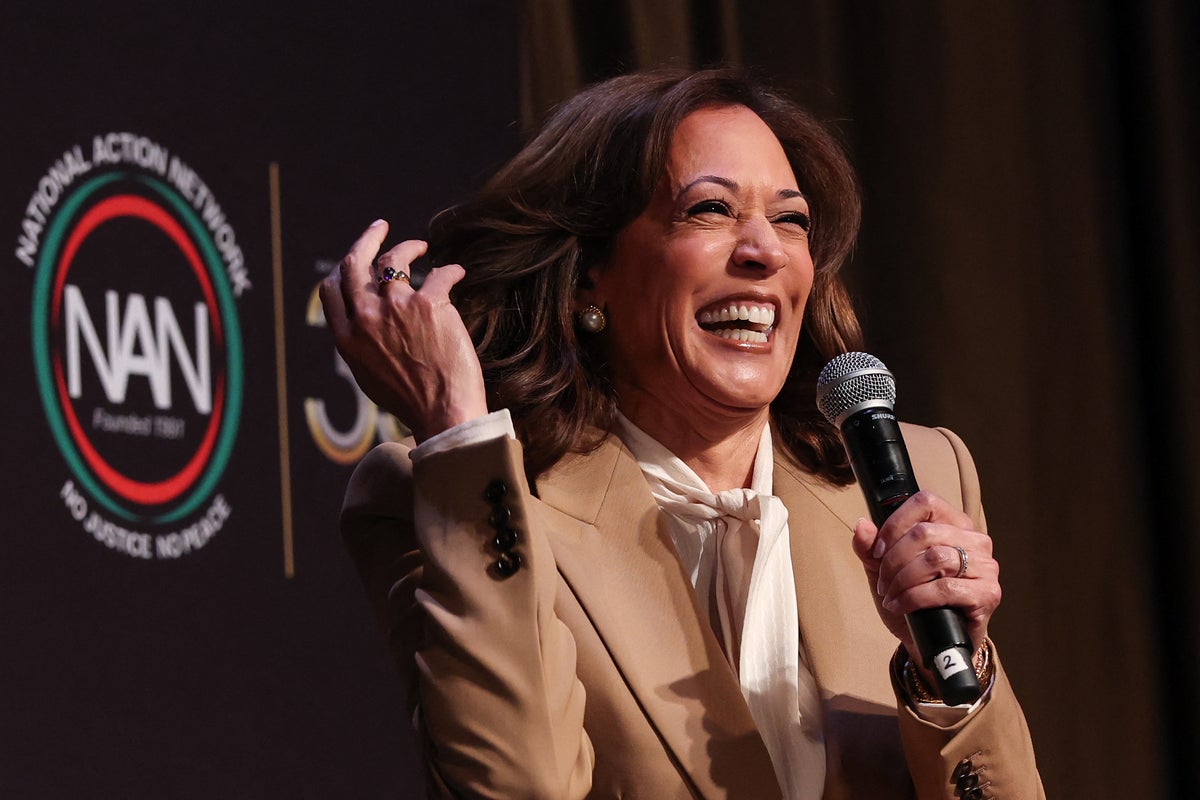
As she walked away from the microphone at her latest event, she stopped to talk to a group of young women. She didn't give them a soundbite. She leaned in close, spoke quietly, and listened.
In that moment, she wasn't the Vice President or the candidate who lost. She was someone who had been through the fire and was still standing.
The path to 2028 is paved with uncertainty, shifting demographics, and the unpredictable whims of a polarized electorate. But the signal from the Harris camp is now undeniable. The race hasn't ended; it has simply changed shape.
The lights at the vice-presidential residence have changed hands, and the nameplates have been swapped. But the woman who left that house isn't looking back at the rooms she vacated. She is looking at the horizon, calculating the wind speed, and waiting for the moment the sun begins to rise on a new cycle.
She is still here. And she isn't finished.