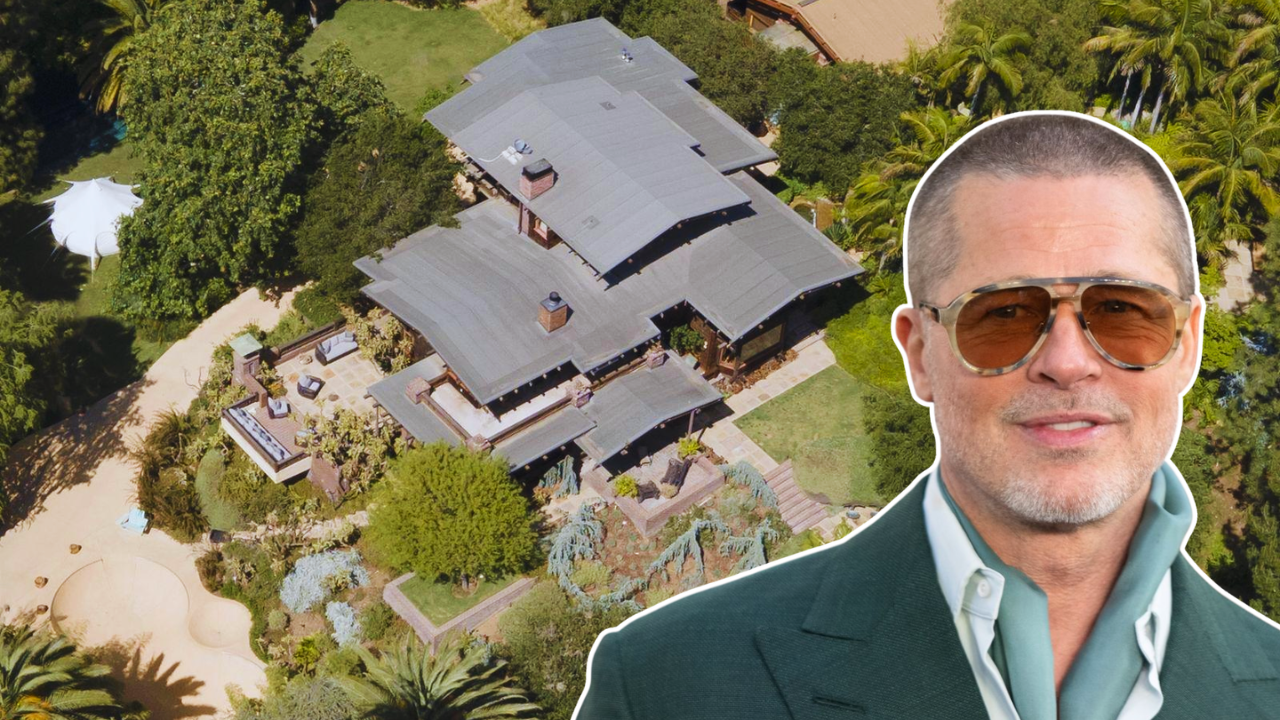
We like our fairy tales packaged neatly. We want the meet-cute to stretch across decades, wrapped in press junkets, shared red-carpet glances, and the comforting illusion that some people have cracked the code of forever. When Hollywood royalty falls, the public reaction is rarely grief. It is shock. It is a sudden, unsettling rustle in the dark, as if a spotlight we had been trusting to illuminate our own way forward has abruptly flickered out.
Amanda Seyfried and Thomas Sadoski. Nine years of marriage. A quiet farmhouse in upstate New York, far from the suffocating gravitational pull of Los Angeles. Chickens, mud, open space, and the promise of a life built away from the lens. It looked real. It felt earned. They met on an off-Broadway play in 2015, reconnected on a film set, and married in secret with only an officiant and a dog as witnesses. There was a charming, rebellious simplicity to it all.
And now, it is over.
News of their divorce has drifted through the news cycles not with the explosive violence of a scandal, but with the heavy, depressing thud of a falling tree in an empty forest. No screaming matches leaked to tabloids. No bitter social media wars. Just the quiet, bureaucratic machinery of uncoupling.
Quiet. That is what hurts the most.
Marriage is not a monument. It is a garden. And gardens require a brutal, unromantic amount of tending. We tend to forget that the people we watch on screen, the ones we project our deepest fantasies of enduring romance onto, are subject to the same exhausting physics of human erosion as the rest of us. They wake up tired. They grow in different directions. They wake up one morning and realize that the person across the breakfast table, whom they once swore to protect from the world, has become a stranger they merely share a zip code with.
Think about what nine years actually means. Nine years is a lifetime in the modern era. It spans the entirety of a child's early developmental milestones. It covers career peaks, career slumps, global anxiety, shifting identities, and the quiet, agonizing accumulation of small resentments that never quite found an exit. People change. They are supposed to. But sometimes, the changes pull two people apart so slowly that neither notices until the distance between them is too wide to bridge with an outstretched hand.
In Hollywood, the spotlight acts as a magnifying glass and a blowtorch simultaneously. Every vulnerability is annotated. Every shift in posture is cross-referenced by millions of strangers who have a vested psychological interest in your happiness remaining intact. To hold a marriage together under those conditions requires an almost superhuman alignment of timing, grace, and mutual sacrifice. When it fails, it does not mean the love was a lie. It usually means the cost of keeping it alive became too high.
Consider the farmhouse in upstate New York. That was supposed to be the sanctuary. The place where the noise stopped. But walls, no matter how thick or how far from the city they are built, cannot keep out the internal weather. You can outrun the paparazzi, but you cannot outrun yourself. You cannot outrun the quiet realization that two people can love each other fiercely and still fail at being married.
We look at couples like Seyfried and Sadoski because we are searching for evidence. Evidence that love can survive the grinder of time. When they part ways, we feel a strange, personal sting. It forces us to look at our own commitments, our own fragile architectures, and ask the terrifying question: If they couldn't make it work with all those resources, all that space, and all that apparent mutual adoration, what hope do the rest of us have?
The answer is both sobering and liberating.
Love is not a permanent state of grace. It is a series of daily choices. And sometimes, the bravest, most compassionate choice two people can make is to stop pretending that the past is enough to sustain the future.
Nine years is not a failure. Nine years is a substantial, beautiful chapter. Two children brought into the world. Countless memories forged in the quiet corners of a shared life. A story that mattered deeply, even if it has reached its final page.
The credits are rolling on this chapter. The farmhouse will likely see new routines. The press releases will fade into yesterday's digital dust. But the human reality remains—messy, tender, and stubbornly ongoing.
And as the lights come up, we are left standing in the quiet, tasked with tending our own gardens, knowing full well that nothing lasts forever, and that the beauty of a thing is never entirely dependent on its endurance.