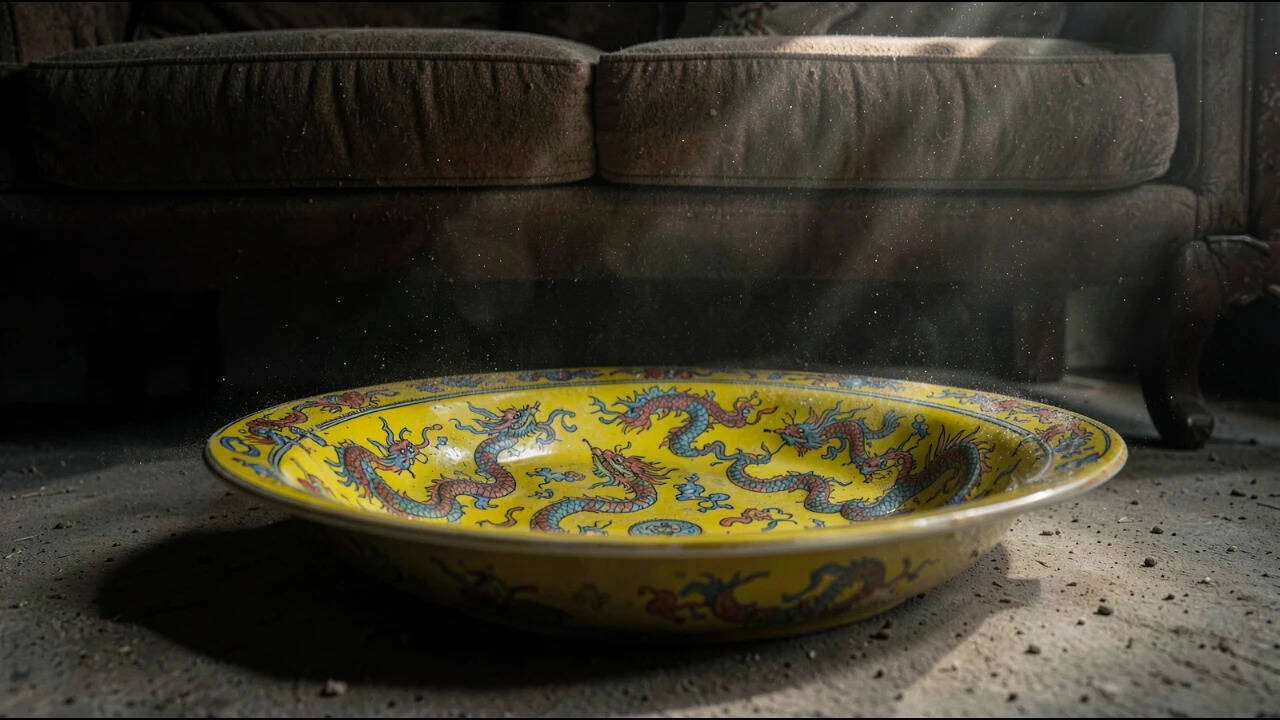
A routine house clearance in London recently turned up an Imperial Chinese porcelain dish stashed beneath a domestic sofa, fetching upwards of thirty thousand pounds at auction. The casual owner had treated a Qing dynasty artifact with the same reverence one affords an old remote control or a stray tennis ball. This discovery sounds like an absurd outlier, yet it happens with alarming regularity across the United Kingdom. Estate liquidators, attic scavengers, and rural auctioneers continually unearth museum-grade treasures from ordinary living rooms.
The phenomenon exposes a massive blind spot in how modern households interact with inherited or overlooked material culture. Most people lack the baseline provenance literacy required to distinguish between a mass-produced Victorian souvenir and an eight-hundred-year-old imperial relic. Auction houses receive thousands of inquiries weekly from hopeful owners holding chipped crockery, yet the truly valuable pieces frequently sit unrecognized in damp basements and spare bedrooms. When a thirty-thousand-pound dish emerges from beneath a piece of IKEA furniture, the story highlights more than simple good fortune. It exposes a structural failure in estate assessment and the precarious preservation of global heritage.
The Mechanics Of Accidental Antiquities
How does a fragile artifact from the Qianlong or Kangxi periods end up discarded on the floor of a London flat? The answer lies in twentieth-century migration patterns, post-war diplomatic postings, and the British love affair with global curiosities. During the nineteenth and early twentieth centuries, British merchants, military officers, and diplomats flooded into East Asia. They returned home laden with porcelain, jade, bronze, and silk.
Decades later, these objects filtered down through families via inheritance, garage sales, and thoughtless downsizing. Subsequent generations inherited the items without the accompanying paperwork, family lore, or shipping manifests. To a grandchild born in the 1980s, an antique famille rose plate is simply an ugly saucer Grandma kept in the sideboard. It gets demoted to holding spare change, housing a potted plant, or sliding under a sofa cushion during a clumsy living room renovation.
The valuation process itself remains deliberately opaque to outsiders. Major auction houses like Christie's, Sotheby's, and regional firms rely on specialists who spend decades training their eyes to spot the subtle iron-red marks, glaze imperfections, and imperial yellow hues that separate a genuine treasure from a tourist reproduction. When an untrained eye looks at a piece of porcelain, they see dirt, wear, and fading patterns. An expert sees a specific reign mark indicating production for the inner court of the Forbidden City.
+-----------------------------------------------------------------+
|               TRAJECTORY OF AN ACCIDENTAL TREASURE              |
+-----------------------------------------------------------------+
| 1. Imperial Origin -> Commissioned for court use in Beijing     |
| 2. Colonial Acquisition -> Brought to Britain via trade/service |
| 3. Domestic Demotion -> Passed down without provenance records  |
| 4. Accidental Storage -> Relegated to spare rooms and furniture |
| 5. Auction Discovery -> Specialist identifies mark and value    |
+-----------------------------------------------------------------+
The Market Forces Driving Imperial Chinese Ware
The staggering prices achieved by Chinese imperial porcelain are not random fluctuations. They reflect a coordinated, aggressive influx of capital from mainland Chinese collectors eager to repatriate cultural property removed during periods of political instability. Over the past three decades, a rising class of ultra-wealthy buyers in Beijing, Shanghai, and Shenzhen has viewed historical art not merely as decoration, but as an essential store of national identity and financial security.
When an imperial piece surfaces in a Western provincial auction, it triggers a bidding war among international buyers. Western institutions often get priced out entirely. The absurdity of a thirty-thousand-pound sofa cushion discovery stems directly from this liquidity surge. Objects that held modest sentimental value fifty years ago now command sums capable of clearing mortgages or funding retirements.
Yet this market creates its own ethical and logistical hazards. The trade in looted or disputed antiquities remains a legal and moral minefield. While many pieces entered Western collections through legitimate trade or diplomatic gifts during the Qing dynasty, others left China under the dark cloud of military conflict, most notably during the sacking of the Old Summer Palace in 1860. Auction houses tread carefully, vetting items for restitution claims, though thousands of minor pieces slip through the cracks of documentation every year.
The Blind Spot In Ordinary Estates
The typical homeowner has zero framework for evaluating the contents of their loft. Probate valuations often treat antique furniture and fine art as bulk commodities, assigning nominal figures to clear properties quickly for probate court. Estate agents and executors want speed, not meticulous scholarship. Consequently, valuable items routinely end up in skip bins or sold off in job lots at local clearance sales.
Consider the typical lifecycle of a suburban British estate. An elderly relative passes away. The children, living busy professional lives three hundred miles away, hire a house clearance firm to empty the property within forty-eight hours. The clearance team works fast, separating obvious high-value items like modern electronics and identifiable gold jewelry from the general clutter. Chipped plates, dusty scrolls, and heavy ceramic bowls get lumped into the generic category of household rubbish or low-value bric-a-brac.
Only occasionally does a vigilant clearance operator pause to look closely at a bottom mark, or a local valuer spots something unusual during a routine walk-through. The London sofa discovery happened purely by chance because someone dropped an object and reached underneath to retrieve it. How many similar pieces remain undiscovered right now, wedged against floorboards or stored in dusty boxes marked Christmas decorations?
Separating Myth From Market Reality
Popular television shows have fostered a dangerous myth regarding antique discovery. Millions of viewers watch programmes where ordinary citizens bring in garage sale finds and walk away with six-figure payouts. This creates a cognitive bias where every chipped vase or tarnished spoon is imagined to be a hidden lottery ticket.
The reality is far more mundane and unforgiving. Ninety-nine percent of the items brought to valuation days are worthless modern reproductions, chipped nineteenth-century dinnerware, or sentimental trinkets with zero secondary market demand. The market for antiques is brutally selective. It rewards absolute authenticity, pristine condition, historical significance, and extreme rarity.
When a genuine piece like the imperial dish does emerge, it serves as an outlier that distorts public perception. People begin examining every piece of pottery they own with unwarranted optimism, missing the actual signals of quality while clinging to fantasies of sudden wealth. True expertise requires rejecting wishful thinking in favor of rigorous historical attribution.
The Preservation Crisis Of Portable Heritage
Beyond the financial windfall lies a deeper cultural loss when items are mishandled, broken, or discarded. Imperial porcelain is remarkably durable, having survived centuries of political upheaval, yet it remains vulnerable to domestic accidents. A dish sliding beneath a sofa risks structural fracturing from foot traffic, dampness, and pressure.
Museum curators and conservationists view domestic hoarding and careless storage as major threats to fragile artifacts. When families treat historical material culture with casual indifference, the physical integrity of those objects degrades. A crack in a Qianlong dynasty bowl instantly wipes out eighty percent of its market value and destroys a unique historical record.
The responsibility for safeguarding this portable heritage falls awkwardly between private owners who view their possessions as personal property and public institutions that lack the acquisition budgets to rescue everything sitting in a British spare room. As long as millions of homes contain undocumented artifacts brought back from centuries of global expansion, the risk of destruction or accidental disposal remains high.
The next time you drop something behind the living room furniture, take a moment to look at what else has accumulated in the darkness. It might just be dust bunnies, or it might be a piece of imperial history waiting for someone to notice it.