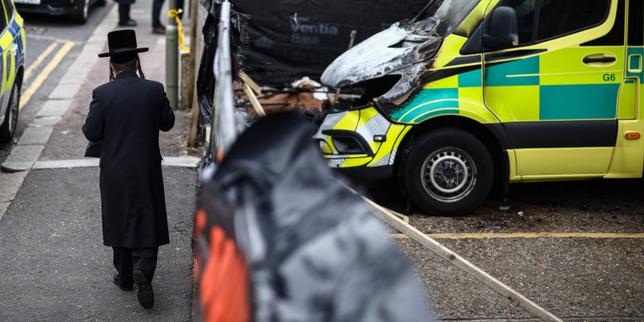
Shock doesn't even begin to cover it. Imagine waking up in a city that prides itself on diversity, only to find that life-saving vehicles were intentionally sidelined because of hate. That’s exactly what happened in North London recently. Two men are now in custody after a series of antisemitic attacks targeted four ambulances. It wasn't just a random act of property damage. It was a calculated strike against a Jewish emergency service that provides care to anyone who needs it, regardless of their background.
The Metropolitan Police acted fast, but the sting of the event remains. When you target an ambulance, you aren't just breaking glass or tagging a door. You're potentially killing someone. You're ensuring that when a heart stops or a child stops breathing, the help they need is sitting in a repair shop instead of racing down the street.
The Reality of the London Ambulance Attack
Late at night in Stamford Hill, the silence was broken by the sound of shattering glass and the scratching of hateful symbols. The targets were vehicles belonging to Hatzola, a voluntary emergency medical service. If you aren't familiar with them, Hatzola is a legendary fixture in Jewish communities worldwide. They’re known for their lightning-fast response times, often beating statutory services to the scene because their volunteers live and work right in the neighborhood.
By the time the sun came up, four of these ambulances were out of commission. The damage included smashed windows and antisemitic graffiti scrawled across the bodywork. Think about that for a second. In a city where the London Ambulance Service is already stretched to its absolute breaking point, losing four specialized vehicles is a massive blow to local resilience.
The police didn't mess around. Following an investigation into the CCTV footage and local intelligence, they arrested two men, aged 21 and 22. They’re being held on suspicion of racially aggravated criminal damage. While the legal process plays out, the community is left picking up the pieces and wondering how we got to a point where even the people saving lives aren't off-limits.
Why Hatzola Matters Beyond the Jewish Community
A common misconception is that religious-based emergency services only serve their own. That's flat-out wrong. Hatzola volunteers treat every single person they encounter. If you collapse on a sidewalk in Stamford Hill, a Hatzola medic will be the first one to start CPR on you, whether you’re Jewish, Muslim, Christian, or atheist.
By attacking these ambulances, the perpetrators didn't just target Jewish people. They targeted the safety net of the entire borough. When those four vehicles were taken off the road, the "margin of safety" for every resident in that area shrank. This is the part that often gets lost in the headlines. Hate crimes have a ripple effect. They create a "tax" on public safety that everyone ends up paying.
The Metropolitan Police have stepped up patrols in the area. It's a necessary move, but it’s also a sad indictment of our current climate. We’re now at a stage where we need police to guard the people who are coming to save us. It’s a circular logic of tragedy that’s hard to wrap your head around.
The Rising Tide of Hate and Its Practical Costs
We can't look at this event in a vacuum. Antisemitism has been spiking across the UK, and London has often been the flashpoint. Data from groups like the Community Security Trust (CST) shows that incidents have reached record highs. But there’s a difference between online vitriol and physical sabotage of medical equipment.
This specific attack highlights a shift from "expression" to "obstruction." When hate moves from words to the physical disabling of emergency infrastructure, it becomes a direct threat to the right to life. The cost of repairing these vehicles is significant, but the cost of the lost service hours is immeasurable.
Hatzola relies heavily on donations. Every pound spent fixing a window broken by a bigot is a pound that isn't going toward new defibrillators or training for new volunteers. It’s a drain on resources that the community simply shouldn't have to deal with.
Understanding the Legal Consequences of Aggravated Damage
The two men arrested are facing "racially aggravated" charges. In the UK legal system, this is a big deal. It’s a sentencing enhancer. If you're convicted of criminal damage, you get a certain penalty. If it's proven that your motivation was hostility toward a person's religion or race, that penalty gets bumped up significantly.
The courts take this seriously because they recognize that these crimes aren't just against the owner of the property. They’re crimes against the "Queen’s Peace" (or the King's Peace, nowadays). They’re designed to terrorize a specific group and fracture society.
Local leaders and the Met Police Commander for the area have been vocal about the fact that there’s zero tolerance for this. But "zero tolerance" needs to be more than a slogan. It needs to look like swift prosecution and a clear message that attacking medical services is a line that can never be crossed.
What You Can Do to Support Local Safety
Staying silent isn't an option when things like this happen. If you live in London or any major city, there are practical ways to ensure hate doesn't win. It’s about more than just posting a black square on social media or sharing a news link.
Keep your eyes open. If you see something suspicious near emergency vehicle bays or community centers, report it. Don't worry about being "that person" who calls 101 or 999 for something small. Intelligence-led policing depends on the public providing those small pieces of the puzzle.
You can also look into supporting the CST or local volunteer services like Hatzola. They don't just need money; they need the vocal support of their neighbors. Knowing that the wider community has their back makes a world of difference for volunteers who are already dealing with high-stress jobs.
The investigation is ongoing, and more details about the suspects' motivations will likely come out during the trial. For now, the focus is on getting those ambulances back on the road and ensuring that the residents of Stamford Hill feel safe again.
Don't let the headlines fade into the background. This attack is a reminder that the systems we rely on to stay alive are fragile and require our protection. If you have any information about the incident on the night of the attack, contact the Metropolitan Police or Crimestoppers immediately. Your tip could be the one that ensures these kinds of attacks don't happen again.


