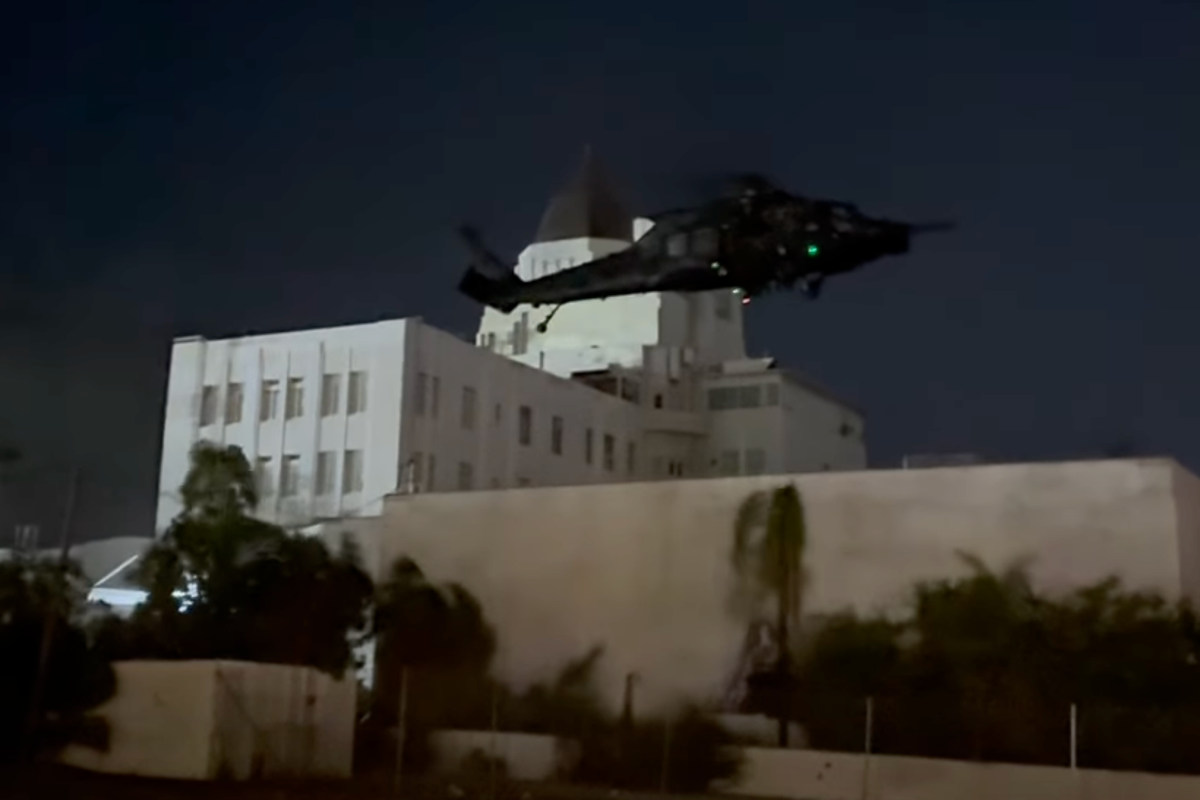
The execution of unannounced military training exercises within civilian municipalities represents a complex optimization problem balancing operational realism against civic disruption. When a quiet California neighborhood becomes the staging ground for midnight urban warfare simulations—complete with low-altitude helicopter maneuvers and simulated gunfire—the resulting public backlash highlights a systemic failure in risk mitigation and stakeholder communication. For defense planners, the utility of utilizing actual urban centers instead of simulated mockups is rooted in the need to replicate the unpredictable RF (radio frequency) environments, structural densities, and thermal profiles of modern foreign theaters. However, failing to account for the psychological and logistical externalities imposed on the local population creates a severe deficit in institutional trust.
To evaluate these operations objectively, the events must be deconstructed through three distinct analytical lenses: the operational imperatives driving urban asymmetric warfare training, the acoustic and kinetic vectors of civilian disruption, and the structural breakdown in municipal-military signaling.
The Operational Imperatives of Live-Tissue Urban Environments
Military readiness doctrines dictate that forces cannot effectively operate in environments they have not stress-tested. While purpose-built training facilities like the Army’s Fort Irwin National Training Center provide controlled environments, they fail to replicate the sheer complexity of a living, breathing metropolitan area.
Live urban centers present unique variables that cannot be modeled synthetically:
- Electromagnetic and Signal Saturation: Modern combat relies heavily on localized electronic warfare, signals intelligence, and encrypted communications. A live civilian grid—packed with commercial Wi-Fi networks, cellular towers, and localized power grids—forces operators to navigate real-world signal degradation and frequency interference.
- Micro-Acoustic Environments: The canyon-like architecture of dense residential or commercial zones alters the propagation of sound, affecting how teams locate sniper fire or coordinate tactical movements.
- Aerodynamic Anomalies: Low-altitude rotary-wing aircraft, such as the MH-6M Little Bird or MH-60 Black Hawk helicopters frequently used by special operations units, experience distinct aerodynamic feedback when operating between tightly clustered buildings. Thermal updrafts from asphalt and HVAC systems alter lift calculations in ways that rural training grounds cannot simulate.
The choice of a quiet neighborhood rather than a high-density downtown core is often a deliberate variable selection. Suburban layouts feature predictable grid systems interspersed with varied vegetation, presenting specific sightline obstructions and architectural vulnerabilities that mirror specific high-value target profiles globally.
Quantifying the Friction Vector: Sound, Shadow, and Surprise
The friction generated by these late-night exercises is not merely emotional; it can be quantified through measurable vectors of civic disturbance. The primary disruptor is acoustic penetration.
Standard military-grade helicopters operating at low altitudes (under 500 feet) generate acoustic profiles exceeding 90 to 100 decibels (dB) at ground level. When amplified by the sudden ignition of blank ammunition—which lacks a projectile but retains the explosive acoustic signature of live rounds—the ambient noise level spikes instantaneously from a baseline suburban night reading of roughly 30–40 dB to hazardous thresholds.
This creates an immediate psychological trigger. Without prior notification, the human nervous system processes these inputs through the lens of an active threat vector. The secondary disruption vector is structural vibration. The downwash from low-flying rotorcraft generates significant localized atmospheric pressure changes, capable of rattling residential windows, triggering vehicle security systems, and causing structural resonance in older wood-frame habitations.
The core failure of these operations lies in the asymmetry of information. The military operates under a strict need-to-know protocol to maintain tactical surprise and prevent crowds from gathering, which would compromise safety and training efficacy. Conversely, the civilian population requires predictability to maintain public order. When these two opposing mandates collide without a buffer framework, the result is localized panic, a surge in emergency 911 calls that strains municipal dispatch centers, and immediate negative media cycles.
The Breakdown in Municipal-Military Signaling Architecture
An analysis of these midnight training incidents reveals a recurring vulnerability in the communication chain between federal military planners, local base commands, and municipal authorities. Typically, permission is secured at the executive level of local government—such as the mayor's office or the chief of police—under strict non-disclosure agreements to preserve the security of the exercise.
This creates an insular information silo. The tactical execution team assumes the civilian leadership has insulated the community, while the civilian leadership underestimates the kinetic intensity of the exercise. The communication breakdown occurs across three distinct phases:
- The Pre-Execution Phase: Authorization is granted based on abstract operational descriptions (e.g., "low-altitude flight maneuvers") rather than clear impact metrics (e.g., "sustained 95 dB rotor noise at 2:00 AM over residential zoning").
- The Active Execution Phase: Local law enforcement agencies receive a deluge of citizen complaints but are restricted by non-disclosure agreements from providing actionable context, forcing them to issue vague reassurances that degrade public trust.
- The Post-Execution Phase: The military unit extracts from the area, leaving local municipal entities to absorb the political and public relations fallout without possessing the technical data required to justify the operational necessity to their constituents.
Re-Engineering the Civil-Military Liaison Framework
To preserve the vital capability of conducting realistic urban training while minimizing the civilian friction coefficient, the operational framework must be overhauled. Moving forward, defense commands must implement a data-driven, tiered notification system that respects tactical security without blindside-testing civilian populations.
The optimal strategy requires replacing absolute secrecy with controlled, localized transparency. For example, deploying hyper-targeted SMS geofencing alerts exactly 15 minutes prior to the commencement of kinetic activity introduces enough lead time to eliminate public panic and prevent the clogging of emergency channels, yet is short enough to deter large public gatherings from disrupting the training zone. Furthermore, acoustic mapping models should be run prior to unit deployment, establishing hard ceilings on decibel exposure over high-density residential zones during standard sleeping hours.
Future urban exercises must treat the civilian population not as an inert backdrop, but as a dynamic environmental constraint that requires active, systematic management. Implementing these structural adjustments will allow specialized units to maintain peak operational readiness without turning domestic neighborhoods into uncompensated zones of psychological stress.