The frost on the morning windshield was thick enough to require a credit card scraper, but by 7:30 AM, the line outside the public library in south Calgary had already turned the corner.
People did not move much. They stood with hands jammed deep into down jackets, paper coffee cups steaming into the frigid prairie air, shifting their weight from one boot to the other. There were no campaign signs within sight, no volunteers handing out neon pamphlets, no brass bands. Just silence, breath condensation, and the low hum of idling pickup trucks in the parking lot.
Consider a hypothetical voter in that queue. Call her Sarah. She is forty-two, runs a small accounting practice, and spent her Sunday morning deciding whether to wake up early to vote or risk the late-afternoon rush after picking up her kids from soccer practice. She expected a five-minute errand. Instead, she found herself standing behind a retired boilermaker and in front of a twenty-year-old university student listening to a podcast on noise-canceling headphones.
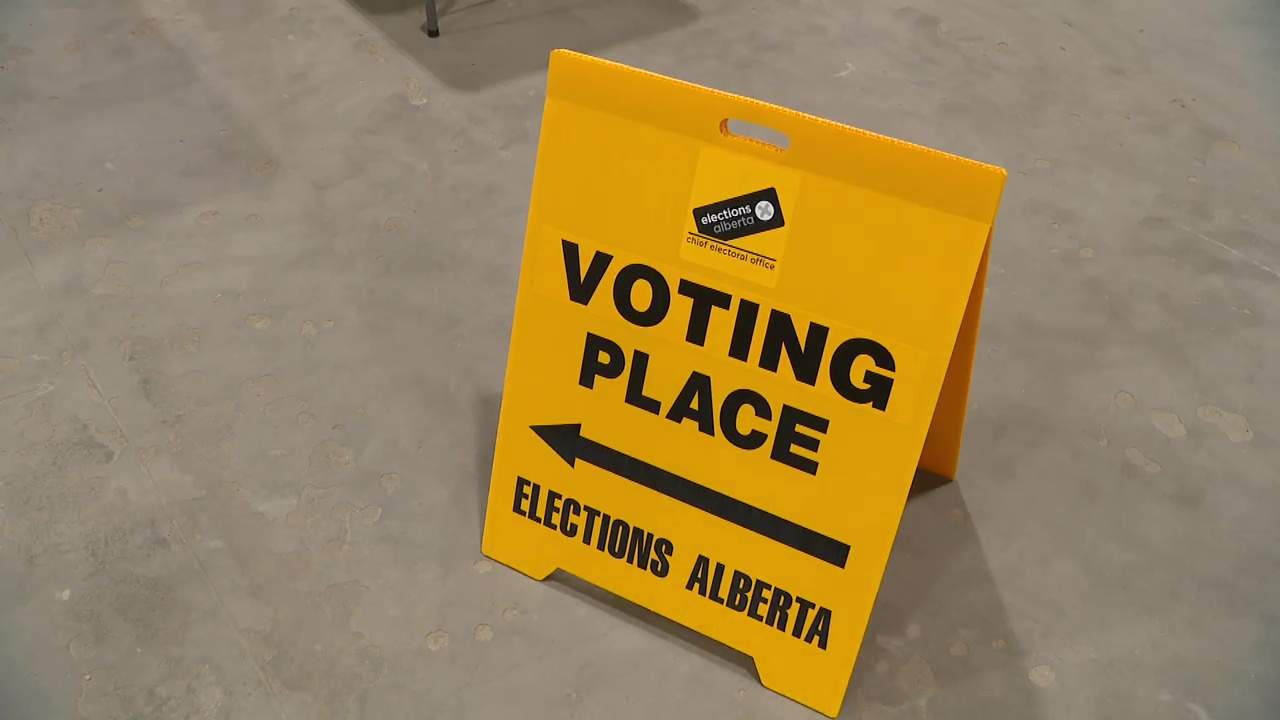
They were not there for a general election. No prime minister or premier was being selected. They were standing in the cold to answer a set of direct questions on a referendum ballot.
And by the time the advance polls closed, Sarah was one of 1.3 million people who had done the exact same thing.
The Weight of One Point Three Million
To understand what 1.3 million votes cast in advance polls actually means, drop the abstract statistical distance for a moment.
Picture the seats inside McMahon Stadium in Calgary. Fill every single one of them to capacity. Now empty it, refill it, and repeat that process thirty times over. Imagine every seat filled with a living, breathing person who decided that waiting until the official polling day was simply too risky, too inconvenient, or too late.
In standard electoral history, advance voting was an afterthought. It was reserved for shift workers, snowbirds heading south for the winter, or the exceptionally meticulous citizens who color-code their household chore charts. Mainstream political wisdom treated early voting as a trickling side stream. The main river always flowed on Election Day.
That river has rerouted itself entirely.
When more than a million citizens turn out before the designated final day, the mechanics of democracy undergo a quiet structural shock. Elections officials who prepared for a steady stream find themselves managing a deluge. Logistical assumptions crafted over decades melt away under the sheer weight of foot traffic.
Why the sudden rush?
It is easy to point toward modern convenience. We live in an era of instant delivery, on-demand streaming, and contactless payments. Waiting in a long line on a specific Tuesday between 9:00 AM and 8:00 PM feels like an artifact from a bygone century. If you can choose when to cast your ballot across a multi-day window, common sense dictates you take the exit ramp when it appears.
Yet convenience alone fails to explain the mood in those lines. Convenience produces casual participation. It does not produce people standing in freezing drizzle forty-five minutes before the doors unlock.
The Invisible Stakes
To frame this purely as a administrative triumph misses the underlying current. High early turnout is rarely a sign of passive contentment. It is a signal of tension.
When a population senses that the ground beneath its feet is shifting, it does not wait around. Referendums, by their very nature, strip away the protective armor of party politics. In a standard election, a voter can compromise. They can vote for a candidate they mildly dislike because they prefer the party platform, or support a local representative despite hating the national leader. It is a package deal full of grey areas.
A referendum offers no such cushion. It reduces complex, multi-layered societal debates into stark binary choices. Yes or No. Stay or Go. Accept or Reject.
That simplicity is deceptive. Behind every checkmark on a referendum ballot lies a web of deeply personal anxieties and hopes.
For the small business owner in Red Deer, a policy question on a referendum isn't an abstract exercise in constitutional law. It is a calculation about payroll taxes, commercial rent, and whether they can afford to hire an apprentice next spring. For the young family in Edmonton, it is about public services, school funding, and whether their mortgage rate will allow them to stay in their neighborhood.
When 1.3 million people flood the advance polls, they are carrying those private calculations with them. The high number tells us that the debate reached into the living room, crossed the kitchen counter, and interrupted the dinner conversation. It transformed quiet concern into physical action.
Anatomy of a Shift
Notice how public spaces transform when civic duty calls them into service.
A community center gymnasium usually smells of old floor wax, rubber soles, and faint bleach. On a polling day, that scent is replaced by wet wool and paper. Temporary cardboard privacy screens line tables that were holding a youth basketball tournament forty-eight hours prior.
Inside these rooms, the mechanics are remarkably quiet. An election worker checks an identification card, runs a ruler down a printed ledger of names, draws a precise line through a line of text, and hands over a slip of paper.
Watch the hands of the voters as they take that paper. Some slide it casually onto the clipboard. Others handle it with a deliberate, almost delicate care, holding it with both hands as they walk toward the voting booth.
This spatial ritual has remained largely unchanged for a century, even as the world around it digitized every other human transaction. We still use wooden pencils or simple black pens. We still fold paper by hand. We still slide that folded paper into a slot in a box.
There is profound psychological power in that physical act. In a world where digital communication feels ephemeral, light, and easily deleted, marking a paper ballot provides a tactile sense of weight. You mark the paper. You drop it in the box. The gravity of the choice leaves your hands and enters the public record.
The record-breaking advance turnout in Alberta highlights a fundamental shift in how citizens view their role in this ritual. Voting is no longer viewed as a single event anchored to a specific date calendar. It has evolved into a period of active engagement. The window of decision-making has expanded, and the public has moved into that space eagerly.
Beyond the Numbers
When the election body released the figure—1.3 million advance votes—the news cycles seized on the record-breaking headline. Graphics were rendered, percentage comparisons were drawn against previous years, and political strategists rushed to claim that the surge favored their specific outcome.
Predicting outcomes from early turnout is a notoriously flawed science. High turnout can mean intense enthusiasm for the status quo, or it can mean an angry electorate determined to force a turn in direction. It can mean flawless organizational work by advocacy groups, or a spontaneous, uncoordinated surge of individual citizens deciding independently that they had seen enough.
The truth is usually far more chaotic than the strategists care to admit.
The 1.3 million individuals who walked into those advance polling stations were not a monolith. They were a cross-section of a province navigating uncertainty. They were parents who dropped off ballots while running errands, retirees who made a morning outing of the process, and shift workers who grabbed a voting card on their way to a night shift on a rig or in a hospital ward.
What unites them is not how they voted, but the shared impulse to claim their slice of the outcome early.
As the advance polls closed and the boxes were secured, the physical lines dissolved. The community centers went back to hosting floor hockey and yoga classes. The library parking lots emptied out.
The silence returned to the mornings, but the ballots remained, stored in secure vaults, waiting for the final tally. They represent a massive, quiet conversation held across cities, towns, and rural stretches—a collective statement written in pencil lead and folded paper, proving that when the stakes feel real, people will always stand in the cold to have their say.