The tea stalls of Nagpur always smell of bruised mint, cardamom, and the distinct, sulfurous tang of damp earth after a sudden monsoon downpour. In the evenings, men gather beneath the corrugated tin roofs, trading gossip about crop yields, cricket scores, and the slow, grinding machinery of politics. Sometimes, the conversation turns heavy. It turns to identity, to who belongs and who remains an eternal guest, to the invisible borders drawn through neighborhoods where families have shared sugar and salt for generations.
In these moments, the air grows still. Everyone waits to see which way the wind blows. Meanwhile, you can find related developments here: Why Milo Yiannopoulos Got Deported From America After Years of Playing With Fire.
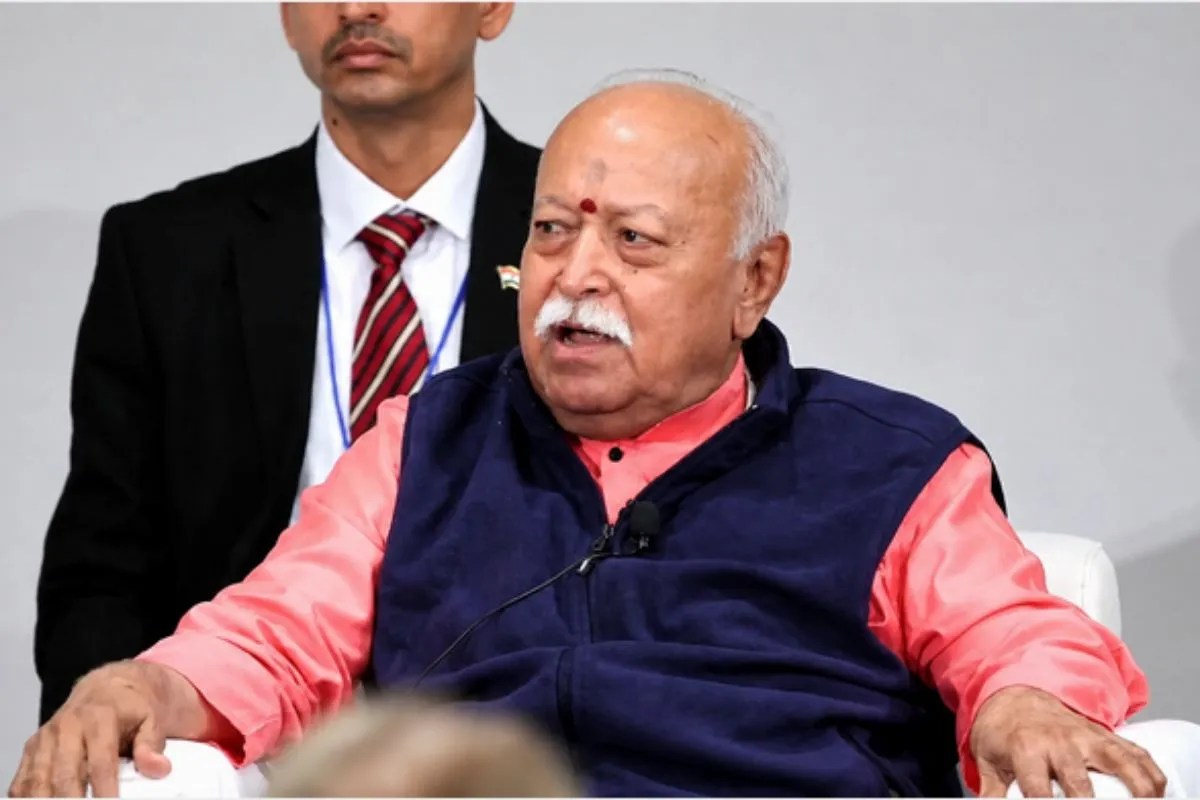
Mohan Bhagwat, the head of the Rashtriya Sevak Sangh, knows the weight of those tea-stall silences. He occupies a position that has long been interpreted through a singular, unyielding lens by critics and supporters alike. To millions, the RSS represents a rigid blueprint for cultural nationalism—an entity often accused of seeking to reduce India's vibrant, chaotic plurality into a single, uniform shade. Yet, words dropped into public discourse can sometimes crack the most carefully constructed molds.
Consider what happened when Bhagwat addressed a gathering and was forced to confront the sharpest edge of the nation's ideological debate. To explore the bigger picture, check out the recent article by NBC News.
A question hung in the air, blunt and polarizing: What should happen to the Muslims of India?
History teaches us that nations do not usually collapse from external invasions. They fray from the inside, stitch by stitch, when neighbors start looking at each other not as human beings with shared anxieties and joys, but as avatars of a hostile collective. The rhetoric of exclusion is seductive. It offers simple answers to complex structural failures. If your livelihood is shrinking, if inflation is biting, if the future feels terrifyingly uncertain, it is remarkably comforting to point a finger across the street and decide that the person living there is the root of all ruin.
For decades, political opportunists on all sides have fed this fire. They have treated human lives as currency, trading in fear and sectarian distrust. In this climate, silence from the top of powerful ideological organizations is often read as tacit approval. When leaders look away, their followers take it as an invitation to cross lines.
So when Bhagwat spoke, the impact was not merely political; it was seismic.
He did not offer a nuanced political dodge. He drew a line in the sand. Whoever wants to drive Muslims out of India, he declared, is simply not a Hindu.
Stop for a moment and let the sheer weight of that statement settle.
This was not a liberal progressive speaking from an air-conditioned studio in South Delhi. This was the Sarsanghchalach of the ideological fountainhead of right-wing thought in India, using the foundational vocabulary of Hinduism to dismantle the most radical fringes of his own ideological ecosystem. In a single stroke, he severed the cord between violent majoritarianism and the religious identity it weaponized.
To understand why this matters, we must walk through the alleys of everyday fear.
Imagine sitting in a modest apartment in a crowded suburb of Mumbai or Lucknow. The TV hums in the corner, broadcasting debates where pundits scream at one another about heritage, citizenship, and loyalty. You look at your children playing on the floor. You wonder if the neighborhood that has been your home for thirty years could suddenly turn hostile overnight. You wonder if your name, your faith, or the way you dress has quietly placed an invisible target on your back. This is the psychological tax paid by millions of minorities in contemporary democracies. It is a low, persistent hum of anxiety that never quite turns off.
When a figure like Bhagwat steps forward and redefines the boundaries of belonging, it does not magically erase decades of communal scar tissue. It does not instantly clear the air of suspicion. But it changes the weather. It tells the foot soldiers of radicalism that their license to hate is not endorsed from above.
Critics, of course, were immediately skeptical. And rightfully so. Skepticism in the face of political rhetoric is not just healthy; it is essential for survival. Many asked whether these words were merely a calculated PR maneuver, a strategic attempt to soften the global image of an organization accused of sectarian polarization. They pointed to the gap between high-minded pronouncements and the harsh realities on the ground, where hate speech still circulates and minorities frequently find themselves economically and socially sidelined.
Change rarely happens overnight. Systems as vast and ancient as India's social fabric are like massive ocean liners; they do not turn on a dime. They require immense torque, sustained pressure, and a fundamental shift in the currents beneath the surface.
Yet, to dismiss such statements merely as window dressing is to misunderstand the mechanics of ideological leadership. Words create boundaries. They give moral permission—or they withdraw it. When the architect of a majoritarian movement explicitly states that exclusion violates the core tenets of the faith itself, he pulls the rug out from under those who claim divine or cultural sanction for their bigotry.
We live in an era addicted to ideological purity tests. We want our villains to be cartoonish and our heroes to be spotless. Real life refuses to cooperate with these neat categories. Human beings are complex, contradictory vessels capable of holding profound prejudice alongside moments of startling clarity.
Bhagwat’s declaration forces us to confront our own complicity in the politics of division. It challenges the hardliners on the right to re-examine their methods, and it challenges the critics on the left to acknowledge when ideological opponents shift the conversation toward common ground.
The tea stalls of Nagpur will keep brewing their strong, spiced tea. The debates will rage on beneath the corrugated tin. The deep, systemic wounds of partition and prejudice will take generations to heal, requiring far more than speeches and press statements.
But a boundary has been articulated. A standard has been set. And somewhere in the quiet, anxious corners of the country, a family can breathe just a little bit easier tonight, knowing that the definition of who belongs has just been fiercely, unmistakably defended from an unexpected quarter.