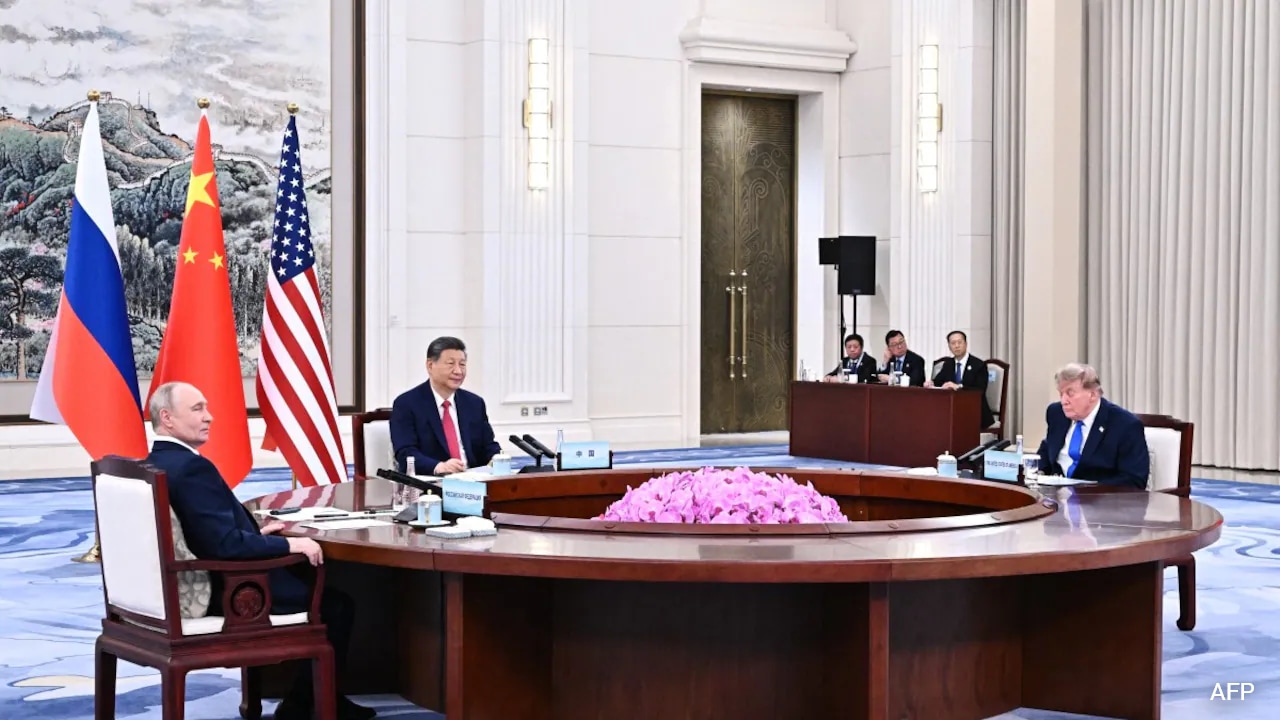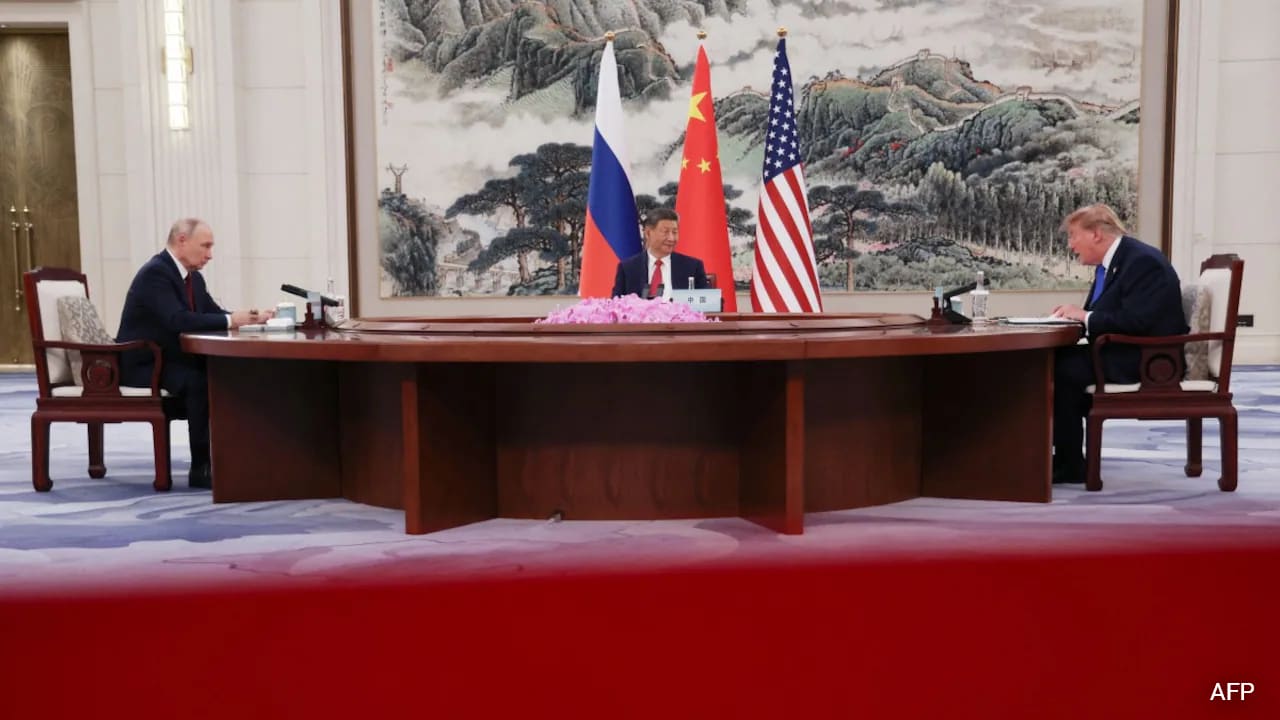
Donald Trump stepped off Air Force One after his historic November 2026 trilateral summit in Shenzhen with a blunt reality check. Getting Xi Jinping and Vladimir Putin in the same room was the easy part. Actually shrinking their arsenals? That's a completely different beast.
"I love the concept of it, but in terms of pure negotiation, it's a very hard thing for me as a president to do," Trump admitted to Reuters on the flight back to Washington. If you've followed nuclear diplomacy over the last few years, his sudden hesitation shouldn't shock you. You can't handshake your way out of an asymmetric arms race.
The Shenzhen meeting—held on November 19, 2026, alongside the Asia-Pacific Economic Cooperation forum—marked the first time leaders from Washington, Beijing, and Moscow sat down together specifically to address global security and nuclear risk. On paper, they produced the U.S.-Russia-China Heads of State Declaration toward Peace. In reality, they kicked the hardest decisions down the road.
The Math Problem Nobody Wants to Solve
Here's the core obstacle that derails every trilateral arms control pitch before the ink dries. The numbers don't line up.
For decades, nuclear treaties were strictly bilateral. Washington and Moscow kept rough parity, making reciprocal cuts straightforward. You scrap a missile, I scrap a missile. Under the New START treaty—which officially expired in February 2026—both the U.S. and Russia were capped at 1,550 deployed strategic nuclear warheads.
China wasn't bound by any of it.
According to estimates from the Federation of American Scientists and Pentagon assessments, the United States holds roughly 5,044 total warheads in its stockpile, with Russia sitting at a similar scale. Beijing, meanwhile, operates around 500 to 600 warheads, though U.S. defense intelligence projects China is racing to hit 1,500 by 2035.
Put yourself in Xi Jinping's shoes for five seconds. Why would Beijing freeze its arsenal at a third of Washington's size? Chinese diplomats have repeated the same line for years, and they didn't budge in Shenzhen. Asking China to join three-way reductions right now isn't realistic. From Beijing's perspective, either the U.S. and Russia slash their stockpiles down to China's level first, or China keeps building until it reaches strategic parity.
Trump clearly ran headfirst into that wall. Later, speaking to reporters in the White House briefing room, he walked back his earlier rhetoric about cutting defense budgets and warheads in half. "It's very hard for me to say let's cut them in half," he noted. "I'm not sure that can ever happen."
What the Shenzhen Peace Declaration Actually Achieved
Don't confuse a four-point joint statement with a binding treaty. If you read the actual text of the White House's November 19 declaration, the language on nuclear weapons is cautious and deliberately vague.
The three leaders reaffirmed the classic Reagan-Gorbachev formula that "a nuclear war cannot be won and must never be fought". They also pledged to "conduct a dialogue on reducing nuclear risks and preventing the proliferation of nuclear weapons".
That's it. No warhead caps. No inspection protocols. No ban on fissile material production.
Even worse, "reducing nuclear risks" means totally different things depending on which capital you ask.
- Beijing's definition centers on a mutual "No First Use" pledge. China wants Washington and Moscow to promise they'll never initiate a nuclear strike. U.S. planners hate this idea because American extended deterrence—the nuclear umbrella protecting Japan, South Korea, and NATO allies—relies on keeping adversaries guessing if a massive conventional attack would trigger a nuclear response.
- Moscow's definition is tied directly to missile defense and regional conflicts. Putin previously offered a temporary, one-year voluntary extension of New START limits back in late 2025, which Trump rejected in favor of chasing a bigger three-way deal. In Shenzhen, Putin used the stage to push for U.N. Security Council reforms, attack the International Criminal Court's arrest warrant against him, and legitimize Russian energy exports.
- Washington's definition focuses on transparency, crisis hotlines, and pulling Beijing into formal verification regimes before China's silo fields in Gansu and Xinjiang are fully loaded.
When three leaders sign a document using the same words to describe conflicting goals, you haven't solved a crisis. You've just bought yourself a photo op.
The Verification Trap Nobody Talks About
Most casual observers think arms control fails because leaders don't trust each other. That's backwards. Arms control exists because leaders don't trust each other.
During the Cold War and throughout the New START era, treaties worked because of intrusive, boots-on-the-ground verification. American inspectors physically traveled to Russian missile bases to count warheads on re-entry vehicles, and Russian teams did the same in Montana and North Dakota.
Right now, that entire verification architecture is dead.
Russia suspended New START inspections years ago, and the treaty's full expiration in February 2026 left the world's two largest nuclear powers operating without legally binding limits for the first time since 1972. Bringing China into a verification system adds a whole new layer of friction. China's nuclear doctrine has historically relied on opacity—hiding missiles in underground tunnel networks so adversaries can't be sure how many warheads survive a first strike.
If China opens its facilities to American and Russian inspectors, it gives up its biggest strategic advantage. Transparency weakens a smaller arsenal. Secrecy protects it. Until someone figures out how to verify warhead counts without exposing China's mobile launchers, a formal three-way treaty remains dead on arrival.
Why European Allies and North Korea Complicate the Math
You can't isolate the U.S.-China-Russia triangle from the rest of the map. Two glaring wildcards hung over the Shenzhen talks.
First, there's Europe. Policy analysts at the European Council on Foreign Relations pointed out right after the summit that Beijing refuses to ignore Britain and France. Combined, London and Paris maintain roughly 500 nuclear warheads. From China's vantage point, if NATO allies hold nuclear weapons, their arsenals belong in the Western column. Yet Britain and France have zero interest in capping their minimum deterrents while Russia's war in Ukraine grinds through its fifth year.
Second, there's Pyongyang. Trump openly floated the idea of getting Xi and Putin to help cap North Korea's nuclear program, admitting that total elimination might no longer be on the table. North Korea now holds an estimated 60 warheads alongside solid-fuel intercontinental ballistic missiles capable of hitting the U.S. mainland. Kim Jong Un didn't even answer Trump's recent outreach attempts, and neither Moscow nor Beijing has any incentive to squeeze Kim while they're locked in broader standoffs with Washington.
How to Read Nuclear Headlines Without Getting Played
If you're tracking geopolitical risk, market stability, or defense policy in late 2026, diplomatic summits can give you serious whiplash. One day leaders are calling each other friends and promising peace; the next day they're admitting a deal might be impossible.
Skip the press conference soundbites and watch three concrete indicators instead:
- Working-level technical talks. Presidential handshakes mean nothing unless mid-level diplomats and defense officials actually schedule follow-up meetings on crisis communication hotlines and missile launch notifications. Watch the upcoming December G20 summit in Miami—where Xi is expected to attend without Putin—to see if technical working groups are formally announced.
- Telemetry and data exchanges. Before any warhead cuts happen, watch whether Washington and Moscow restore basic data notifications on strategic exercises. If they won't even share flight-test telemetry, they aren't signing a treaty.
- Warhead upload capacity. Without New START caps, both the U.S. and Russia can take reserve warheads out of storage and "upload" them onto existing Trident submarines and Minuteman or Sarmat missiles. If Pentagon budget requests shift toward uploading reserve warheads rather than just modernizing delivery systems, the arms race is officially accelerating regardless of what any peace declaration says.
Trump wanted a signature deal that would do what Cold War presidents couldn't. Instead, Shenzhen proved that you can't bluff physics or national survival. Until Washington, Moscow, and Beijing agree on what parity actually looks like, nuclear restraint is going to rely on crisis management rather than binding signatures.