An Irish court has sentenced Riad Bouchaker to life imprisonment for the November 2023 knife attack outside a primary school on Parnell Square East in Dublin, a brutal assault that left three young children and a care worker severely injured and triggered the worst civil unrest the Irish capital has seen in decades. The mandatory life sentence closes the criminal prosecution of the attacker, yet it leaves open the far more volatile questions surrounding state security, immigration policy, and the rapid mobilization of street violence that followed within hours of the stabbings.
The sentencing at the Central Criminal Court brings legal finality to an afternoon that permanently altered Ireland's political temperature. On November 23, 2023, shortly after 1:30 PM, Bouchaker approached children standing outside Gaelscoil Coláiste Mhuire, a primary school in Dublin's north inner city. Armed with a large kitchen knife, he attacked several pupils before being disarmed and restrained by bystanders, including Brazilian delivery driver Caio Benicio, whose intervention prevented further fatalities.
For veteran observers of Irish criminal justice and public order, the court's decision was never really in doubt once the facts of the assault were established. Under Irish law, a conviction for murder or certain aggravated capital-level offenses—or, in this case, the sentencing framework applied to the most severe violent crimes prosecuted before the Central Criminal Court—carries the weight of indefinite detention. What makes this case an enduring flashpoint is not the mechanics of the courtroom verdict, but the institutional failures that preceded the attack and the explosive street reaction that consumed Dublin's city center hours later.
The Anatomy of a Preventable Crisis
To understand why the Parnell Square attack detonated such fury across Ireland, you have to look at the timeline before the knife was ever drawn. Bouchaker, an Algerian-born naturalized Irish citizen in his late forties, was not a phantom to the authorities. He had lived in Ireland for roughly two decades and had accumulated a history of prior interactions with both the courts and medical services.
Months before the November stabbings, Bouchaker had appeared before a Dublin court on charges involving a separate knife-related incident and criminal damage. Those charges were struck out after the court heard evidence regarding his deteriorating mental health and a prior brain injury that had significantly altered his cognitive functioning and impulse control. He was known to the health system. He was known to the police. Yet he remained in the community without sustained psychiatric containment or intensive supervision.
This is the quiet scandal buried beneath the louder political shouting matches over borders and citizenship. When state agencies operate in rigid silos—where criminal courts dismiss charges due to psychiatric impairment, while community mental health services lack the statutory teeth or bed capacity to enforce long-term treatment—high-risk individuals fall directly through the floor.
How Misinformation Turned a Crime Scene Into a Riot Zone
Within minutes of the first emergency sirens reaching Parnell Square, a second, parallel crisis began unfolding on encrypted messaging apps and social media platforms. Before Gardaí had even secured the perimeter or confirmed the identity of the suspect, voice notes and posts circulated rapidly across Telegram, WhatsApp, and X, claiming that an undocumented foreign national had murdered multiple children and that the state was actively covering up the fatalities.
None of those claims were accurate at the time they were broadcast. Three children and care worker Leanne Flynn Keogh were critically wounded, with one five-year-old girl spending months in intensive care undergoing extensive neurological surgeries, and Flynn Keogh suffering life-altering injuries while shielding the pupils. Nobody had died. Yet the digital narrative moved faster than official police briefings could ever hope to match.
By early evening, hundreds of people had converged on O'Connell Street and the surrounding arteries of Dublin's north side. What began as an angry gathering outside the police cordon rapidly mutated into coordinated looting, arson, and targeted attacks on public infrastructure. Rioters torched double-decker buses, burned a Luas tram, destroyed Garda patrol vehicles, and smashed storefront windows along Henry Street and O'Connell Street.
The numbers tell the story of how completely public order collapsed that night:
- 13 Garda vehicles were damaged or completely destroyed by fire.
- 3 buses and 1 Luas tram were burned out in the heart of the commercial district.
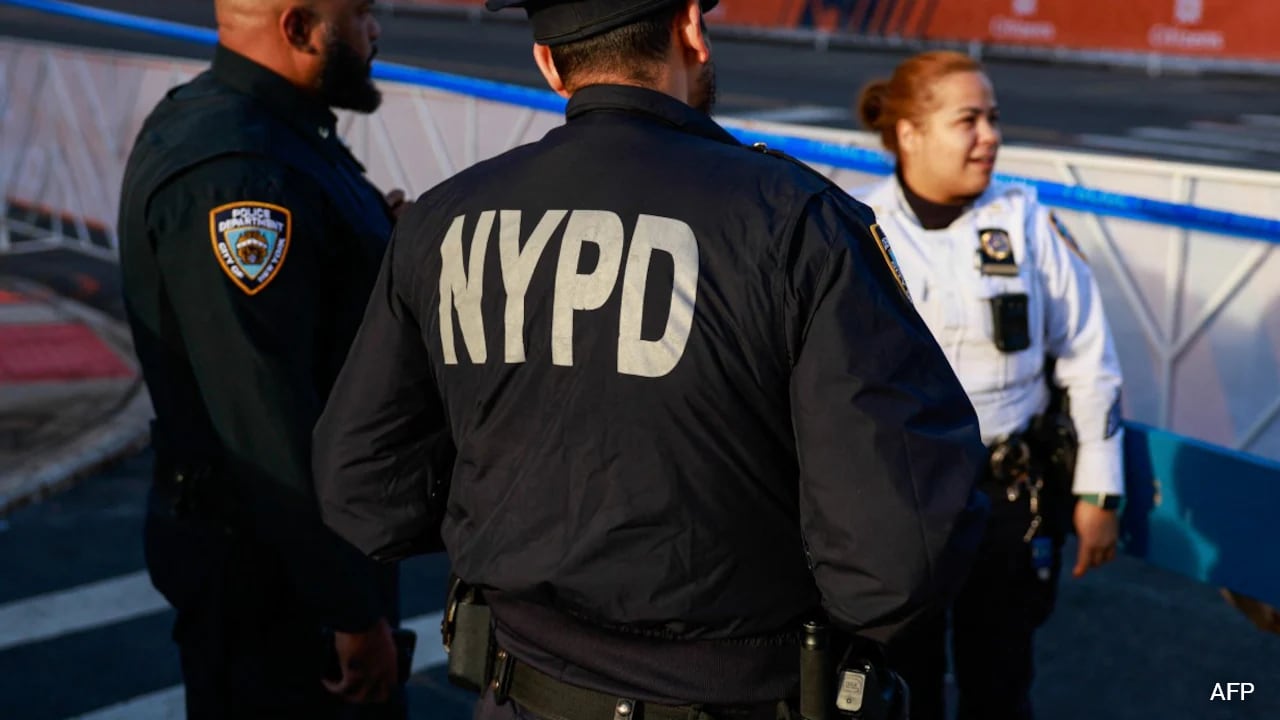
- 60 officers were assaulted, with several sustaining serious injuries while holding lines without adequate crowd-control equipment.
- Tens of millions of euros in property damage and lost retail trade hit Dublin businesses during the busiest shopping week of the year.
The Policing Failure Nobody Wants to Own
For years prior to November 2023, rank-and-file members of An Garda Síochána had warned senior management and the Department of Justice that the force was dangerously under-resourced for large-scale public disorder. Those warnings were largely treated as routine union bargaining tactics.
When the streets erupted, the operational reality exposed every flaw in Garda command structure. Public Order Unit officers were scattered across regular duties and took hours to assemble, equip, and deploy in formation. Frontline patrol officers were left standing in standard high-visibility jackets against crowds throwing fireworks, bottles, and metal barriers.
In the aftermath, Garda Commissioner Drew Harris faced intense scrutiny over both the slow deployment of riot units and the initial reluctance to authorize the use of incapacitant spray and forceful dispersal tactics. Following the riots, the force scrambled to procure water cannons from Northern Ireland, upgrade protective gear, and revise crowd-control doctrine. Those measures arrived too late for the business owners and commuters caught in the firestorm on November 23.
The Political Weaponization of Parnell Square
The life sentence handed down to Bouchaker closes one chapter, yet the political consequences of the attack continue to reshape Irish public life. For decades, Ireland was widely viewed across Europe as an outlier—a wealthy, open economy that had largely avoided the rise of organized nationalist street movements seen in France, Germany, or the Netherlands.
Parnell Square shattered that assumption overnight. In the months following the attack and riots, anti-immigration protests became a regular fixture outside accommodation centers housing asylum seekers across both urban and rural Ireland. Arson attacks targeted properties rumored to be earmarked for international protection applicants, forcing the government into a defensive crouch on housing and migration policy.
Critics of the government argue that successive coalitions created a vacuum by placing thousands of asylum seekers into working-class neighborhoods—communities already straining under chronic housing shortages, underfunded schools, and overstretched GP clinics—without prior consultation or additional infrastructure funding. When the Parnell Square stabbings occurred in one of Dublin's most economically deprived postal codes, those simmering resentments found an immediate, combustible outlet.
Conversely, civil rights advocates and legal analysts point out that the rioters who burned buses and looted sportswear stores on O'Connell Street had zero interest in the welfare of the injured children. Opportunistic criminality fused with online agitation, hijacking a community tragedy and turning it into an assault on the city itself.
What the Verdict Actually Solves—And What It Leaves Broken
A life sentence in Ireland does not mean a fixed number of years, though it guarantees that Bouchaker will remain behind bars indefinitely unless the Minister for Justice, acting on the advice of the Parole Board, ever approves his release—a prospect that remains exceptionally remote given the gravity of his crimes and the lifelong trauma inflicted on his victims. For the families of the injured children and for Leanne Flynn Keogh, the court's ruling provides formal recognition of the horror visited upon them outside a school gate on an ordinary Thursday afternoon.
Yet justice in a single courtroom cannot repair systemic negligence. If a man with a documented history of brain trauma, violent episodes, and psychotic symptoms can slip past both the courts and the health service until he ends up outside a primary school with a kitchen knife, the failure is institutional as well as individual.
Ireland's security apparatus has spent the past three years upgrading riot gear, expanding public order training, and prosecuting dozens of individuals involved in the November 2023 looting. Those steps address the symptoms of what happened after dark on O'Connell Street. They do nothing to fix the broken referral pathways between criminal justice and acute psychiatric care, nor do they rebuild trust in communities that feel abandoned until a crisis forces cameras onto their streets.
Bouchaker will spend the rest of his life in a prison cell, while the institutions whose blind spots allowed him to reach that school gate continue operating largely unchanged.