The prevailing narrative suggests that China’s flood of lidar-equipped budget EVs is a tech miracle. The press is obsessed with the idea that democratizing "luxury" sensors is a win for the consumer. It isn't. It’s a desperate hardware flex masking a massive software deficit.
By cramming laser-based light detection and ranging (lidar) into $20,000 hatchbacks, Chinese manufacturers aren't leapfrogging the West. They are admitting they can't solve the "vision" problem. They are bolting on expensive, fragile hardware to compensate for mediocre neural networks. It’s the automotive equivalent of wearing night-vision goggles because you’re too lazy to turn on the lights.
The Hardware Crutch vs. The Software Brain
The "lazy consensus" assumes that more sensors always equal better safety. If one camera is good, eight cameras and a lidar unit must be better, right? Wrong. In the world of autonomous driving, more data often creates more noise.
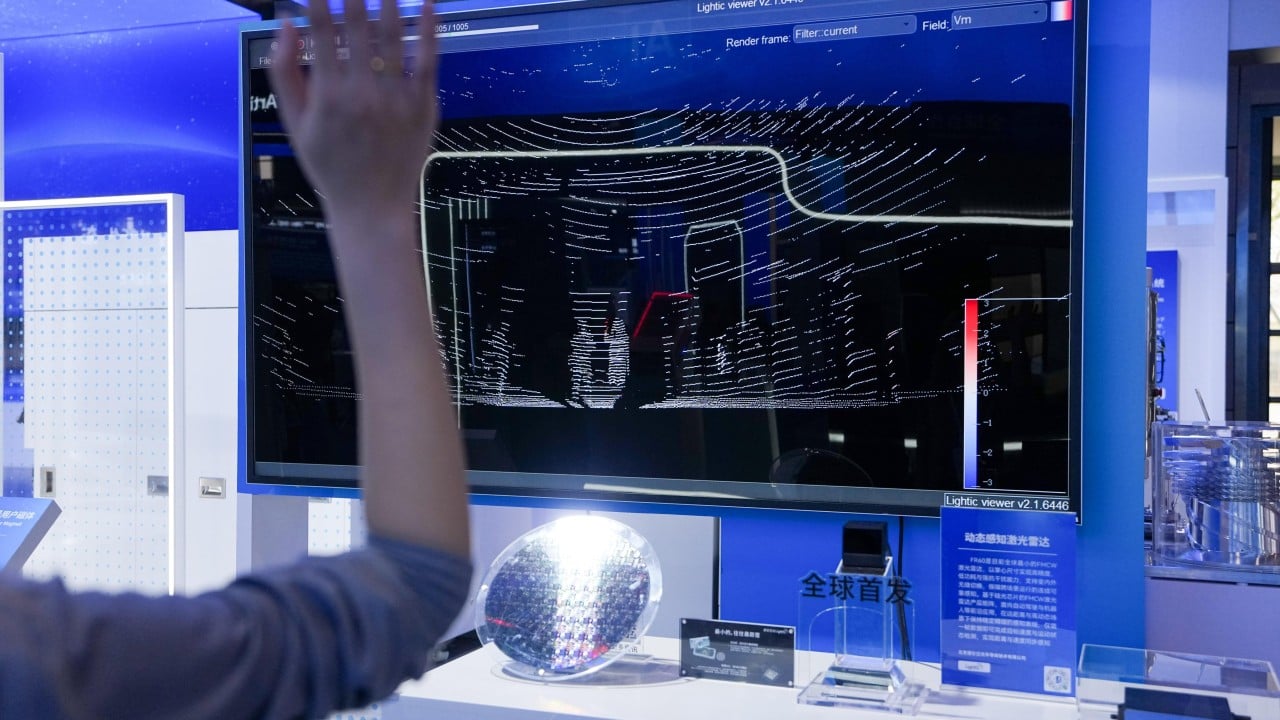
Lidar generates a massive point cloud of data. Processing that data in real-time requires significant compute power. When you put a lidar unit on a low-cost vehicle, you aren't just paying for the sensor; you are taxing the car's onboard computer.
- The Latency Trap: Most budget EV chips struggle to fuse lidar data with camera feeds fast enough to make high-speed decisions.
- The Ghost Braking Phenomenon: Cheap lidar units are notorious for "false positives"—detecting a puff of exhaust or a stray leaf as a concrete wall.
- The Maintenance Nightmare: Unlike cameras tucked behind glass, lidars are often exposed. A single rock chip on a $1,000 sensor turns your "smart" budget car into an expensive paperweight.
Tesla (for all its faults) and companies like Waymo understand that the battle isn't over who has the most lasers. It's over who has the best occupancy networks. If your software can't understand that a plastic bag isn't a child, adding a laser won't help. It just means you’ll hit the brakes harder for the plastic bag.
China’s Subsidy-Driven Spec War
Why are brands like XPeng, Li Auto, and NIO pushing lidar into the mass market? Because in the hyper-competitive Chinese market, specs are the only thing that sell. It’s a "megahertz myth" for the 2020s.
Domestic manufacturers are locked in a brutal price war. When you can't compete on battery chemistry or brand prestige, you compete on the spec sheet. "Equipped with Lidar" sounds better in a showroom than "Our path-planning algorithm has a slightly lower jitter rate."
I have watched dozens of hardware startups burn through venture capital trying to make $100 lidar a reality. They usually fail because they ignore the physics of photonics. To get high resolution at long range, you need quality components. Cheap lidar is often "low-resolution" lidar, which provides a grainy 3D map that offers zero safety benefits over a high-definition camera system.
The Hidden Cost of "Cheap" Sensors
Consider the supply chain. Most of these budget sensors are coming from firms like Hesai or RoboSense. While these companies are technically proficient, the integration into a $20,000 car is often a rush job.
- Thermal Management: Lidar units run hot. Keeping them cool in a budget chassis leads to corners being cut in housing and airflow.
- Calibration Drift: A lidar unit that is 1 degree out of alignment after hitting a pothole is worse than no lidar at all. It provides the driver with a false sense of security while feeding garbage data to the steering rack.
- Data Bloat: The storage and transmission of lidar data for "shadow testing" (improving the AI) is expensive. Most budget brands aren't actually using the data to improve their fleet; they are just using the sensor as a marketing badge.
The Vision-Only Counter-Argument
The industry is currently split into two camps: the "Lidar-is-King" crowd and the "Vision-Only" purists. The smart money is actually on a third, ignored group: those who realize that lidar is a bridge, not a destination.
Lidar is excellent for mapping. It’s terrible for dynamic, chaotic urban environments where color and context matter more than distance. A lidar sensor sees a red light and a green light as the same grey circle. It sees a police officer’s hand signals as a generic obstruction.
By forcing lidar into the low-end market, Chinese OEMs are slowing down the development of robust computer vision. They are teaching their AI to rely on a crutch. When that crutch breaks—or when the hardware becomes too expensive to maintain—the software will be years behind the competitors who learned to "see" with cameras first.
Why You Should Be Skeptical of "Standard Equipment"
When a feature usually reserved for luxury cars becomes standard on a budget model, it’s rarely because of a "technological breakthrough." It’s usually because the component has been commoditized to the point of being a gimmick.
Imagine a scenario where every budget smartphone came with a professional-grade thermal imaging camera. Would you use it? Maybe once or twice. Would it make the phone better at being a phone? No. It would just drain the battery and make the device bulkier.
The current lidar craze in China is exactly that. It's "feature creep" used to justify the purchase of yet another indistinguishable electric sedan.
The Real Winner? The Repair Shops
If you buy a budget EV with a roof-mounted lidar "watchtower," you aren't buying safety. You are buying a liability.
- Insurance Premiums: Insurance companies aren't stupid. They know that a minor front-end collision on a lidar-equipped car costs 3x more to fix than a standard car. Expect premiums on these "cheap" EVs to skyrocket.
- Resale Value: Who wants to buy a five-year-old budget EV with a first-generation, degraded lidar sensor? The tech moves so fast that today’s "advanced" sensor will be obsolete by the time the car is paid off.
Stop Asking "Does it have Lidar?"
The question consumers and analysts should be asking is: "How many miles of disengagement-free driving has your vision system achieved without the laser?"
If the answer is low, the lidar is just there to keep the car from hitting a wall while the software figures out what it's looking at. That isn't progress. That's an expensive band-aid.
The Western automotive industry is often criticized for being "slow" to adopt these sensors. In reality, they are being cautious. They understand that a sensor is only as good as the stack behind it. Bolting a $5,000 sensor onto a $15,000 car doesn't make it a $20,000 luxury vehicle; it makes it a fragile experiment funded by the buyer.
China's "low-cost" lidar movement isn't about safety or democratization. It's a hardware-first solution to a software-first problem. It’s a signal that the industry is hitting a wall in AI development and is trying to buy its way out with lasers.
Don't buy the hype. The cars of the future won't be defined by how many lasers they point at the world, but by how well they understand what they see. Right now, most of these budget EVs are just blind men with very expensive canes.
Stop celebrating the arrival of cheap lidar. Start questioning why these companies need it so badly in the first place.