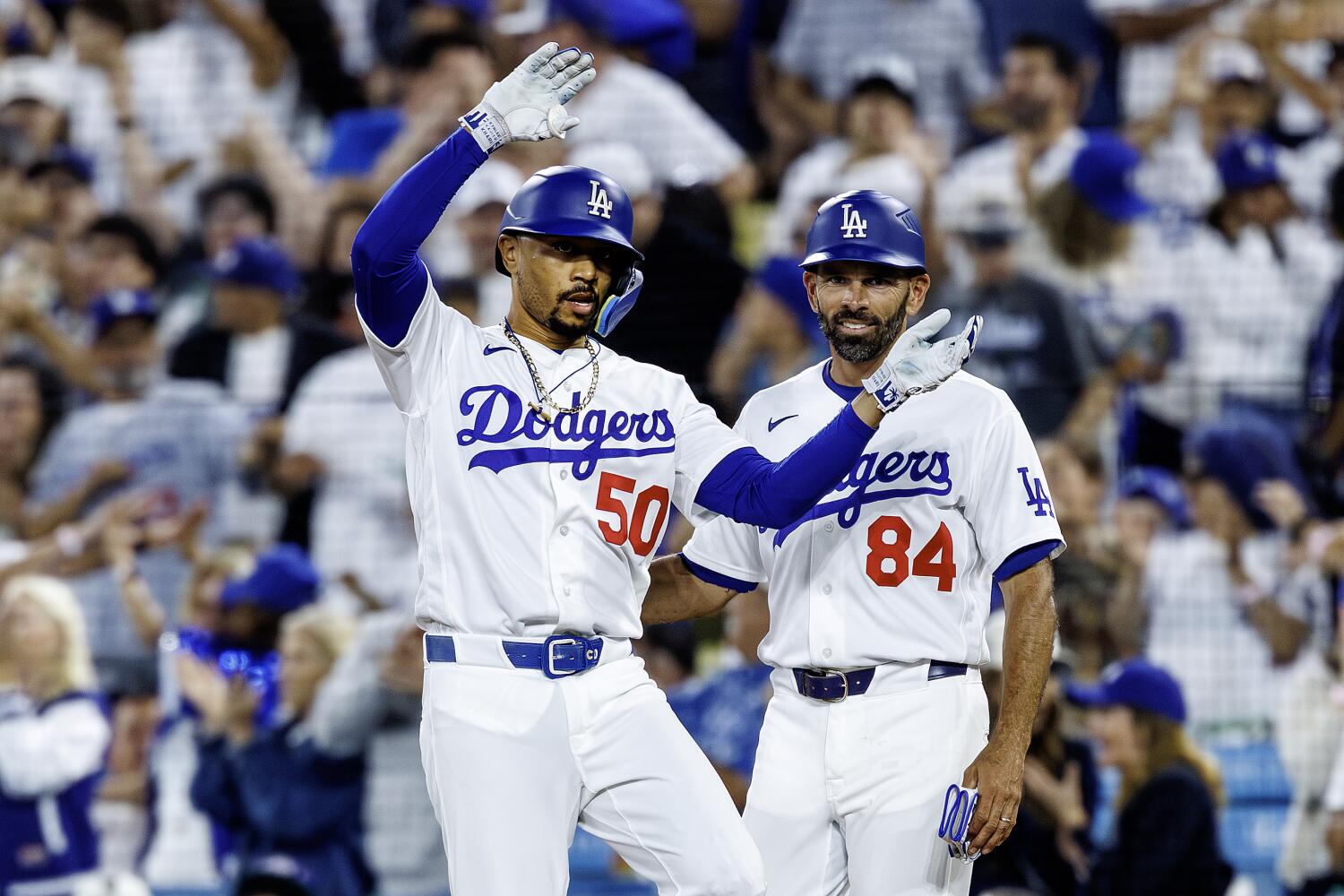
In high-leverage late-inning situations, Major League Baseball games are won not by chance, but by the precise intersection of pitcher-batter sequencing, mechanical efficiency, and tactical positioning. When Mookie Betts drove an eighth-inning single to secure a Los Angeles Dodgers victory over the Colorado Rockies, standard sports journalism framed it as a clutch moment of individual heroism. A rigorous analytical breakdown reveals it as the inevitable outcome of a high-stress tactical equation. By evaluating the structural variables of this plate appearance—specifically leverage index, pitch sequencing vulnerability, and batter-profile optimization—we can dissect exactly how the Dodgers manufactured this winning edge.
The anatomy of a late-inning rally depends on three distinct operational pillars:
- The Leverage Environment: The baseline run expectancy shifted dramatically based on base-out configurations in the eighth inning.
- The Arsenal Mismatch: The pitcher’s linear velocity and movement profile ran directly into the batter’s optimal launch angle and contact zones.
- Defensive Positioning Constraints: The game state restricted the defensive alignment, expanding the high-probability hit locations on the field.
The Leverage Index and Run Expectancy Framework
To understand why the eighth inning became the inflection point of the match, one must look at the Leverage Index (LI). A standard mid-game plate appearance holds a baseline LI of 1.0. When the Dodgers entered the bottom of the eighth inning in a tied or one-run state, the LI spiked into high-leverage territory (exceeding 2.0).
Under the Run Expectancy Matrix (RE24), the value of a single base runner increases exponentially when transitioning from zero outs to one out. When a runner reached scoring position prior to Betts stepping into the batter's box, the Rockies' defensive run expectancy surged. The pitcher was forced into a binary execution matrix: hunt for a strikeout using high-risk, high-reward secondary pitches, or attack the strike zone with fastballs to avoid a catastrophic walk that would compound the baseline traffic.
This environment strips away a pitcher's ability to nibble at the margins of the zone. The physical reality of a high-leverage state imposes a cognitive load that frequently causes a degradation in pitch command, manifesting as a mechanical breakdown known as "mishit location."
Deconstructing the Arsenal Mismatch
The confrontation between Betts and the Rockies' relief arm hinged on a fundamental mismatch in velocity vectors. Relief pitchers frequently rely on a high-velocity, two-pitch mix—typically a four-seam fastball paired with a horizontal or vertical breaking ball (slider or sweeper). The strategic flaw in this approach against an elite contact hitter lies in predictability.
[Pitcher's High-Velocity Fastball] -> Upper Quad Targeting -> [Betts' Elite Vertical Bat Angle] -> High-Probability Line Drive
[Pitcher's Secondary Breaking Ball] -> Low-Zone Deviation -> [Take/Ball Count Disadvantage] -> Forced Zone Inbound
Betts possesses one of the shortest, most efficient hand paths in modern baseball. His swing mechanics are optimized to neutralize high velocity by maintaining a flat vertical bat angle (VBA) through the upper quadrants of the strike zone.
- The First Velocity Tax: The pitcher attempted to establish the zone with a high-spin four-seam fastball. Because Betts demonstrates elite rotational acceleration, the perceived velocity of the pitch was effectively mitigated.
- The Breaking Pitch Failure: When the pitcher attempted to break the plane with a slider, the pitch failed to achieve optimal vertical drop, hanging in the middle-third of the plate.
- The Contact Execution: Betts adjusted his hip rotation within a window of milliseconds, transforming a pitch designed to generate a swing-and-miss into an ideal barrel-contact event.
The physics of the contact itself dictate the outcome. With an exit velocity exceeding 100 miles per hour at a low launch angle (between 10 and 15 degrees), the ball was projected into the outfield before the defense could structurally adjust their shifts.
Defensive Restraints and the Geometry of the Hit
The Rockies' defensive alignment during the eighth inning faced a mathematical bottleneck. With a runner on second base, the middle infielders could not play deep or shift aggressively toward the pull side without conceding a massive stolen base or advancing-grounder advantage.
The shortstop was forced to hold a tighter position to the second-base bag to limit the runner's secondary lead. This widened the hole between the third baseman and the shortstop, creating a high-probability hit corridor. When Betts initiated contact, the ball traveled directly through this vacated zone. The play was a function of field geometry:
- The left fielder was playing at a depth designed to prevent an extra-base blow over his head, neutralizing his ability to charge a sharp line drive.
- The third baseman was positioned shallow to protect against a potential bunt or soft contact, reducing his lateral reaction time.
- The shortstop's positioning liability left the left-side hole entirely undefended against a high-velocity grounder or low line drive.
This confirms that the single was not an anomaly, but rather a direct exploitation of standard defensive mandates in late-game scenarios.
Systemic Risks and Strategy Limitations
While the Dodgers executed this sequence flawlessly, reliance on late-inning high-leverage hits exposes a structural vulnerability in long-term team design. Compounding wins through late-game rallies places an unsustainable stress load on a team's offensive efficiency metrics.
The primary limitation of this tactical model is its dependency on sequencing luck. If the preceding batters fail to achieve a base-on-balls or a high-BABIP (Batting Average on Balls in Play) event to set the table, an elite hitter's high-leverage plate appearance can be entirely bypassed via an intentional walk. Teams that fail to build early-inning run cushions consistently deplete their high-leverage bullpen arms, creating a negative performance cascade in subsequent games.
To counter this operational vulnerability, future tactical deployments must focus on maximizing early-game run-differentiation metrics, treating eighth-inning execution as a secondary safety valve rather than a primary win engine. The optimal strategic play moving forward is the systematic exploitation of the opposing bullpen’s pitch-mix design from the sixth inning onward, rather than waiting for the leverage index to force a crisis point.