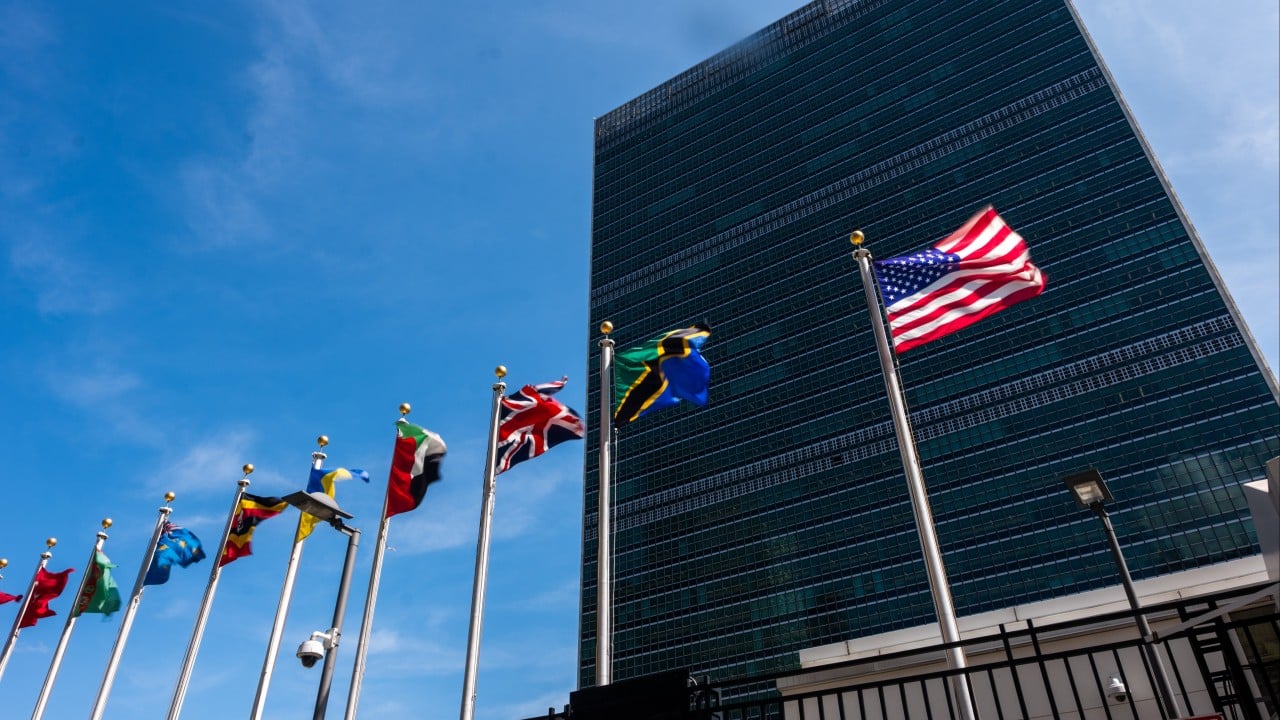
When a wartime standoff stretches across months, diplomacy usually takes a backseat to artillery. Yet, Washington recently made a jarring exception. The US government approved visas for top Iranian leaders—including President Masoud Pezeshkian and Foreign Minister Abbas Araghchi—to touch down in New York for the United Nations General Assembly.
It sounds counterintuitive. Why roll out the diplomatic carpet for a regime you are actively locking down with a naval blockade? The answer comes down to the legally binding obligations of hosting international bodies, mixed with a heavy dose of strict surveillance.
The Real Reason Washington Said Yes
Let us clear up the legal reality right away. As the host nation for the United Nations headquarters, the United States is bound by the 1947 UN Headquarters Agreement. Refusing entry outright to foreign delegations isn't as simple as checking a box on a denied travel form. Doing so invites global backlash and threatens the very fabric of international diplomacy.
Still, Washington didn't hand over those visas without putting up a fence. The State Department slapped severe limitations on the Iranian delegation. Officials made it clear that President Pezeshkian and his staff wouldn't be taking casual strolls around Manhattan or going on shopping sprees while regular Iranians face soaring inflation and severe supply shortages back home. Their footprint was restricted, the delegation size was slashed compared to previous years, and every movement was monitored under tight security protocols.
What the Headlines Miss About Wartime Optics
Most mainstream coverage treats this visit as a simple friction point between two warring nations. It is much more than that. It is a high-stakes psychological chess match.
When Iranian leadership took the podium at the UN, they weren't just speaking to empty chairs or sympathetic allies. They were broadcasting straight to an American audience and a fractured international community. President Pezeshkian framed his country as a victim of foreign pressure, while US officials countered by defending their ongoing military actions and economic blockades.
Think about the absurdity of the scene. On one side of the world, navies enforce a strict counterblockade, oil tankers burn in the strategic waterways of the Persian Gulf, and defense infrastructure takes a pounding. On the other side, those exact same adversaries share a zip code in midtown Manhattan for a few days of tense handshakes and fiery speeches.
Navigating the Fallout
Critics on both sides of the aisle hate this kind of diplomatic theater. Hardliners in Washington argue that rolling out the red carpet—even a heavily restricted one—rewards a hostile state. Meanwhile, Tehran's state media routinely slams the US for heavy-handed visa restrictions on media teams and auxiliary staff, claiming Washington tries to censor opposing narratives.
Yet, shutting down communication entirely during a military crisis is a dangerous game. Channels need to stay open, even if they are strained to the breaking point. Whether these brief encounters in New York pave the way for actual de-escalation or just provide another stage for propaganda remains to be seen.
Keep an eye on how backdoor channels utilize these physical meetings. Real breakthroughs rarely happen in front of the UN cameras anyway. They happen in the quiet side rooms long after the press pool leaves the building.
US allows Iranian delegation to attend UN General Assembly in New York
This video provides additional context and reporting regarding the US decision to grant visas to the Iranian delegation during heightened geopolitical tensions.