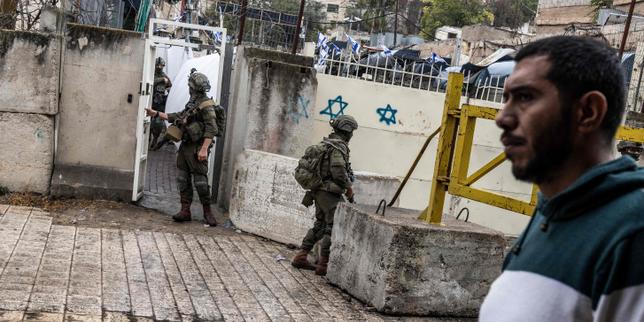
Standard reporting on fatalities involving minors in the occupied West Bank relies on episodic incident summaries that obscure the systemic mechanics of military occupation. When a 14-year-old Palestinian is killed during an Israeli military operation, surface-level journalism records the casualty, quotes competing institutional narratives, and moves to the next news cycle. To understand why these fatalities recur with predictable frequency, analysts must examine the structural architecture governing military deployments, rules of engagement, legal accountability frameworks, and asymmetric force encounters in Areas A, B, and C.
The Structural Architecture of Military Incursions
The operational environment in the occupied West Bank is defined by the jurisdictional divisions established under the Oslo Accords, which partitioned the territory into three distinct administrative zones. While Area A was designated for full civil and security control by the Palestinian Authority, Israeli military forces routinely conduct nocturnal and daytime raids across all zones under the doctrine of preemptive counterterrorism.
These operations follow a standardized tactical sequence that creates high-probability friction points between heavily armed infantry units and civilian populations:
- Perimeter Encirclement: Armored vehicles and infantry squads enter densely populated urban centers or refugee camps to isolate a target structure, immediately disrupting normal civilian movement.
- Crowd Convergence: The presence of military vehicles triggers localized resistance, typically involving youths throwing stones, incendiary devices, or fireworks at armored transports.
- Escalation of Force: Soldiers operating inside hostile, confined urban terrain apply force-protection protocols designed to neutralize perceived threats before they breach a defensive perimeter.
- Extraction and Post-Incident Reporting: Following the arrest or neutralization of the primary target, units withdraw, leaving local medical personnel to document casualties and military spokespersons to issue standardized justifications.
The friction in this cycle stems from the deployment of conventional combat units into civilian policing environments. Infantry soldiers trained for high-intensity warfare operate with battlefield threat assessments in neighborhoods where combatants and non-combatants occupy the exact same physical space.
Rules of Engagement and Threat Assessment Mechanics
The core driver of juvenile fatalities during West Bank operations is the legal and operational definition of an imminent mortal threat within the Israel Defense Forces (IDF) Open-Fire Regulations. While the exact text of these classified directives remains confidential, operational patterns and testimonies from former military personnel reveal a progressive expansion of lethal force authorization.
Under classical international humanitarian law, lethal force during law enforcement operations is restricted to scenarios posing an immediate threat to life. In practice, operational directives in the West Bank frequently equate specific kinetic actions—such as throwing stones at moving vehicles, launching fireworks, or holding objects suspected of being explosive devices—with lethal threats.
This creates a profound asymmetry in risk distribution:
- Force Protection Prioritization: Military doctrine places the physical safety of soldiers above the minimization of civilian casualties during arrest raids. When an infantry squad faces projectile fire from a crowd, standard operating procedure permits live ammunition targeting the lower extremities, though high-stress environments and moving targets frequently result in lethal torso or head wounds.
- The Visual Identification Deficit: Operations frequently occur at night, in poorly lit alleys, or amidst tear gas and stun grenade smoke. Distinguishing between a 14-year-old holding a stone, a firework, or an improvised explosive device within a two-second decision window exceeds human perceptual limits under combat stress.
- Deterrence Doctrine: Beyond immediate self-defense, lethal responses function as an informal crowd-dispersal mechanism. Rapid, high-consequence retaliation is utilized to suppress mass mobilization before crowds can overwhelm small tactical units.
The Accountability Vacuum and Institutional Incentives
Behavioral economics dictates that institutional actors respond to the incentive structures and penalty mechanisms enforcing their rules. Within the Israeli military justice system, the investigation and prosecution of lethal incidents involving Palestinian minors exhibit severe structural bottlenecks that neutralize deterrence against excessive force.
When a minor is killed, the Military Police Criminal Investigation Division (MPCID) does not automatically launch a criminal inquiry. Instead, the incident undergoes an initial operational debriefing conducted by the chain of command involved in the event. This creates an immediate conflict of interest, as commanders evaluate the legality of orders they themselves authorized.
The progression from incident to legal resolution typically stalls across three distinct phases:
- Evidentiary Degradation: Because the military rarely secures the scene for forensic collection after a raid, physical evidence—such as shell casings, bullet trajectories, and environmental obstructions—is lost or contaminated before investigators arrive.
- Testimonial Asymmetry: Military prosecutors rely heavily on the operational testimonies of the soldiers involved, treating them as credible baseline accounts unless contradicted by indisputable video evidence. Palestinian eyewitness testimonies are routinely discounted due to perceived bias or lack of corroborating physical forensics.
- The Reasonable Mistake Standard: Legal evaluations assess whether a soldier acted reasonably based on their subjective perception of danger at the moment of firing, rather than objective post-incident reality. If a soldier testifies that a teenager appeared to reach for a weapon, the resulting fatality is classified as an operational error rather than a criminal offense.
Data compiled by human rights monitors consistently demonstrates that fewer than one percent of complaints regarding military offenses against Palestinians result in indictments. Without credible legal consequences, frontline units face zero institutional penalty for erring on the side of lethal force.
Media Framing and the Asymmetry of Information
Standard journalistic coverage of these incidents reinforces public misunderstanding by adopting passive linguistic structures and false equivalence. When reporting the death of a 14-year-old, mainstream outlets frequently rely on institutional press releases that frame the event as an unavoidable clash rather than the predictable output of specific military policies.
Three specific framing mechanisms distort public comprehension:
- Agency Erasure: Headlines routinely state that a teenager "died during clashes" or "was killed in gunfire," obscuring the active decision-making chain that placed live ammunition on a lethal trajectory.
- Premature Threat Validation: Military statements claiming that troops fired at "suspects who hurled rocks and posed a threat" are published verbatim in opening paragraphs, embedding the military's legal defense as objective fact before independent verification occurs.
- Contextual Amnesia: By treating each fatality as an isolated breaking-news event, articles fail to connect the incident to broader statistical trends, legislative shifts in open-fire regulations, or the expansion of military operations in specific governorates like Jenin, Nablus, or Ramallah.
Strategic Forecast and Policy Interventions
Reversing the trajectory of juvenile fatalities in the occupied West Bank requires dismantling the structural incentives that normalize lethal force in civilian environments. Relying on internal military reviews or diplomatic expressions of concern will yield zero measurable reduction in casualty rates, as neither alters the tactical calculus on the ground.
To alter operational outcomes, external and internal stakeholders must enforce three structural changes:
- Mandatory External Forensics: Establish independent, internationally monitored investigative mechanisms with immediate access to incident scenes, bypassing internal chain-of-command debriefings whenever a minor is killed.
- Revision of Open-Fire Directives: Explicitly remove non-firearm projectiles—including stones and fireworks—from the category of threats authorizing live-fire responses, restricting infantry units to non-lethal crowd dispersal tools unless confronted with verified firearms.
- Command Liability Enforcement: Shift legal accountability from individual low-ranking soldiers to the operational commanders who authorize high-risk raids in densely populated civilian centers without adequate non-lethal containment protocols.
Until the legal and political costs of civilian fatalities outweigh the tactical convenience of aggressive force-protection doctrines, lethal encounters involving minors will remain a permanent, systemic feature of military operations in the West Bank.