A ten-year-old boy sits at a wooden desk in a sun-drenched classroom in Tehran. The air smells of cedar shavings and industrial floor wax. He opens his mathematics workbook, ready to tackle the day’s equations. But the variables aren't apples or oranges. They aren't train schedules or the velocity of a falling ball.
Instead, the word problems ask him to calculate the trajectory of a missile. He is instructed to determine the distance required to strike a specific target across a map. The numbers are precise. The geometry is sound. But the soul of the lesson is something else entirely.
Education is usually a bridge to the future. In certain corners of the world, however, it is being forged into a weapon. A recent analysis of Iranian school textbooks reveals a curriculum that has moved beyond simple national pride into a territory of systemic, pedagogical warfare. The "Great Satan" isn't just a political slogan shouted in the streets; it is now a foundational element of a child’s literacy.
The Vocabulary of the Void
In the West, we often view textbooks as neutral vessels of consensus. We trust that a history book might have a slight bias, but that the hard sciences remain untouched by the whims of the state. In Iran, the wall between the lab and the pulpit has collapsed.
Consider the shift in how a child learns to read. The primers don't just teach the alphabet; they teach the identity of the enemy. The United States is presented not as a nation or a culture, but as a metaphysical entity of pure malevolence. By the time a student reaches the fourth grade, the concept of the "Great Satan" is as chemically stable to them as oxygen or water. It is a fact of nature.
This isn't merely about propaganda. It is about the "invisible stakes"—the gradual reshaping of a human brain’s empathy centers. When you teach a child that an entire swath of the globe is inherently demonic, you aren't just teaching history. You are performing a pre-emptive strike on their ability to perceive common humanity. You are cauterizing their curiosity before it can ever reach across a border.
The Ballistics of the Blackboard
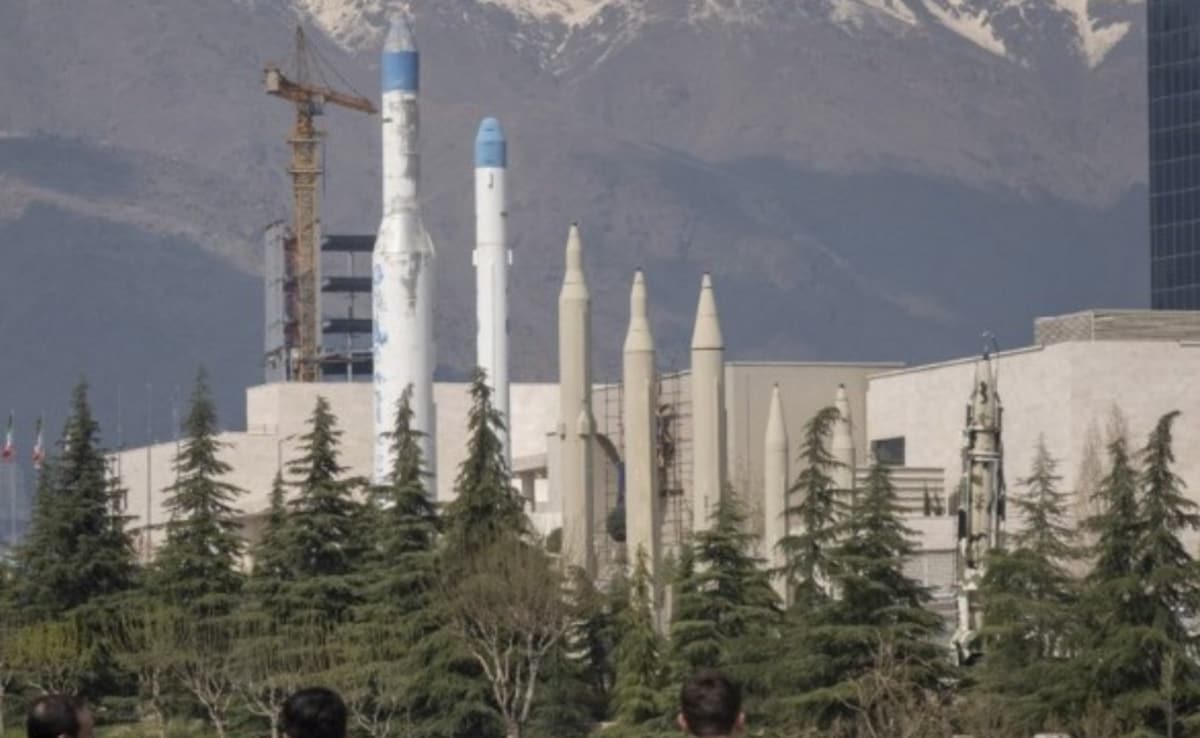
The inclusion of "missile math" is perhaps the most chilling development in this pedagogical shift. Mathematics is the universal language. It is supposed to be the one place where truth is indisputable and objective. $2 + 2$ equals $4$ in New York, and it equals $4$ in Shiraz.
But when you wrap that $2 + 2$ in the casing of a long-range rocket, the math changes meaning. It becomes a rehearsal.
Imagine a hypothetical student named Amir. Amir is gifted. He loves the way numbers snap together like magnets. He spends his evenings solving for $x$. But the $x$ in his textbook represents the impact point of a strike against a naval vessel in the Persian Gulf. As he masters the Pythagorean theorem, he is simultaneously mastering the logistics of destruction. The beauty of the equation is inextricably linked to the horror of its application.
The report highlights that these textbooks aren't just radicalizing the outliers; they are standardizing radicalization for millions. This is the industrialization of the martyr complex. By embedding military objectives into the core curriculum, the state ensures that a child cannot become an engineer without also becoming, in spirit, a soldier.
The Erasure of the Other
History is always a story told by the winners, or at least by those currently in power. In these textbooks, the narrative of the last century is stripped of its nuances and replaced with a singular arc of victimhood and vengeance.
The books carefully omit the shared cultural triumphs of the global community. There is no mention of the collaborative spirit of scientific discovery or the universal declarations of rights that bind disparate peoples together. Instead, the world is a dark, predatory place where the "Great Satan" lurks behind every economic shift and every cultural export.
This creates a profound psychological isolation. When a student is told from age six that the outside world is a hunting ground, the walls of their classroom begin to feel like the walls of a fortress. Paranoia becomes a survival skill.
We often talk about "radicalization" as something that happens in dark corners of the internet or in secret meetings. We forget that the most effective radicalization happens in the bright light of a Tuesday morning, under the supervision of a teacher the child respects, using a book stamped with the seal of the government. It is official. It is sanctioned. It is "truth."
The Cost of a Captured Mind
The tragedy here isn't just political; it is deeply personal. Think of the wasted potential of a generation taught to look at a map and see only targets. The curiosity that should be directed toward solving the climate crisis, curing diseases, or exploring the stars is instead channeled into the cold, hard math of the silo.
There is a specific kind of grief in watching a child’s wonder be harvested for the state. A child is born a blank slate of potential connections. They have no natural enemy. They have to be taught who to hate. They have to be coached on how to narrow their eyes when they hear a foreign tongue.
The "missile math" is a symptom of a much deeper malady: the fear of a world where children might decide for themselves who the enemy is—or if an enemy needs to exist at all. By hard-coding the conflict into the curriculum, the authorities are attempting to colonize the future. They are trying to ensure that even after the current leaders are gone, the hatred will remain, preserved in the notebooks and the memories of the youth.
The Invisible Border
Behind the headlines about geopolitical tensions and nuclear deals, there is a quieter, more permanent war being waged. It is the war for the internal landscape of the next generation. If you can control what a ten-year-old calculates in his workbook, you don't need to worry about his politics when he is twenty. You have already built the cage.
The math stays the same. The physics of a missile are the same physics that launch a satellite or keep a bridge standing. The equations are indifferent to the blood they might eventually spill. But the boy at the desk is not indifferent. He is learning. He is absorbing. He is becoming the person the book wants him to be.
He finishes his calculation. He draws a circle around the final number. He has found the answer. He pack his bag and walks out into the sunlight, a small, walking piece of a much larger, much darker plan, carrying the weight of a war he didn't start in a backpack he is still growing into.