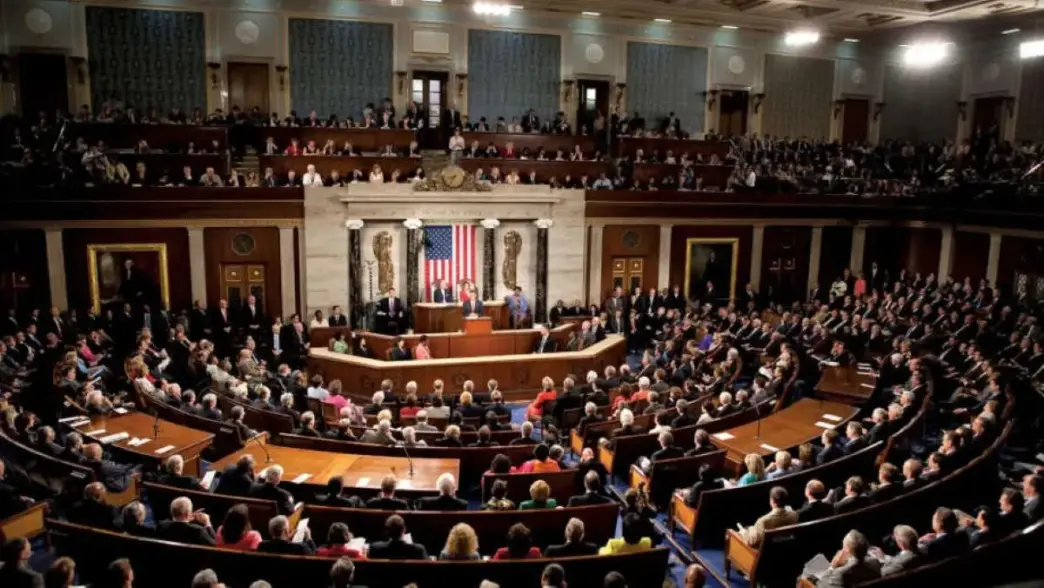
Legislative output in a newly reordered Congress is not determined by party manifestos or campaign rhetoric; it is governed by procedural friction, margin arithmetic, and the ticking clock of the budget cycle. When lawmakers return to Washington following a realignment of institutional power, an undefined or "hazy" agenda is rarely a sign of strategic incompetence. It is the predictable equilibrium state when razor-thin floor majorities collide with rigid committee bottlenecks and mandatory fiscal deadlines. Understanding what Congress will actually execute requires mapping the structural constraints of the legislative chamber rather than listening to leadership talking points.
The Structural Anatomy of a Hazy Agenda
Media narratives frequently misinterpret a lack of early legislative specificity as confusion among party leaders. In operational terms, strategic ambiguity is a survival mechanism for leadership operating with narrow vote margins. When a party holds control of the House or Senate by single-digit seats, committing early to granular policy text alienates moderate members in swing districts before whip counts can even begin.
Leadership delays specific legislative text to preserve coalition cohesion during the initial organizational phase. This creates a vacuum that outside observers label a hazy agenda, though insiders recognize it as deliberate sequencing. The operational reality breaks down into three distinct structural phases:
- The Organizational Freeze: Before a single bill reaches the floor, leadership must negotiate committee ratios, gavel assignments, and chamber rules packages. Every concession made to secure the Speaker’s gavel or committee chairmanships directly restricts what can later be brought to the floor. If a rules package lowers the threshold for a motion to vacate or mandates an open amendment process, the leadership's ability to pass complex, controversial legislation drops precipitously.
- The Information Asymmetry Gap: Incoming committee chairs and newly realigned leadership teams inherit unfinished oversight investigations, expiring statutory authorizations, and updated baseline projections from the Congressional Budget Office (CBO). Until staff directors audit the exact fiscal score of proposed priorities, publishing concrete legislative targets exposes the party to immediate scoring failures under Pay-As-You-Go (PAYGO) rules.
- The Rhetoric-to-Text Compression: Campaign platforms are written in broad, aspirational language designed to maximize voter turnout. Converting those slogans into statutory language forces zero-sum trade-offs between competing factions within the same caucus. A hazy agenda is simply the visible friction of that conversion process.
The Three Constraints Dictating Floor Action
Regardless of what party leaders claim they want to pass upon returning to Washington, actual floor time is rationed by three immovable institutional constraints. Any legislative priority that fails to clear all three bottlenecks remains a messaging bill rather than a viable statute.
1. The Margin-to-Defection Ratio
In a chamber with narrow partisan control, individual lawmakers possess maximal extortion power. Under basic game theory, when the governing majority cannot afford more than two or three defections on a party-line vote, every distinct ideological faction—and every vulnerable swing-district incumbent—effectively holds a unilateral veto.
This dynamic alters the cost function of passing legislation. Leadership cannot rely on whip operations alone to manufacture consensus; they must either strip out controversial provisions until the bill becomes innocuous, or attach high-value regional earmarks and targeted tax carve-outs to buy off holdouts. The result is an inverse relationship between the size of a party's majority and the ideological purity of the bills it can pass without opposition support.
2. The Bicameral and Executive Veto Gates
A reordered Washington rarely means unified, frictionless control across the House, the Senate, and the White House. Even when one party controls all three, the Senate’s 60-vote cloture threshold acts as a permanent structural brake on non-budgetary legislation.
To bypass the filibuster, leadership must route major fiscal priorities through the budget reconciliation process. However, reconciliation is strictly policed by the Senate Parliamentarian under the Byrd Rule, which prohibits extraneous provisions that do not produce a direct change in outlays or revenues. When analysts note that Congress lacks a clear legislative roadmap, they are often observing leadership teams quietly scrubbing their agendas to see which campaign promises can survive a Byrd Rule challenge and which must be abandoned or watered down to attract ten opposition senators.
3. The Tyranny of Mandatory Deadlines
Discretionary floor time is a finite resource. Before Congress can debate new policy initiatives, it must clear a backlog of must-pass statutory deadlines. Failure to act on these items triggers immediate economic or administrative disruption, forcing leadership to push ideological priorities to the back of the calendar.
The primary calendar-consuming mechanisms include:
- Appropriations and the Debt Ceiling: Continuing Resolutions (CRs) and omnibus spending negotiations consume weeks of floor time and political capital. Every temporary funding extension compresses the window available for authorizing committees to move standalone bills.
- Expiring Tax and Program Authorizations: Major statutory frameworks—such as expiring provisions of the tax code, the Farm Bill, or the National Defense Authorization Act (NDAA)—carry built-in expiration cliffs. Interest groups and committee chairs prioritize attaching their niche riders to these moving vehicles rather than risking standalone floor votes.
- Executive Nominations and Judicial Confirmations: In the Senate, floor time is heavily taxed by procedural cloture votes on executive branch and judicial nominees. When the opposition party refuses to grant unanimous consent to speed up debate, a single nomination can burn three days of Senate floor time, starving legislative committees of the bandwidth needed to debate substantive bills.
Procedural Sequencing: How Priorities Actually Move
To predict what a reordered Congress will accomplish, strip away press releases and track procedural vehicles. When an agenda appears undefined at the start of a session, leadership is typically sorting policy goals into four distinct legislative tracks based on their survival probability.
- Track A: The Reconciliation Vehicle. Reserved exclusively for core tax, spending, and mandatory program reforms that can pass with a simple majority in the Senate. Because reconciliation requires passing a concurrent budget resolution first, this track moves slowly in the first quarter of a session while budget committees haggle over top-line spending caps and deficit targets.
- Track B: Bipartisan Reauthorizations. Must-pass bills like defense policy, aviation, or agriculture subsidies. Leadership uses these bills to absorb moderate policy wins that can clear the 60-vote Senate hurdle and earn a presidential signature without fracturing the majority caucus.
- Track C: Congressional Review Act (CRA) Resolutions. If the White House and Congress are misaligned, or if a new majority seeks to unwind late-term regulations from a previous administration, CRA resolutions offer a fast-track mechanism. They bypass the Senate filibuster and require minimal floor time, making them the preferred early output for a leadership team trying to project momentum while major bills remain stuck in committee.
- Track D: Messaging Bills. High-profile bills drafted to satisfy core primary voters or highlight partisan contrasts ahead of the next election cycle. Leadership schedules these for floor votes in the House knowing they will die in the Senate, using the roll call to lock vulnerable opposition members into difficult votes.
Limitations of Legislative Forecasting
Tracking structural bottlenecks and procedural tracks provides a superior baseline for predicting congressional output, yet this analytical model carries distinct operational blind spots. Institutional friction does not account for exogenous shocks. A sudden geopolitical crisis, a domestic banking failure, or an acute supply-chain disruption instantly overrides committee schedules, suspends standard budget scoring rules, and forces emergency bipartisan consensus where gridlock previously existed.
Furthermore, quantitative margin analysis cannot fully model irrational actor behavior. When individual lawmakers prioritize personal media branding and primary election survival over institutional governance, standard whip-count incentives—such as committee assignments or campaign fundraising support—lose their coercive power. In environments with high concentrations of ideological purists, leadership cannot reliably calculate the breaking point of their own coalition until a vote actually fails on the floor.
The Strategic Play for Stakeholders and Analysts
Stop indexing on early-session leadership speeches or broad ideological platforms to gauge Washington's trajectory. Treat the first sixty days of a reordered Congress as an audit of procedural capacity rather than a rollout of policy. To accurately forecast legislative risk and opportunity, execute three specific monitoring steps:
- Audit the Rules Package and Committee Rosters: Read the fine print of the adopted chamber rules and track who holds the swing votes on the House Rules Committee, Ways and Means, and Senate Finance. Power resides with the members who control gatekeeping bottlenecks, not the members dominating cable news segments.
- Map the Expiration Calendar: Align policy tracking exclusively around statutory cliffs—appropriations deadlines, debt limit dates, and expiring tax provisions. Any policy proposal lacking a direct path onto one of these mandatory vehicles should be discounted as pure messaging.
- Track CBO Score Requests: Watch which legislative drafts are formally submitted to the Congressional Budget Office for dynamic or static scoring. A bill does not become a serious legislative vehicle until leadership commits staff resources to clearing its budgetary math.