The ink on a federal mandate does not dry on paper. It dries on skin.
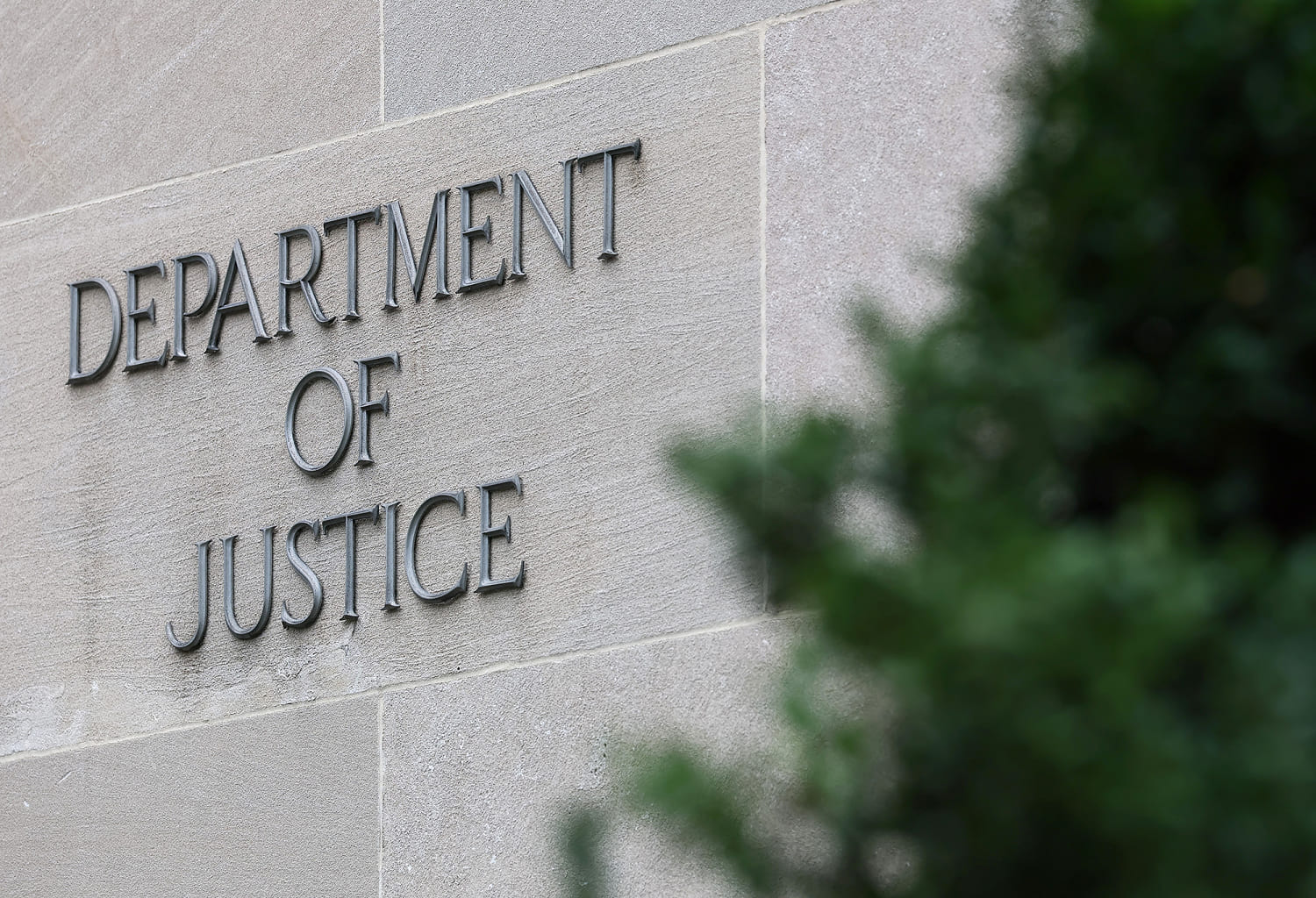
Listen to the hum of the fluorescent lights in a county clerk’s office at four in the afternoon. The linoleum is scuffed by ten thousand footsteps of people looking for a birth certificate, a marriage license, a way to anchor themselves to the map. Behind the counter sits Elena. She has worked this window for twenty-two years. She knows the weight of every filing cabinet drawer, the specific metallic click each one makes when shoved shut against the humid evening air. Today, Elena’s hands hover over a keyboard with a new hesitation. A directive has arrived from Washington. The Department of Justice has drawn a sharp, unyielding line through the ledger of local governance, tying the disbursement of federal grant money—millions of dollars that patch potholes, fund after-school reading programs, and keep local clinics staffed—to a singular, uncompromising demand: report every undocumented immigrant who crosses your path, or watch your city starve for resources.
Paperwork is a quiet weapon. It looks harmless. It looks like a form with boxes to check, data fields to populate, a neat little row of digits sent via encrypted email to a database miles away. But try telling that to Maria.
Maria lives in a third-floor apartment where the radiator sings a metallic clang every winter morning. Her youngest son, Leo, has asthma. When the seasons shift and the Ohio air turns heavy with pollen and damp, Leo’s chest tightens like a fist. For years, Maria’s lifeline has been the community health clinic down the street—a federally funded sanctuary where no one asks for papers before listening to a child’s wheezing lungs through a cold stethoscope. It is a place built on the ancient, quiet pact of medicine: you hurt, I heal.
Now, consider the rupture.
When the Department of Justice mandates that local municipalities track and report undocumented populations as a prerequisite for federal funds, the shockwave does not hit politicians in high-backed chairs. It hits the waiting room of Maria’s clinic. It hits the local police precinct where a woman whose English is threaded with fear hesitates to dial three digits when her partner raises a fist, terrified that a call for rescue will transform into an invitation for deportation.
Trust is an ecosystem. It takes decades to grow and seconds to clear-cut.
To understand the mechanics of this mandate, we have to look past the political rhetoric and examine the cold machinery of federalism. The Department of Justice, operating under the executive branch's broad authority to manage immigration enforcement and condition grants, has increasingly leveraged financial coercion. This is not a new playbook. For decades, Washington has used the purse strings as a cudgel to force compliance from local jurisdictions—remember the federal highway funds withheld until states raised the drinking age to twenty-one? The mechanism is familiar. But the subject matter here is human flesh, not amber waves of grain or pint glasses.
By tying Byrne JAG grants—the primary source of federal justice funding for local police departments—and other community development block grants to mandatory immigration reporting, the federal government forces a profound identity crisis upon local authorities.
Chief Vance of a midwestern police department knows this crisis intimately. I sat with him across a scarred wooden table in a precinct office smelling of cold coffee and old paper. He is a man with silver at his temples and thirty years on the force who didn't sign up to be an immigration agent.
"If people don't trust us, they don't call us," Vance told me, his voice flat, drained of the performative outrage you see on cable news. He wasn't talking theory. He was talking about a homicide investigation from three summers back. A witness saw everything—the car, the license plate, the shooter’s face. That witness stayed hidden in a dark apartment for four days, paralyzed by the fear that stepping forward to help the police would summon ICE to their doorstep. It took Vance personally walking up three flights of stairs, sitting on a worn-out couch, and giving his word as a human being—not just a badge—to draw out the truth.
"If Washington makes me a border guard," Vance said, leaning forward, "my officers stop being peace officers. And a community that won't talk to the police is a community where everybody—documented or not—gets less safe."
This is the central paradox of the DOJ directive. Proponents argue that public safety requires total transparency, that a lawful society cannot function when federal immigration laws are actively blunted by sanctuary policies or local non-cooperation. They view the withholding of funds not as a punishment, but as a corrective measure to align local jurisdictions with federal supremacy. In their view, the law is the law, and federal dollars should not flow to entities that frustrate federal mandates.
Logic has a clean, geometric beauty from a distance. Up close, it bleeds.
Imagine the hypothetical ledger in a city budget office. A shortfall of four million dollars. That is not an abstraction. That is the cancellation of the summer youth employment program. That is the layoff of three public health nurses. That is the rusting bridge left unpainted because the money was diverted to fight a legal battle against a federal mandate or lost entirely for refusing to comply.
The pressure placed on local officials is designed to be irresistible. No mayor can easily look constituents in the eye and say, "We lost our police overtime budget because we chose to protect the privacy of our undocumented neighbors." Conversely, no mayor with a conscience can easily sign a directive that turns local social workers, health inspectors, and beat cops into an arm of federal deportation machinery.
We are watching a slow-motion collision between two different definitions of community. One definition is territorial and legalistic—bounded by borders, defined by papers, policed by compliance. The other is relational and immediate—defined by proximity, sustained by mutual survival, bound by the simple fact that if the child in the third-floor apartment stops breathing in the middle of the night, the whole street feels the silence.
When federal power reaches down into the daily machinery of local life, it forces everyone to choose which ledger they are keeping.
Elena is still sitting at her desk in the county clerk’s office. The clock on the wall ticks with a heavy, deliberate rhythm. She has a stack of forms in front of her, new fields added to the bottom of the page, gray boxes waiting for checkmarks that will determine who belongs and who does not, who is counted and who is cast out into the shadows.
Outside, the rain begins to tap against the tall, drafty windows. Somewhere down the street, Leo’s mother is turning the dial on a vaporizer, listening to the labored rattle of her son’s breath, wondering if tomorrow is the day she stops trusting the clinic down the road.
The mandate is law. The funds are leveraged. The machinery is moving. But in the quiet spaces between the paragraphs, the human cost remains uncounted, waiting for someone to brave the dark and write it down.