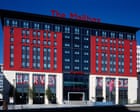
The floorboards of the Mailbox in Birmingham remember the sound of heels that meant business. For a quarter of a century, they absorbed the quiet squeak of designer loafers, the sharp click of stiletto tips on polished stone, and the soft rustle of heavy shopping bags carrying things people did not strictly need, but desperately wanted.
Luxury is an atmosphere. It smells like crushed velvet, cold glass, and expensive perfume sprayed with polite restraint.
Soon, that air will clear out entirely. Harvey Nichols is leaving.
When the news broke that the Birmingham flagship store would close its doors for good in January, it arrived with the clinical coldness of a corporate press release. Fifty thousand square feet of high fashion, fine dining, and curated indulgence reduced to a timeline and a severance notice. But numbers on a spreadsheet miss the human architecture of what a place like that actually means to a city trying to reinvent its own reflection.
Consider Sarah, a hypothetical personal shopper who has spent ten years learning the subtle art of the unsaid. She knows which clients come in because they have just received a promotion they worked a decade for, and which ones come in because their marriage is quietly dissolving over breakfast. To Sarah, the store was never just a collection of racks; it was a stage where people came to try on a better version of themselves. A silk blouse isn’t just fabric when you are wearing it to a first interview after five years out of the workforce. It armor.
When a luxury anchor store pulls up its stakes, it takes the armor with it.
The story of Harvey Nichols in Birmingham is really the story of how cities change their minds about themselves. Back in 2001, when the store first opened its doors in the newly minted Mailbox development, Birmingham was clawing its way out of its industrial past. It was shedding the soot of the engine room and learning how to wear a sleek, modern jacket. The arrival of the Knightsbridge giant wasn't just retail expansion. It was a validation stamp. It said: Birmingham is ready for the extraordinary.
For years, it delivered. The fourth-floor restaurant became the site of whispered business deals, celebratory champagne toasts after court victories, and long, slow Sunday lunches where time felt elastic. It was a social living room for a new kind of Midland elite—people who didn't need to catch a train to London to buy a Balenciaga coat or a bespoke timepiece. They could get it right here, overlooking the quiet curve of the canal.
Retail is shifting beneath our feet like tectonic plates. The traditional department store model, once the unshakeable titan of British commerce, is straining under the weight of shifting consumer habits, soaring operational costs, and the relentless gravitational pull of digital storefronts. People still want luxury, but the way they buy it has mutated. Why brave the January chill and pay city-center parking rates when an algorithm can drop a monogrammed box on your doorstep before you finish your morning coffee?
Yet, algorithms cannot pour a glass of champagne. They cannot look at a client standing in front of a three-way mirror and gently say, "No, darling, let’s try the navy; it respects you more."
The closure is a symptom of a larger, quieter grief happening across high streets everywhere. We are trading physical friction for digital frictionless efficiency, and we are losing the accidental intimacy of the public square in the process. When you walk through a department store, you rub shoulders with strangers. You smell the strange mix of twenty different perfumes. You see someone laugh too loud over a cappuccino, or a child pressing their nose against a glass display case filled with glittering watches they will never own. That shared physical reality is the glue of urban life.
As the final weeks tick down toward January, the mood inside the Birmingham store is inevitably complex. There will be final clearance sales where the discounts grow steeper by the day, transforming reverence into a frantic scramble for bargains. Racks that once held untouchable elegance will look picked over, sparse, almost skeletal.
That is the hardest part to watch. Not just the empty space left behind, but the indignity of the unravelling.
Retail spaces do not die quietly. They echo with ghosts of past seasons, forgotten trends, and the personal histories of the people who worked the floors for decades. For the staff packing up the designer labels into cardboard boxes, this isn't just a job search; it is the end of an era defined by a very specific kind of elegance. They knew every corner of that building, every shadow thrown by the designer lighting, every regulars coffee order.
When the last shopper walks out those doors in January and the security shutters pull down for the very last time, the Mailbox will feel a little heavier, a little quieter. The canal outside will keep moving, indifferent to the shifting tides of retail. But the city will have lost a landmark that proved, if only for a few decades, that Birmingham could sparkle just as brightly as any capital in the world.
The velvet is coming down. The lights are dimming. And the space left in the heart of the city waits to see what ambition will dare to fill the void next.