The chalk dust on old blackboards used to smell of gypsum and ambition. Today, the dust smells of scorched composite and recycled air.
Thirty miles outside Beijing, in a windowless auditorium lit by the cold glare of diagnostic monitors, a nineteen-year-old engineering cadet named Chen draws a precise vector on a glass slate. He is tracing the projected orbital decay of a reconnaissance satellite. His hands do not shake. He has spent the last four years drilling for this exact fraction of a second, waking before dawn to study the orbital mechanics of near-Earth space with the monastic discipline of a concert pianist preparing for a lifetime recital.
Across the Pacific, in a quiet congressional hearing room in Washington, lawmakers pore over satellite imagery of that same facility. They see the sprawling training grounds, the centrifuges spinning day and night, the massive mock-ups of modular space stations. They see a nation that has decided the high frontier is not a playground for billionaires or a secondary theater of scientific curiosity, but the ultimate high ground of sovereign survival.
Panic has a way of concentrating the mind.
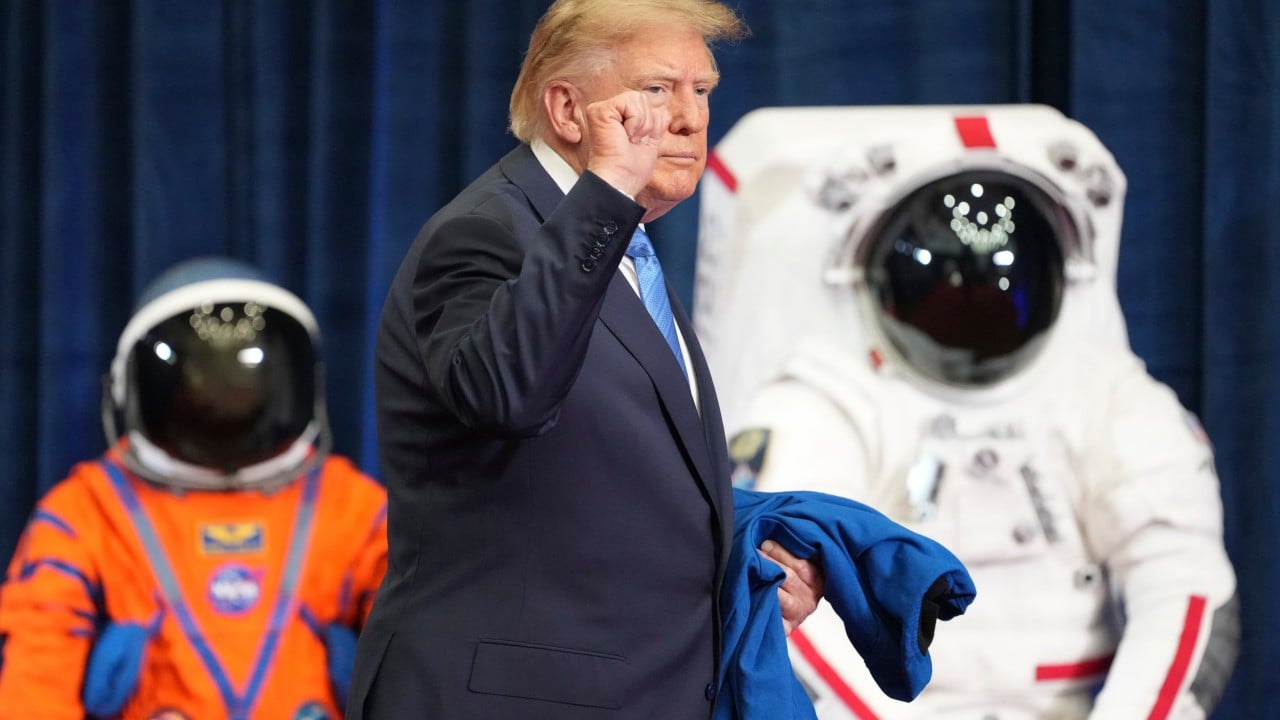
When Donald Trump signed the directive ordering the creation of the United States Space Academy, the headlines treated it as political theater. Another acronym. Another bureaucratic flagpole planted in the dirt of a crowded federal budget. But anyone who has spent time watching the slow, grinding machinery of geopolitical rivalry knows the truth. Institutions do not start as concrete. They start as fear.
Consider what happens next: a generation of young Americans, raised on TikTok and quiet despair about terrestrial housing markets, are suddenly being offered a different kind of horizon. They are being told that the sky is no longer a ceiling, but a combat zone. Or worse, a vacuum waiting to be claimed by someone else.
I remember standing on the tarmac at Cape Canaveral a decade ago, watching a Falcon heavy thunder into the Atlantic sky. The sound hit you in the chest long before the fire reached your eyes. It rattled your teeth. It made you feel small in the best possible way—the terrifying, exhilarating realization that humanity was clawing its way off the rock. But rockets are just the hardware. They are the shiny toys we use to distract ourselves from the biological reality of the operators inside them. Who flies them? Who fixes the station when a micrometeoroid punches a hole through the radiator at seventeen thousand miles per hour? Who makes the split-second calculation when a communications blackout cuts off Houston?
Right now, the answer is a patchwork of military contractors, aging NASA veterans, and civilian aerospace engineers who learned their trade by trial and error. It is messy. It is ad hoc.
China understood this vulnerability years ago. While American politicians argued over appropriations bills and the definition of a Guardian, Beijing built schools. They built specialized academies designed to pipeline teenagers directly from secondary school into the specialized physics and propulsion tracks required to master orbital logistics. They didn't just build rockets; they built a breeding ground for the people who command them.
The proposed United States Space Academy is Washington’s belated acknowledgment that you cannot out-innovate an institutional rival with temporary contracts and goodwill. You need a dedicated forge.
Imagine a cadet named Maya sitting at a metallic desk in a newly minted Colorado campus. She is nineteen. She doesn't want to conquer the stars out of romantic idealism; she grew up watching climate refugees clog the highways and supply chains collapse during cyberattacks. To her, space isn't poetry. It's high ground. It's GPS integrity. It's secure communication channels for emergency responders down below.
She stares at a rendering of a cislunar transfer orbit. The math is brutal. If she misses her burn by a tenth of a degree, a multi-million-dollar supply vessel misses the lunar gateway entirely, tumbling uselessly into the silent deep.
The stress is absolute.
Critics will argue that militarizing the educational pipeline of space exploration taints humanity's greatest cooperative enterprise. They will point to the Outer Space Treaty and mutter about weaponization. But that idealism is a luxury paid for by oceans. Out there, five hundred miles above your head, commercial satellites dodge anonymous debris fields every single day. A silent, invisible war of electronic jamming and orbital shadowing is already being fought by people whose names you will never know.
The Space Academy is designed to institutionalize that reality. It takes the raw, chaotic energy of American technological ingenuity and channels it into a disciplined, repeatable process.
History teaches us that nations rise and fall based on their ability to master logistics. Rome had its roads. Britain had its ships. The twenty-first century belongs to whoever controls the narrow corridor between the upper atmosphere and the moon.
When Chen looks up from his glass slate in Beijing, he sees a destiny forged by state planning. When Maya looks up from her terminal in Colorado, she sees a challenge issued by a rival who refuses to wait for permission.
The blackboard is gone. The chalk has turned to stardust. And the bell is ringing.