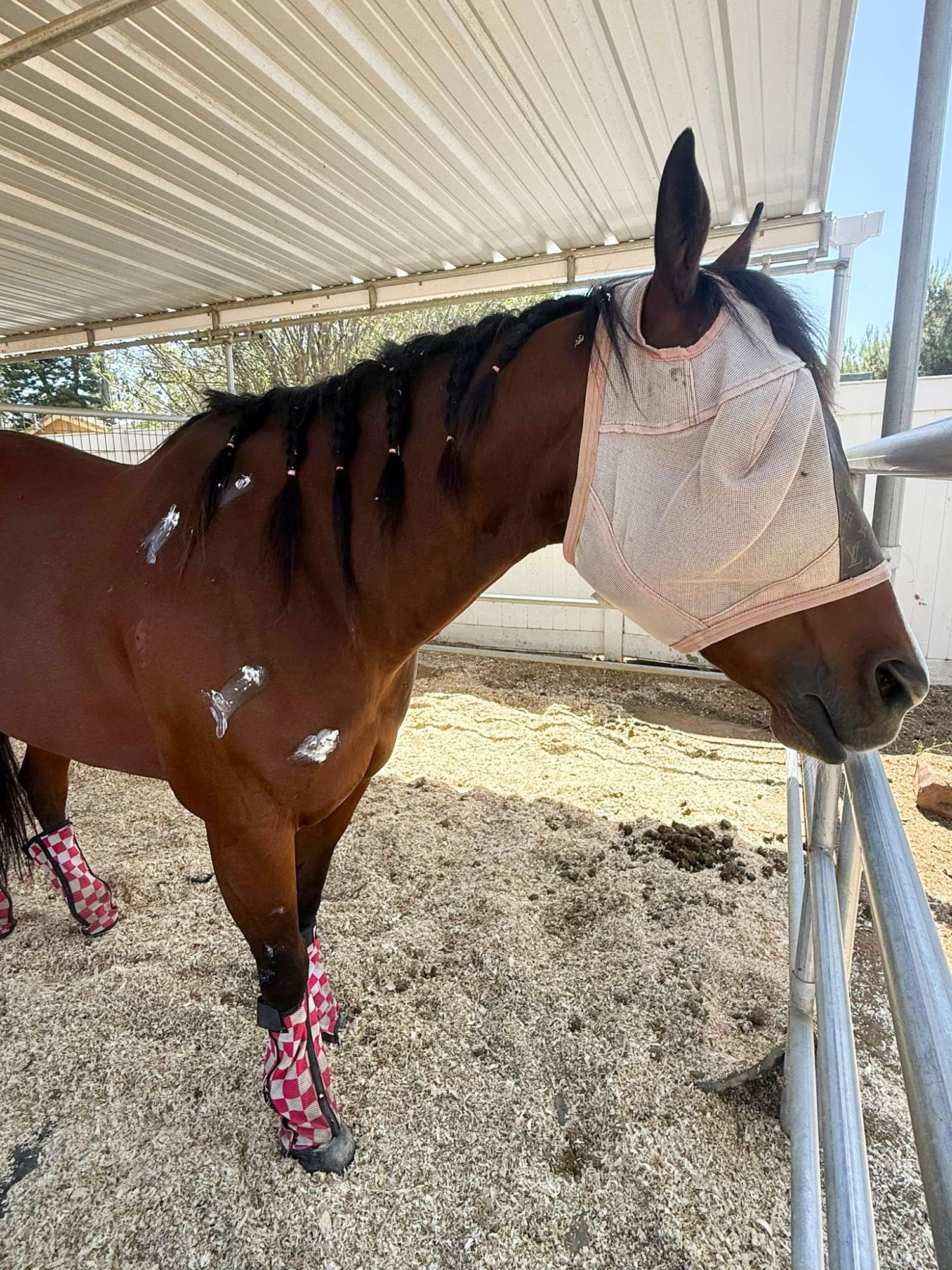
The mainstream media loves a simple villain. When news broke out of Las Vegas about a teenage rider allegedly stabbing three performance horses after a pattern of stalking behavior, the headlines wrote themselves. True crime sensationalism immediately took over. The narrative locked into a predictable groove: one bad actor, a horrific act of malice, and an isolated security breach at a high-stakes venue.
That narrative is completely wrong. It misses the systemic rot staring the entire equestrian industry in the face.
Sensationalizing the psychology of a troubled teenager lets stable owners, event coordinators, and high-net-worth investors off the hook. This incident is not an unpredictable anomaly. It is the logical consequence of an industry that treats multi-million-dollar athletic assets with the same basic security protocol as a suburban boarding kennel.
We do not need more hand-wringing about online stalkers. We need to dismantle the archaic, casual culture of backside racetrack and showground security.
The Illusion of the Secure Stable
Mainstream coverage focuses heavily on the emotional trauma of the horse owner and the alleged stalker's fixation. While the human element sells papers, it ignores the physical mechanics of how an outsider gains access to elite equine athletes.
Performance horses—whether they are thoroughbreds, show jumpers, or cutting horses—frequently command valuations crossing into six and seven figures. They are elite athletes. Yet, the physical infrastructure protecting them remains stuck in the 19th century.
Go to almost any major equine expo center or regional racetrack. What do you find?
- Open-air shed rows with simple latch gates.
- Unmonitored backstretches where anyone with a polo shirt and a bucket can walk through unchallenged.
- A reliance on "community vigilance" instead of modern access control.
I have spent two decades operating within high-stakes agricultural and sporting environments. I have watched syndicates invest $500,000 in a colt's pedigree, only to leave that colt overnight in a canvas tent secured by a $5 brass snap hook. The lazy consensus says we cannot secure stables without ruining the "culture" of the backside. That logic is bankrupt.
If a disgruntled fan or an obsessed individual walked onto an NFL practice field or into an NBA locker room with a weapon, the security apparatus would be dismantled by regulators by morning. In the equestrian world, we blame the stalker, patch up the horse, and change absolutely nothing about the perimeter.
Dismantling the Myth of the Isolated Incident
Every time an event like this happens, industry insiders call it a "freak occurrence." Let's look at the actual landscape of equine vulnerability.
Malicious security breaches in agriculture and sport are vastly underreported, often handled quietly to protect stud values and insurance premiums. When a horse is injured or poisoned, the default assumption is colic, a pasture accident, or stable vice. It takes a blatant, violent act like a stabbing for the public to realize how porous these environments are.
The premise that you can separate digital stalking from physical risk is a fatal mistake. The modern equestrian subculture lives on digital platforms. Riders post real-time updates of their stall numbers, show schedules, and travel routes.
[Digital Footprint: Show Schedule + Stall Tags]
       │
       ▼
[Zero Physical Access Control at Venue]
       │
       ▼
[Unchecked Vulnerability to High-Value Asset]
When venues fail to implement strict credentialing, they bridge the gap between an online fixation and physical violence. The competitor's article treats the stalking as a personal relationship problem. It is not. It is a corporate liability problem for the venue organizers.
Why Increased Surveillance Isn't the Answer
The standard corporate response to a security crisis is to buy a dozen trail cameras and hang them from the rafters. This is security theater. It gives owners a false sense of safety while doing nothing to prevent harm.
A camera does not stop a knife. It merely records the act for the courtroom.
The Failure of Passive Security
Passive security systems rely on hindsight. In high-density stabling areas, low-light conditions, dust, and constant movement render basic video surveillance practically useless for real-time intervention. True security requires active access control.
The Human Cost of Poor Layouts
Most venues prioritize spectator foot traffic over athlete safety. The layout of modern showgrounds actively encourages mixing the public with high-stress, high-value animals. This layout is designed to maximize vendor revenue, not protect the horses.
Implementing Unconventional Protection Policies
Fixing this requires a complete shift in how syndicates and owners manage risk. If you are relying on the venue to keep your horse safe, you have already lost.
First, biometric or encrypted digital credentialing must become standard for anyone entering a stabling area. The era of the "guest pass" or the nod-and-wave at the gate is over. If a groom, trainer, or owner cannot verify their identity via a digital ledger at the checkpoint, entry must be denied automatically.
Second, the industry must adopt perimeter isolation. Stabling areas for high-tier competitions must be physically segregated from public viewing areas with single-point entry architecture.
The downside to this approach is obvious: it kills the traditional, romantic charm of the open backside. It makes the sport less accessible to casual fans. It increases operational friction for trainers who are used to moving freely. But that is the exact price of protecting seven-figure assets from an increasingly volatile public. You cannot have absolute accessibility and absolute security at the same time.
The Financial Reality of Equine Negligence
Insurance companies are watching these high-profile breaches with growing scrutiny. For decades, mortality and loss-of-use policies have been priced based on health, age, and discipline risks. We are rapidly approaching a tipping point where underwriters will demand proof of physical asset protection before issuing a policy.
If you leave a million-dollar asset in a facility with zero night security, a court should view that as negligence, not bad luck. The moment insurance payouts are denied based on a venue's lack of access control, the industry will change overnight. Until then, owners will keep crying foul in the media while leaving their barn doors wide open.
Stop focusing on the psychology of the perpetrator in Las Vegas. Start focusing on the physical vulnerabilities that allowed them to walk into that stall in the first place. The problem isn't one unstable teenager. The problem is an entire industry refusing to lock its doors.