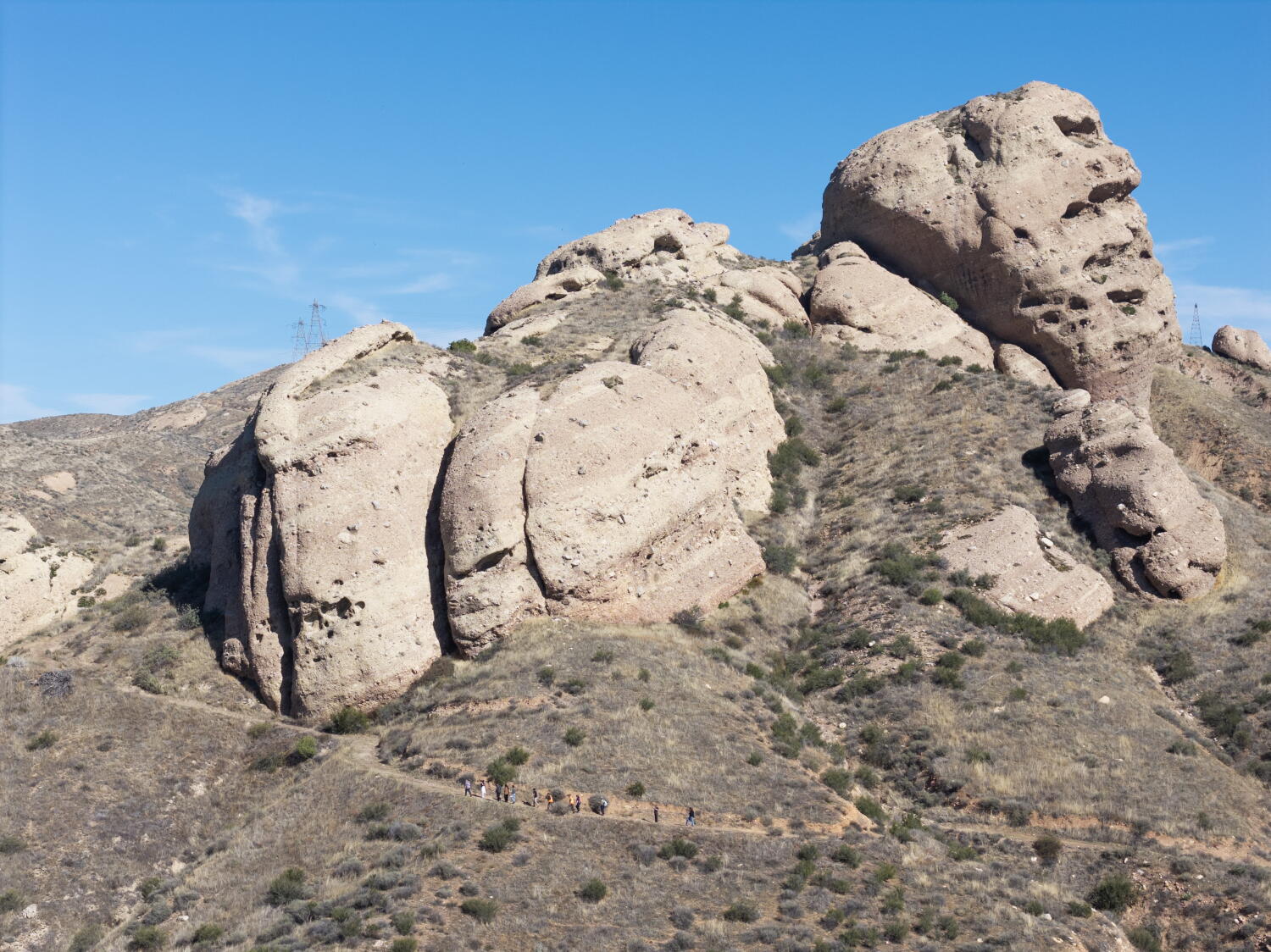
The transfer of 51 acres in the San Gabriel foothills to the Fernandeño Tataviam Band of Mission Indians is widely framed by legacy media as a ceremonial milestone, yet it operates as a rigorous structural model for modern land reacquisition, ecological risk mitigation, and non-federal tribal sovereignty. Understanding this transaction requires stripping away sentimental narratives to examine the underlying legal instruments, capital flows, and land management mechanics that allow non-federally recognized tribes to secure ancestral territory in one of the most expensive real estate markets in North America.
The Structural Constraint of Non-Federal Recognition
To evaluate the operational significance of this 51-acre acquisition, one must first establish the baseline legal constraint governing the Fernandeño Tataviam Band of Mission Indians. Unlike federally recognized tribes, which possess a government-to-government relationship with the United States and can petition the Department of the Interior to place land into federal trust status under the Indian Reorganization Act of 1934, non-federally recognized tribes operate without access to federal trust protections or Bureau of Indian Affairs (BIA) funding streams. Meanwhile, you can explore other events here: Stop Asking Catholic Bishops to Play Partisan Referee for Donald Trump.
This creates a severe capital and governance bottleneck. Without federal trust status, land acquired by a tribe remains subject to state and local property taxation, municipal zoning ordinances, and standard commercial real estate liability. Traditional media coverage routinely misses this distinction, treating all tribal land returns as legally identical. In reality, a non-federally recognized tribe reacquiring territory in Los Angeles County must execute a complex private-sector real estate and conservation strategy rather than relying on federal administrative processes.
The acquisition mechanism utilized in the San Gabriel foothills bypasses the federal bottleneck through a multi-party conservation and philanthropic structure. Specifically, the transaction relies on three distinct institutional levers: To understand the bigger picture, we recommend the excellent article by The Guardian.
- Fee-Simple Acquisition via Tribal Non-Profit Entities: Because the tribe cannot hold land in federal trust, title must be held in fee-simple through a tribally controlled 501(c)(3) non-profit organization—specifically, the Pukúu Cultural Community Services or a dedicated tribal land trust. This insulates the asset while maintaining corporate governance under tribal leadership.
- Conservation Easements and Open Space Grants: High-value foothill acreage in Southern California carries prohibitive market valuations driven by speculative residential development. To neutralize this cost, conservation intermediaries and state agencies—such as the Mountains Recreation and Conservation Authority (MRCA) or state conservancies—strip the development rights from the parcel via conservation easements. Removing residential development potential collapses the commercial market price to its ecological and recreational baseline.
- Philanthropic Capital Stacking: Once development rights are extinguished, the remaining acquisition cost is bridged using targeted philanthropic grants and state environmental justice allocations, effectively eliminating debt service on the asset.
The Three Pillars of Post-Acquisition Land Governance
Securing title to 51 acres is merely the entry point; sustaining ownership in the wildland-urban interface (WUI) of the San Gabriel Mountains requires an operational framework capable of absorbing high carrying costs and regulatory compliance. Standard emotional reporting focuses on the day of the transfer, ignoring the ongoing operational liabilities that cause undercapitalized land trusts to fail.
1. Wildfire Liability and Fuel Load Management
The San Gabriel foothills represent one of the highest-risk fire sheds in the United States. Under California state law and Los Angeles County Fire Department regulations, fee-simple landowners bear strict statutory responsibility for brush clearance, defensible space maintenance, and fuel load reduction. Failure to maintain compliance results in municipal abatement liens and catastrophic civil liability if a fire originates on or spreads rapidly across the parcel due to negligence.
Reintroducing Indigenous land stewardship—specifically Traditional Ecological Knowledge (TEK) practices such as selective thinning, invasive species removal, and cultural burning—shifts the parcel from a passive liability to an active risk-mitigation asset. By clearing non-native annual grasses and restoring native chaparral and oak woodland spacing, the tribe reduces the probability of high-intensity crown fires. In operational terms, cultural land management functions as a subsidized wildfire defense perimeter for adjacent municipal infrastructure.
2. Tax Exemption and Carrying Cost Neutralization
Holding 51 acres of California real estate in fee-simple triggers annual property tax assessments under Proposition 13, alongside parcel taxes and regional assessments. For a non-profit tribal entity, unchecked property taxes create a permanent cash drain.
To achieve zero-net carrying costs, the governing tribal entity must execute California’s Welfare Exemption for non-profit conservation and cultural organizations. This requires proving that the land is used exclusively for charitable, scientific, or educational preservation purposes, and that no commercial profit is derived from the acreage. The operational trade-off is strict: the tribe gains permanent tax immunity, but forfeits the right to generate commercial revenue (such as hospitality, retail, or private event rentals) on the protected acreage.
3. Regulatory Co-Management and Access Protocols
Unlike federal reservation land, where tribal police and courts exercise primary jurisdiction, fee-simple land within Los Angeles County remains subject to state criminal and civil jurisdiction, as well as California Environmental Quality Act (CEQA) oversight for any physical alterations.
Governance on the 51-acre parcel therefore operates through a co-management protocol. While the tribe holds exclusive surface access rights—allowing members to gather traditional basketry materials, medicinal plants, and conduct private ceremonies without public interference—any structural improvements, trail grading, or water infrastructure installations require municipal permitting. The tribe must maintain a dedicated administrative interface to manage county inspectors, environmental compliance, and grant reporting.
Ecological Arbitrage and Watershed Economics
The value of 51 acres in the San Gabriel foothills cannot be measured by standard residential real estate metrics, such as price per square foot or buildable lot yield. Instead, the transaction represents a form of ecological arbitrage, where the true economic return is captured through watershed protection and biodiversity banking.
The San Gabriel Mountains supply roughly one-third of Los Angeles County’s local water through groundwater recharge and surface runoff capture. Paved or heavily graded foothill developments accelerate stormwater runoff, increasing flood-control costs downstream and reducing aquifer replenishment. Keeping 51 acres in an unfragmented, permeable state preserves natural percolation rates.
From a regional infrastructure perspective, state and county agencies allocating funds to facilitate tribal land return are not merely engaging in restorative justice; they are purchasing low-cost hydrological infrastructure. Maintaining natural chaparral and riparian corridors costs a fraction of constructing and maintaining concrete flood-control basins in the valley floor below.
The Capital Limitations of the Philanthropic Model
While the San Gabriel foothills transfer demonstrates a viable blueprint for non-federally recognized tribes, practitioners must recognize the severe scaling limitations of this model. Relying on conservation easements and philanthropic capital stacks introduces structural constraints that prevent rapid replication across larger territories.
First, philanthropic and state grant cycles are slow, fragmented, and heavily oversubscribed. Assembling the capital stack for a single mid-sized parcel routinely requires 24 to 48 months of due diligence, appraisals, environmental phase assessments, and grant writing. During this window, private developers with liquid cash can easily outbid tribal entities unless the seller explicitly agrees to an off-market hold.
Second, conservation easements permanently restrict economic self-determination. When a tribe acquires land encumbered by a state or non-profit conservation easement, the tribe is legally bound to maintain the land as open space in perpetuity. While this aligns with cultural preservation goals, it prevents the tribe from utilizing the land for tribal housing, healthcare facilities, or revenue-generating enterprises. The land becomes an operational cost center that requires continuous external fundraising for maintenance, insurance, and security, rather than a self-sustaining economic engine.
Third, the absence of federal recognition leaves the tribe vulnerable to shifts in state-level political and budgetary priorities. Because the land is not held in federal trust, its protections rely entirely on state tax exemptions, municipal goodwill, and the enforcement of non-profit corporate law. A downturn in state tax revenues directly reduces the availability of environmental justice and conservancy grants, immediately slowing the pipeline of future acquisitions.
Strategic Execution for Tribal Land Trusts and Conservation Partners
To move beyond isolated, multi-year real estate transactions and establish a scalable land reacquisition pipeline in high-cost urban interfaces, tribal governing bodies and their municipal partners must transition from bespoke grant-chasing to standardized financial and legal structures.
- Establish Dedicated Revolving Acquisition Funds: Tribal entities must separate cultural programming budgets from real estate acquisition capital. By partnering with mission-aligned impact investors and community development financial institutions (CDFIs), tribes can establish low-interest revolving lines of credit. This provides the immediate liquidity required to lock up off-market foothill parcels via option agreements while slower state conservation grants are processed.
- Standardize Cultural Conservation Easements: Standard conservation easements often prohibit human intervention, inadvertently outlawing traditional Indigenous harvesting and cultural burning. Legal teams must draft specialized Cultural Conservation Easements (CCEs) that explicitly codify tribal rights to conduct prescribed burns, harvest native flora, and construct non-permanent ceremonial structures without triggering easement violations.
- Monetize Ecosystem Services: To offset the ongoing carrying costs of liability insurance, brush clearance, and security, tribal land trusts should register restored foothill acreage in regional biodiversity, carbon, or stormwater mitigation banks. Selling mitigation credits to municipal infrastructure agencies creates a recurring, non-dilutive revenue stream that funds land stewardship without compromising the ecological integrity of the territory.
- Integrate Co-Management Contracts with Fire Agencies: Rather than absorbing wildfire mitigation costs entirely through tribal budgets, tribal land managers should execute formal fee-for-service contracts with county fire departments and state forestry agencies. Framing Indigenous fuel-load reduction as contracted municipal fire prevention converts a regulatory liability into a funded operational program.