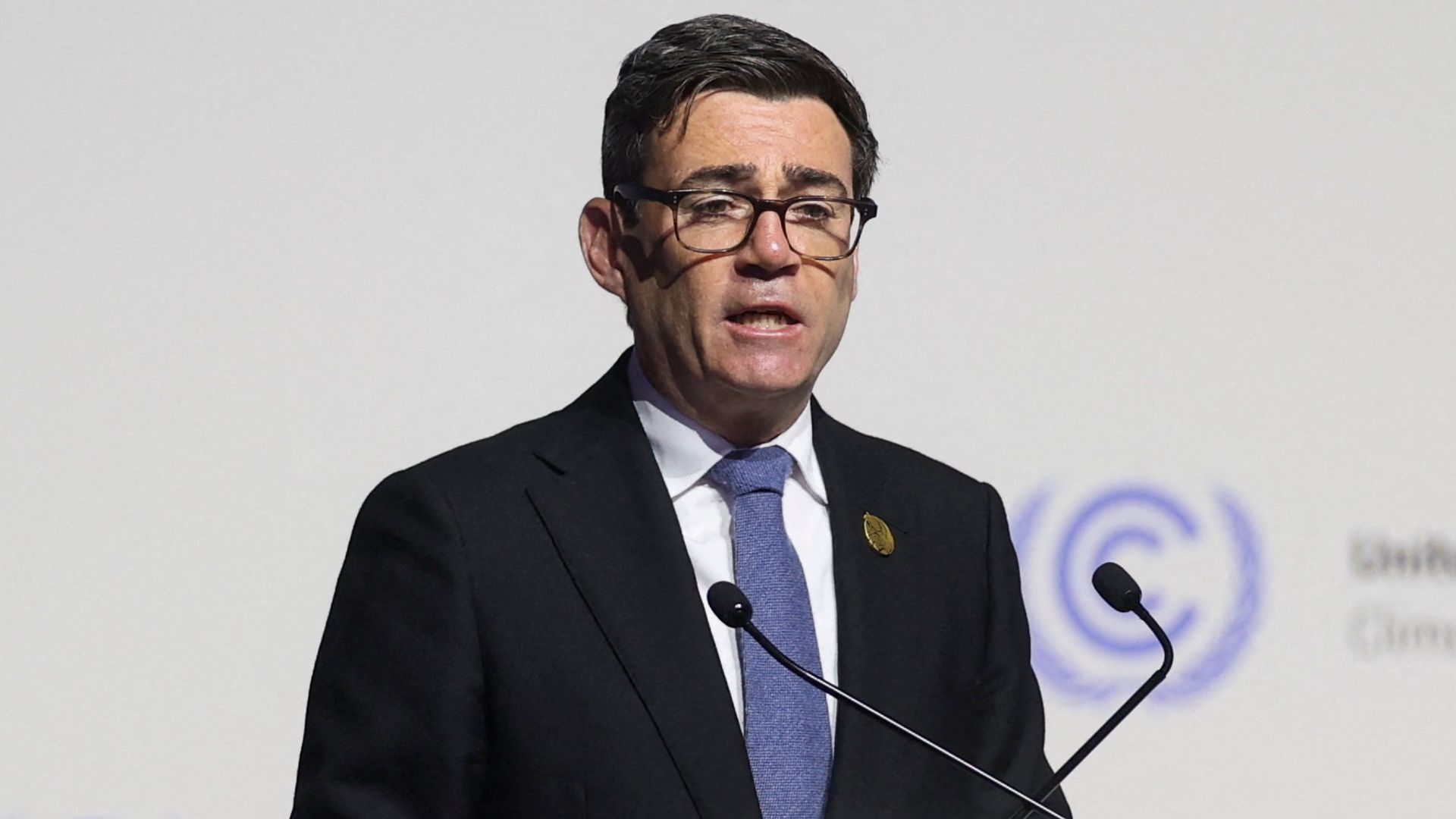
Two years into government and two prime ministers deep, Labour has hit a wall it can't charm its way around. You can't fix a £183 billion working-age welfare bill with warm speeches about unity, and Andy Burnham is finding that out the hard way.
Right now, Labour is facing its biggest test yet. Following the mid-November publication of former Health Secretary Alan Milburn’s landmark review, From a Welfare State to a Working State, Downing Street is staring down a political trap that nearly destroyed Keir Starmer earlier this year. If Burnham backs Milburn’s tougher eligibility rules and benefit sanctions, he risks an open rebellion from his own backbenches and trade unions. If he waters them down to keep the peace, the Treasury's fiscal headroom vanishes, and Kemi Badenoch’s Conservatives will spend the next three years hammering Labour as the party of runaway welfare spending.
Here is the real story behind why this specific fight matters more than any Brexit summit or budget tweak—and how it will decide whether Burnham’s premiership survives its honeymoon.
What the Milburn Review Actually Puts on the Table
Most political coverage treats welfare reform like an abstract spreadsheet exercise. It isn't. At the center of Milburn’s November 17 report is a stark reality: nearly one million young people in the UK—roughly 1 in 8—are not in education, employment, or training (NEET). Even worse, six in ten of them have never held a single job.
Milburn’s diagnosis is blunt. Britain doesn't just have a temporary youth unemployment problem anymore; it has a crisis of permanent economic detachment. To reverse it, his review lays out a 10-year plan designed to move 440,000 young people off sickness and disability benefits and into sustained work by 2036.
To get there, the report recommends tearing up parts of the current system:
- Ending long-term GP "fit notes" that lock young people out of the workforce before early health interventions even happen.
- Introducing a statutory duty requiring young benefit claimants to accept "reasonable offers" of work or training without good cause, backed by reductions in their youth allowance if they refuse.
- Replacing blanket sickness payments with targeted tiers, including a Severe and Complex Needs Insurance for those genuinely unable to work, alongside a local health and disability fund.
- Cutting employer costs through targeted National Insurance relief and public procurement rules to make hiring under-25s financially worthwhile.
On paper, it sounds sensible. In practice, it drops a grenade straight into the middle of the Parliamentary Labour Party.
Why This Trap Already Broke One Prime Minister
To understand why Labour MPs are so jittery right now, you have to look at how Andy Burnham ended up in Number 10 in the first place.
Keir Starmer didn't resign in June 2026 because of a single scandal. His premiership collapsed under the weight of compounding U-turns—the winter fuel payment backlash, employer National Insurance hikes, and an aborted attempt to rein in welfare spending that left 103 Labour MPs publicly calling for him to step aside by May. By January 2026, YouGov had Starmer’s net favorability sitting at minus 57, matching Liz Truss.
Burnham won the summer leadership contest by promising a reset. He gave Labour a temporary "Burnham Bounce" in the polls, leaned into a closer UK-EU reset at the November 20 Brussels summit, and restored a sense of political instinct that had gone missing in Westminster.
That political capital is now on the line. Just days after Milburn’s report dropped, Burnham suggested that youth welfare reforms could also be extended to the over-25s. Ahead of an expected review into Personal Independence Payments (PIP), he pledged to do "everything that I can, as quickly as possible, to get the welfare bill down," arguing that claimants without additional care costs should be signposted to support services rather than handed ongoing cash payments.
For a leader whose entire brand is built on northern solidarity and protecting the vulnerable, that rhetoric is high-wire politics without a net.
The Three Fronts Closing In on Downing Street
Burnham isn't fighting one battle here. He is fighting three at once, and winning one almost guarantees losing another.
1. The Backbench and Charity Revolt
Labour’s left and soft-left MPs didn't replace Starmer just to watch Burnham enact Conservative welfare cuts with a red rosette. Disability equality charities like Scope have already warned that weakening PIP could leave disabled people unable to afford basic essentials. Meanwhile, Unite the Union—which already slashed its Labour affiliation by 40% earlier this year over industrial disputes—is watching closely to see whether Downing Street prioritizes employer tax breaks over worker protections.
If Burnham attempts to legislate statutory benefit sanctions without massive upfront investment in mental health and skills support, his backbenchers will revolt. Again.
2. The Treasury’s Maths Problem
Even if Burnham keeps his MPs in line, the numbers barely add up. Milburn’s own modeling shows his policies would bring the youth NEET rate down to 6.8% by 2036—short of his stated 5% target—unless broader economic growth picks up.
At the same time, Treasury officials have raised serious concerns about the upfront price tag of Milburn’s "new deal" for young people, which builds on a £2.5 billion youth guarantee. Offering National Insurance cuts to businesses that hire young workers costs money immediately, while welfare savings take years to materialize. With Whitehall budgets already stretched thin, the Chancellor doesn't have billions lying down the back of the sofa.
3. The Conservative and Reform Pincer
While Labour argues with itself, the opposition is keeping the message brutally simple. Earlier this month, the Conservatives unveiled a rival blueprint claiming £36 billion in welfare savings by tightening sickness benefit eligibility for mild mental health and joint conditions, restoring the two-child benefit cap, and halving employer taxes for under-25s.
Nigel Farage’s Reform UK, meanwhile, is attacking Burnham from the flank on both domestic spending and his November EU agreements. If Labour delays its white paper until next year without delivering immediate, visible reductions in the benefits bill, voters frustrated by sluggish living standards won't care about the nuance of a 10-year prevention strategy.
What Nobody Talks About in the Welfare Debate
Here is the uncomfortable truth that both Milburn’s team and opposition critics dance around: a welfare system cannot manufacture jobs that don't exist.
During the House of Lords debate on the Milburn Review on November 18, peers pointed out a glaring bottleneck. Right now, there is roughly one starter vacancy for every three young people who are NEET, and graduate vacancies have dropped by 43% in a single year. Over the last five years, minimum wage costs for 18-to-20-year-olds have jumped by 65%.
You can overhaul fit notes, mandate job coaching, and threaten benefit cuts all day long. If small and medium-sized businesses feel taxed out of hiring entry-level staff, tightening the benefits tap simply pushes vulnerable young people into destitution rather than employment.
Look at social care, which The King’s Fund highlighted as a potential "two birds, one stone" opportunity. The sector is sitting on 96,000 vacancies, yet 18-to-25-year-olds make up just 7% of its workforce. Why? Because low pay, zero-hours insecurity, and burnout make care work unattractive compared to staying on sickness support. Pushing young claimants toward care jobs without fixing pay and progression will just create a revolving door of drop-outs.
How to Read Labour’s Next Moves
If you are watching Westminster over the coming months to see whether Burnham passes or fails this test, ignore the daily press briefings and track three concrete markers instead:
- Watch the PIP review language. When the upcoming review on Personal Independence Payments lands, look at whether ministers protect cash payments for daily living costs or replace them with non-cash vouchers and service signposting. Moving away from direct cash for disability costs is the single brightest red line for Labour backbenchers.
- Check the Spring 2027 White Paper for employer incentives. If the government’s formal white paper includes real National Insurance relief for hiring under-25s—and not just another round of local council pilots—it signals the Treasury is willing to back job creation with actual fiscal firepower.
- Track the conditionality threshold. Pay close attention to how ministers define "reasonable offers" and "good cause" before cutting a young person’s allowance. If those rules are written tightly enough to satisfy the right-wing press, expect immediate rebellion from Labour’s trade union affiliates.
Andy Burnham took the top job because his party believed he could connect with working-class voters in ways Keir Starmer never managed. Now he has to prove he can make a deeply unpopular choice—reshaping Britain’s safety net—without tearing his own coalition apart in the process.