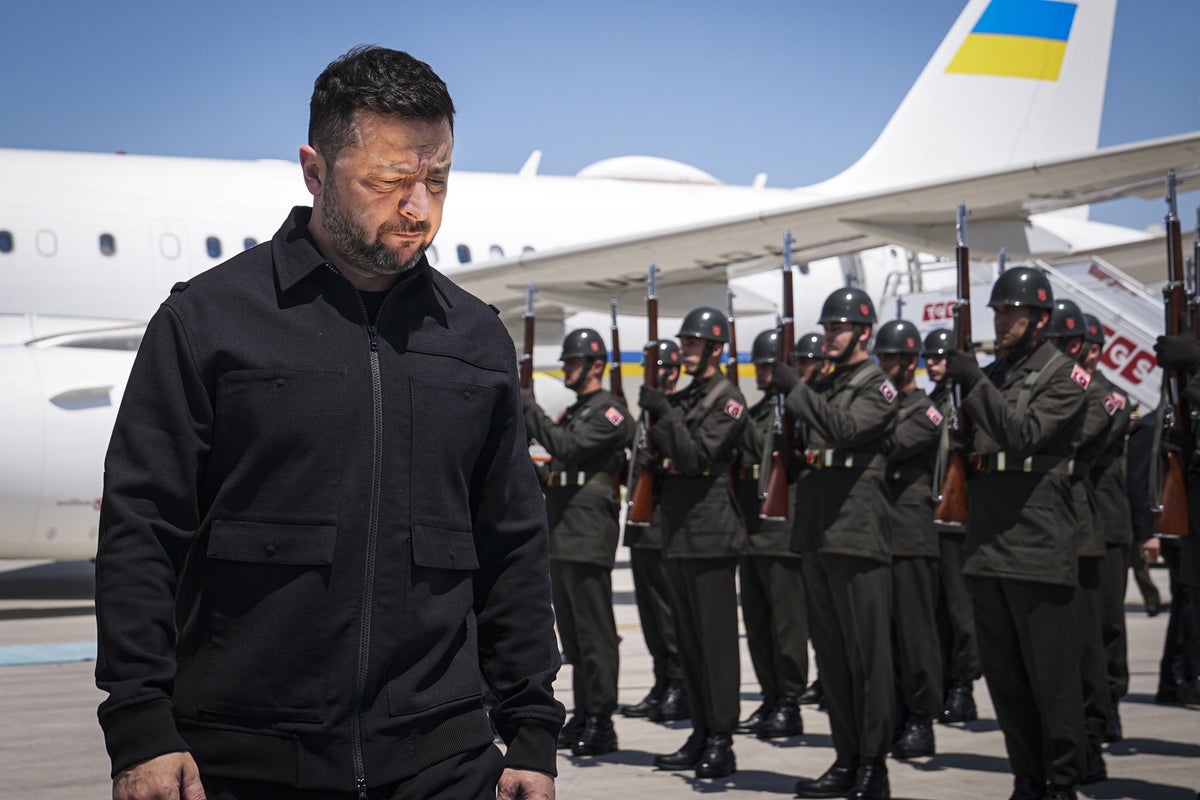
The mainstream media is stuck in a predictable loop. Every time Moscow rains missiles down on Kyiv, the narrative machine churns out the exact same script. Russia launches strikes, civilian infrastructure suffers, and Volodymyr Zelensky stands before a microphone to declare that only immediate NATO membership can save Ukraine.
It is a comfortable, copy-paste formula for war correspondents. It is also a fundamental misreading of modern geopolitical leverage.
The lazy consensus insists that Kyiv’s relentless public push for NATO admission is a shield. In reality, it has become one of Russia’s most effective levers for prolonging the conflict. By tying Ukraine's ultimate security definition to an organization that has repeatedly signaled it will not admit a nation mid-war, Kyiv has locked itself into a strategic paradox. They are chasing a bureaucratic phantom while Moscow uses that very chase to justify endless attrition.
The Admission Paradox That Powers the Kremlin
Let’s dismantle the premise of the standard "People Also Ask" query: When will Ukraine join NATO?
The brutal, unvarnished answer is never, as long as the war continues. Article 5 of the North Atlantic Treaty is not a retroactive rescue mechanism; it is a deterrent. Admitting a state currently engaged in a hot war with a nuclear power would mean an immediate, mandatory declaration of war by all 30+ member states against Russia. Washington knows this. Berlin knows this. Moscow knows this best of all.
By making NATO membership the singular, non-negotiable metric of victory and security, Ukraine gives Russia a massive incentive to never stop fighting. If peace or even a frozen ceasefire opens the door to Kyiv joining the alliance, then the Kremlin's easiest move to block NATO expansion is simply to ensure the conflict never ends. A low-intensity border war, an occasional missile strike on Kyiv's energy grid, or a localized artillery duel is all it takes to keep Ukraine permanently disqualified under current alliance norms.
I have watched Western foreign policy establishments burn through billions in aid while ignoring this basic incentive structure. We are funding a strategy that requires the enemy to voluntarily agree to their own ultimate geopolitical defeat before they have been decisively beaten on the battlefield.
The Air Defense Mirage
The latest rounds of strikes on Kyiv highlight another flaw in the current discourse: the idea that Western air defense systems are a permanent fix.
When a Patriot battery or an IRIS-T system intercepts a wave of Russian cruise missiles, the headlines celebrate a tactical victory. What they omit is the cost-to-benefit ratio of the attrition cycle. Russia is increasingly utilizing cheap, domestically produced drones and older, refurbished Soviet-era munitions to saturate Ukrainian airspace. They are forcing Kyiv to fire million-dollar interceptor missiles at hundred-dollar targets.
This is not sustainable defense; it is resource depletion masquerading as a stalemate. Relying entirely on Western supply lines that are subject to the whims of domestic political cycles in the US and Europe is a high-risk gamble. The moment a budget package stalls in Congress or a European coalition fractures, the air umbrella thins.
The solution is not begging for more alliance hardware under the guise of future membership. The solution is the rapid, localized industrialization of Ukraine’s own defense sector, focusing on offensive asymmetric capabilities that make striking Kyiv too costly for Moscow to contemplate.
Moving Past the Western Permission Slip
Ukraine does not need a seat at the Brussels table to secure its borders; it needs to become an entity so heavily armed and structurally toxic to invade that no Kremlin leader would attempt it again.
Think of Israel’s security model. Israel does not have a formal mutual defense treaty with the United States that guarantees American boots on the ground. They do not wait for a consensus vote from 32 different countries before defending their airspace. Instead, they rely on bilateral security guarantees, qualitative military edges, and an absolute willingness to act unilaterally.
Kyiv needs to pivot from the NATO-or-bust rhetoric toward building a network of hard, bilateral military pacts with specific regional allies—countries like Poland, the Baltic states, and the UK—who are willing to move faster than the sluggish, consensus-driven machinery of NATO.
The downside to this contrarian approach is obvious: it strips away the comforting illusion of a grand Western coalition coming to the ultimate rescue. It forces Kyiv to accept that the cavalry is not riding over the hill to sign a treaty.
Stop asking when the NATO invitation is coming. Start building a military reality that makes the invitation irrelevant.


