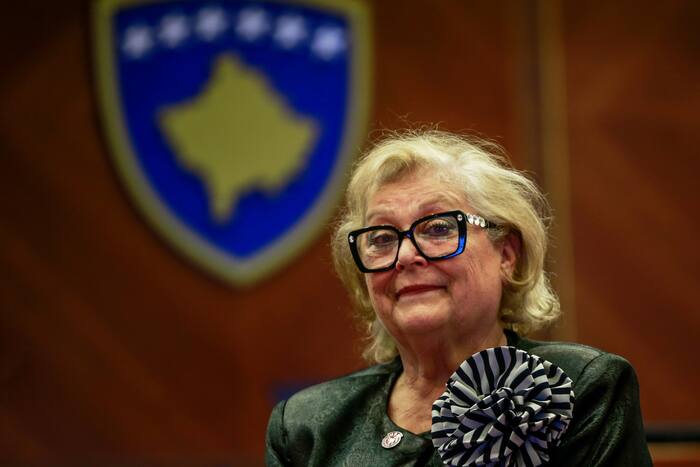
Political gridlock usually ends in finger-pointing and early trips to the ballot box. But Kosovo just wrote a different script. Lawmakers in Pristina managed to pull off a dramatic, eleventh-hour legislative maneuver that stopped a complete institutional collapse dead in its tracks.
The Assembly elected Justina Shiroka Pula as the country's new president during a chaotic marathon session. It happened just moments before a strict constitutional deadline expired. If they had missed it, the country would have been plunged straight into a snap election. Instead, politicians blinked, compromised, and averted a full-blown crisis.
Why This Midnight Vote Actually Matters
Most political drama in the Balkans gets dismissed as standard posturing. This time was different. Kosovo faced a mounting wall of pressure, including fierce street protests outside the parliament building and severe friction over international court rulings.
The country needed stability, and it needed it immediately. By securing 81 votes out of 83 cast, Shiroka Pula cleared the threshold for the largely ceremonial post. You might wonder why an economist and former academic became the compromise choice. The answer is simple. Parties on all sides were terrified of the alternative. Another election cycle would have paralyzed public administration, frozen EU integration funds, and left the state without a functioning head of state.
The Fine Print Behind the Compromise
Shirok Pula isn't just an ivory-tower academic. She previously served as the minister of energy and mining between 2008 and 2011, and later as a member of parliament for the Democratic Party of Kosovo. She knows how the machinery works.
Yet, the timing of her swearing-in ceremony sparked an immediate legal debate. Because the final votes were tallied a mere seventeen minutes past midnight, constitutional purists are already arguing over whether the technical cutoff was breached. Prime Minister Albin Kurti and international partners have welcomed the outcome, choosing practical governance over legalistic hair-splitting.
Institutions are running. The immediate threat of a snap election is gone. But underlying political polarization in Pristina hasn't vanished overnight. Watch how the new president navigates upcoming legislative battles, because this midnight truce is only the beginning of the real test.


