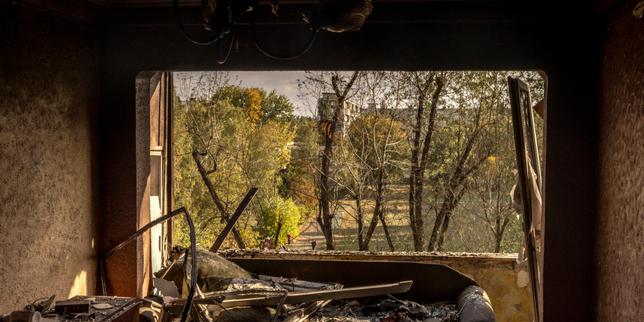
Three people died in Russian strikes on Ukraine's Kirovohrad Oblast, according to the regional military administration, underscoring how long-range warfare continues to reach far beyond the active front lines. Even in central regions that sit well behind the trenches, civilian infrastructure, logistics corridors, and residential areas remain vulnerable to missile and drone barrages. What makes these attacks consequential is not merely the immediate loss of life, which is tragic in every instance, but what they reveal about the shifting geography of attrition in the war.
After years covering conflicts from Sarajevo to Eastern Europe, one pattern repeats with grim predictability. When front lines harden into trenches, minefields, and drone-saturated kill zones, militaries look for asymmetric pressure points deep in the opponent's rear. Kirovohrad Oblast occupies that exact strategic middle ground. It is not a border region like Kharkiv or Sumy, nor is it an active frontline sector like Donetsk or Zaporizhzhia. Yet its roads, rail links, agricultural hubs, and energy nodes knit central Ukraine together.
A live bulletin can tell you that strikes occurred and three people were killed. It cannot tell you why a central oblast matters to Moscow's targeting calculus, how local air defenses are stretched thin across thousands of square kilometers, or what repeated strikes do to civilian resilience when sirens sound miles from any infantry clash. To understand the weight of news coming out of Kirovohrad Oblast, we have to look past the raw casualty count and examine the mechanics of rear-area warfare.
Why Central Regions Like Kirovohrad Enter the Targeting Calculus
Geography shapes every military campaign. Kirovohrad Oblast sits in central Ukraine, bordered by regions that carry immense economic and logistical weight, including Cherkasy, Poltava, Dnipropetrovsk, Mykolaiv, and Vinnytsia. While it does not sit directly on the current contact line, nothing in modern warfare is truly insulated from long-range fires.
Strike planners think in networks. A rail junction, a fuel depot, a substation, or a warehouse storing grain or spare parts does not have to be inside a contested town to affect operations hundreds of kilometers away. By targeting central oblasts, Russian forces aim to impose persistent friction across Ukraine's interior. Even when a strike fails to halt a supply line permanently, it forces rerouting, delays shipments, damages transformers, and keeps regional authorities in a constant state of emergency response.
There is also a psychological dimension that military analysts sometimes understate in favor of pure logistics. For residents of central Ukraine, living far from the front once created a sense of relative distance, if never complete safety. Periodic deadly strikes shatter that illusion. When people are killed in an interior region, the war feels closer to home for everyone watching regional updates, complicating efforts to maintain normal economic activity, schooling, and daily routines.
Consider a hypothetical example to see how rear-area disruption compounds over time. Suppose a regional logistics hub or agricultural facility in a central oblast takes repeated hits over several months. Even if repair crews restore basic function within days, insurers raise premiums, drivers face longer detours and higher risks, local businesses lose staff or clients, and municipal budgets divert scarce funds from routine maintenance to emergency repairs and civil protection. No single strike collapses the system. Together, they wear down margins.
The Air Defense Arithmetic Behind Every Strike
Every news report of strikes landing in an interior region prompts the same public question. Why didn't air defenses intercept everything?
The short answer is geometry and economics. Ukraine is a large country with a vast airspace to defend, and air defense systems are finite, high-value assets. Covering the immediate front lines, major cities, and critical energy infrastructure already strains interceptor stocks and radar coverage. Interior oblasts inevitably face thinner, more dispersed coverage than heavily fortified hubs, creating seams that incoming drones and missiles can exploit.
Air defense is also a cost-exchange problem. Launching expensive surface-to-air interceptors against massed drones or decoys burns through stockpiles faster than allies can replenish them. Commanders must constantly weigh where a scarce interceptor will save the most lives or protect the most vital node. That triage is brutal, and it is an unavoidable reality of modern air war.
Decoys, Flight Paths, and Detection Limits
Modern strike packages rarely rely on a single type of munition. Attackers often mix low-flying drones, cruise missiles, ballistic threats, and decoy systems designed to saturate sensors or force defenders to expend missiles on non-lethal targets. Low-altitude flight paths use terrain masking to stay off radar until the last possible moment, giving air defense crews and mobile fire groups mere minutes—or seconds—to react.
Weather, electronic warfare, and sheer volume further complicate interception. Even high interception rates leave room for leakers. When only a fraction of incoming projectiles get through, a single impact on a populated area or critical facility can still result in fatalities and severe damage.
What Regional Military Administrations Do and Cannot Say
When an attack hits an oblast like Kirovohrad, the regional military administration is typically the first official source to confirm casualties, damage, and ongoing threats. Its role is vital, yet its communication is bound by strict operational security rules.
Officials routinely withhold exact impact coordinates, specific military-adjacent targets, or details about air defense performance until well after the fact. That restraint is not meant to hide reality from the public; it is meant to deny strike planners battle damage assessment. If a public post reveals that a particular depot was hit or that a specific air defense battery was depleted, the attacking force learns where to aim next.
Skeptics sometimes view terse official statements with frustration, wanting fuller context immediately. In wartime reporting, patience and verification matter more than speed. Official casualty figures in the immediate aftermath of a strike can also shift as emergency crews clear rubble, treat the critically injured, or identify victims. Treating early figures as provisional rather than final is basic discipline for anyone following conflict news.
Comparing Frontline Attrition With Interior Strikes
To grasp why strikes in Kirovohrad Oblast carry a distinct significance, it helps to contrast interior attacks with fighting along the active front. They are part of the same war, yet they operate on different rhythms and inflict different kinds of strain.
| Dimension | Active Frontline Sectors | Interior Oblasts Such as Kirovohrad |
|---|---|---|
| Primary Threat | Artillery, FPV drones, glide bombs, infantry and armor assaults | Long-range drones, cruise or ballistic missiles, falling debris |
| Strategic Purpose | Seize or hold ground and degrade opposing forces | Disrupt logistics, pressure energy and industry, strain air defenses |
| Civilian Exposure | Severe and continuous; heavy displacement and ruins | Intermittent but acute; sudden alerts and localized fatalities |
| Information Environment | Fast-moving tactical claims; heavily contested ground truth | Official alerts, regional administration updates, emergency response |
This contrast highlights a critical nuance. Strikes in an interior oblast rarely alter the map of territorial control by themselves. Instead, they shape the operating environment in which the broader war is fought. A damaged rail line or power node in central Ukraine can ripple outward to frontline supply, industrial output, and civilian morale without a single soldier advancing a meter on the ground.
The Hidden Toll on Local Infrastructure and Communities
Casualty numbers capture the sharpest human cost, yet the secondary effects of strikes ripple through communities long after the smoke clears. Emergency services—firefighters, paramedics, police, and utility workers—operate under exhausting pressure, responding to incidents while remaining alert to secondary strikes or follow-on waves.
Local economies feel the strain in quieter ways. Farmers, transport operators, manufacturers, and small merchants rely on predictable power, intact roads, and stable labor pools. Each strike adds friction to daily planning. Even when damage is localized, uncertainty lingers over when the next alert will sound and what infrastructure might be hit next.
There is also a gray area in how observers interpret strikes on rear regions. Analysts sometimes debate whether a given strike was aimed at a legitimate logistical or industrial target, a general area, or civilian morale. In practice, inaccuracy, debris, electronic interference, and proximity between civilian life and dual-use infrastructure mean civilians frequently pay the price regardless of stated intent. Acknowledging that ambiguity keeps reporting honest and grounded in observable facts rather than speculation.
How to Read Breaking Strike Reports Critically
In an era of instant social media feeds, breaking reports from regions like Kirovohrad can easily generate confusion or rumor. A few practical habits help separate verified developments from noise.
- Check the primary source: Look for confirmation from the regional military administration, emergency services, or national authorities rather than unverified secondhand posts.
- Watch for evolving numbers: Treat early death and injury counts as initial snapshots that may change during search-and-rescue operations.
- Separate alert waves from confirmed hits: Air raid sirens across an oblast do not always mean impacts occurred in every district; verify where strikes actually landed.
- Look at the broader pattern: One strike is a discrete tragedy; repeated strikes across central regions point to sustained pressure on logistics, energy, or air defenses.
News from Kirovohrad Oblast reminds us that modern war does not stay neatly inside the lines drawn on a map. Every lethal strike in the rear tests air defenses, stretches emergency responders, and forces a nation to keep functioning under constant threat.