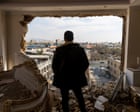
Stop refreshing the live blogs. Stop tracking every individual missile trajectory in the Persian Gulf as if it’s the harbinger of a $200 oil barrel. The media is currently obsessed with the "decimation" of Kharg Island and the supposed shock of Iranian retaliation against Gulf neighbors. They are selling you a narrative of fragile collapse. They are wrong.
The consensus view—that the Middle East is a precarious house of cards one explosion away from a global dark age—is a profitable myth for defense contractors and cable news anchors. In reality, the global energy apparatus is more resilient, cynical, and decentralized than the headlines suggest. If you think a strike on a single terminal or a few "surprising" shifts in Iranian targeting will break the back of the West, you haven’t been paying attention to how power actually moves in 2026. You might also find this related coverage interesting: Strategic Asymmetry and the Kinetic Deconstruction of Iranian Integrated Air Defense.
The Kharg Island Paper Tiger
Everyone is talking about Kharg Island as the "jugular" of Iranian exports. The narrative is simple: you hit Kharg, you starve the regime, and the oil price spikes to the moon.
I’ve spent a decade watching analysts overestimate the impact of physical infrastructure destruction in the age of "ghost fleets" and decentralized logistics. Kharg is a massive, stationary target. It is the visible tip of an invisible iceberg. As extensively documented in recent articles by The Washington Post, the implications are worth noting.
Striking it isn’t a strategic masterstroke; it’s a loud, expensive signaling exercise. When the U.S. or its proxies "decimate" an island terminal, they aren't ending the flow of crude. They are merely shifting the math of the black market. Iran has spent the last five years perfecting the art of Ship-to-Ship (STS) transfers and utilizing "dark" ports that don't appear on a standard satellite briefing.
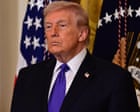
The "decimation" reported by Trump and amplified by the press ignores one cold reality: infrastructure is replaceable, but the network is permanent. By the time the smoke clears over Kharg, the volume has already been rerouted through smaller, mobile assets that no Tomahawk missile is designed to chase.
The "Surprise" of Targeted Gulf Neighbors
The current coverage expresses "surprise" that Iran is targeting Gulf neighbors like the UAE or Saudi Arabia. This isn't a surprise. It's a fundamental misunderstanding of regional leverage.
The lazy consensus assumes these nations are static US allies waiting for protection. Wrong. They are hedge funds with flags. They play both sides because they have to. Iran isn't targeting them to start a world war; they are targeting them to force a negotiation that the West isn't invited to.
When you see a headline about a drone hitting a facility in a neighboring state, don't read it as "The Middle East is on fire." Read it as "The regional price of neutrality just went up." These strikes are tactical audits. They are designed to prove that the U.S. security umbrella has more holes than a screen door.
If the U.S. truly "decimated" Iranian assets as claimed, the retaliation wouldn't be a surprise—it would be the only logical move left for a cornered actor. To be surprised by this is to admit you don't understand the basic physics of geopolitical pressure.
Why Oil Refuses to Explode
Why isn't oil at $150 right now? Because the market has already priced in the apocalypse.
In the old world—let’s say 2003—a strike on a major export hub would send traders into a frenzy. Today, the "Fear Premium" has been diluted by three factors the mainstream press refuses to quantify:
- Strategic Reserves as a Weapon: We no longer treat the SPR (Strategic Petroleum Reserve) as a rainy-day fund; we treat it as a price-suppression tool.
- The Permian Buffer: Every time a terminal in the Gulf gets hit, a fracking rig in West Texas becomes more profitable. The U.S. is now the swing producer, a reality that renders the "Strait of Hormuz" bogeyman increasingly irrelevant.
- The China Factor: China is the primary customer for the oil moving through these "decimated" zones. Do you really think they’re sitting on their hands? They aren't waiting for a U.S. carrier group to fix the problem. They are negotiating directly with Tehran to keep the taps open under the table.
The "crisis" is a localized military event being sold as a global economic catastrophe. It’s theater.
The Myth of the "Decisive Strike"
Military analysts love the term "decisive." They want you to believe that one campaign, one bombing run, or one "surprising" turn of events will change the trajectory of the decade.
I’ve watched billions of dollars in hardware vanish into the desert sands with zero net change in political willpower. You can’t bomb a country out of the global oil market when that country’s primary export is a fungible commodity that half the world is willing to buy through a shell company in Malaysia.
The "decimation" of Kharg Island is a temporary inconvenience for a regime that operates on a thirty-year timeline. While we argue about the "live" updates of a missile strike, they are calculating the increased premium they can charge for the risk of delivery. War, in this context, is just another cost of doing business.
Stop Asking "What Happens Next?"
People always ask: "Will this lead to a total regional war?"
That is the wrong question. A total regional war is bad for business for everyone involved, including Iran and the Saudis. What we are seeing is not the beginning of the end; it is the refinement of the "Gray Zone."
This is a state of perpetual, low-intensity conflict where the goal isn't to win, but to stay in the game. When a competitor's article tells you that a leader is "surprised" or that an island is "decimated," they are trying to apply 20th-century war logic to a 21st-century economic siege.
The unconventional truth? This volatility is the new baseline. The market isn't waiting for "peace" to return to the Middle East because peace was never the goal. Stability is a myth sold to retail investors to keep them from panicking. Professional players know that the chaos is curated.
The Actionable Reality
If you are waiting for a clear "victory" or a "resolution" before making your next move, you will be waiting forever.
- Ignore the "Surprise": Expect every actor in the region to hit the most sensitive economic targets they can find. It’s not an escalation; it’s an opening bid.
- Discount the Physical: In a digital, globalized economy, hitting a pier on Kharg Island is like trying to stop the internet by smashing a single router. The signal finds a new path.
- Watch the Currency, Not the Crude: If you want to know if the Middle East is actually in trouble, stop looking at the price of Brent. Look at the capital flight from regional banks. If the money stays, the missiles are just background noise.
The "crisis" isn't what the headlines say it is. It’s not a breakdown of order. It’s the birth of a new, more violent, and more cynical type of order where "decimation" is just a PR term used by politicians to sound tough on a Sunday morning talk show.
Stop falling for the theater. The island might be smoking, but the oil is already on a tanker halfway to a refinery that doesn't care about your live updates.
Go back to work. The world isn't ending; it’s just getting more expensive to ignore the truth.