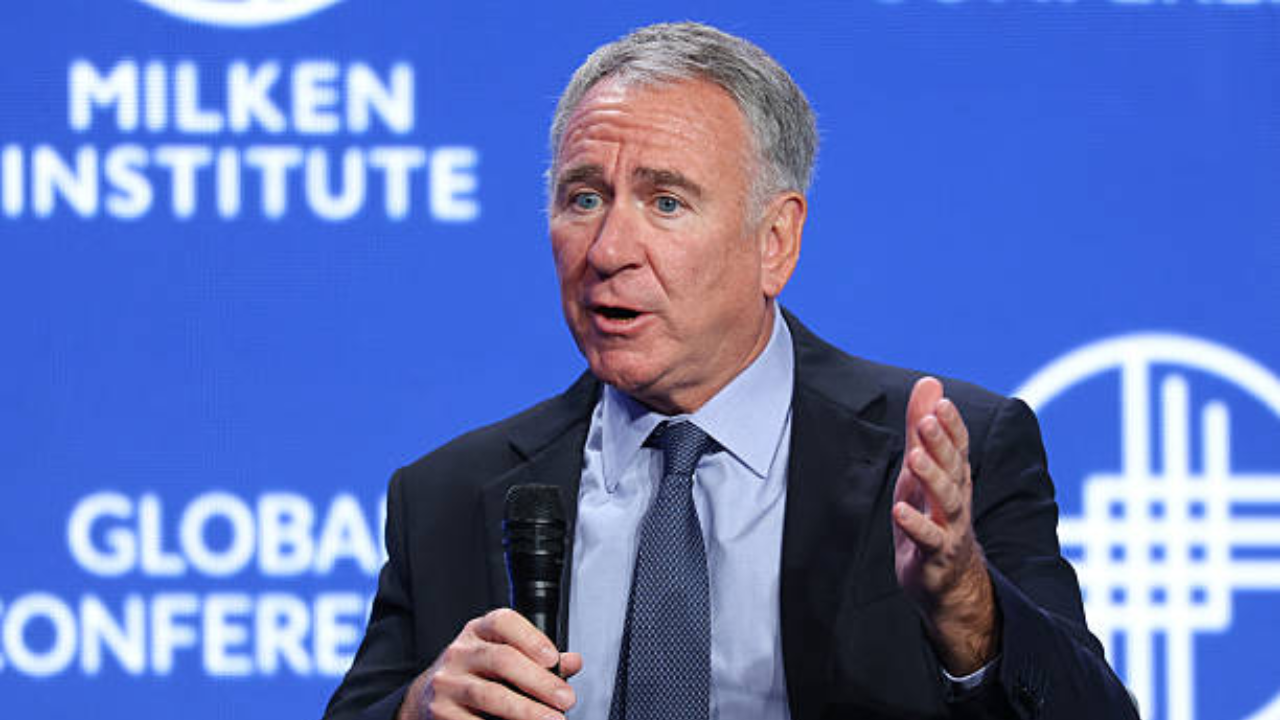
Every business publication on the planet wants to sell you the same fairy tale about Ken Griffin’s $5.3 billion Miami spending spree. They call it the birth of "Wall Street South." They frame the Citadel founder as a civic savior single-handedly upgrading a sun-drenched party town into a global financial capital.
That narrative is lazy, breathless, and completely misses the real mechanics of what is happening on Biscayne Bay. Also making headlines recently: What Really Happens to Your Savings After the Paraguay Banking Collapse.
Griffin is not building an open, competitive financial ecosystem in Miami. He is vertically integrating a private municipality. When one billionaire buys out every single unit of a 138-apartment downtown condominium just to assemble land, drops $2 billion to import an elite computer science university campus into Wynwood, funds the local hospitals, and rewrites local zoning and political dynamics, you are not watching the organic rise of a financial hub. You are watching the modern reinvention of the Gilded Age company town—dressed up in glass towers, philanthropic tax write-offs, and quantitative trading algorithms.
I have spent two decades advising institutional real estate syndicates and municipal economic development boards, and I have seen cities blow billions chasing the "anchor billionaire" mirage. Municipalities always confuse capital concentration with economic diversification. They see a $5.3 billion headline number and assume permanent prosperity follows. It rarely does. Instead, single-patron dominance creates a brittle, lopsided urban economy where public accountability quietly erodes behind private endowment checks. Further information into this topic are explored by Bloomberg.
The Myth of the "Wall Street South" Ecosystem
The standard media coverage treats Griffin’s 2022 relocation from Chicago and subsequent $5.3 billion outlay as proof that Miami has permanently dethroned New York and Chicago as a premier financial center.
Look closer at the actual numbers and behavior. A true financial ecosystem—like London, New York, or Tokyo—thrives on agglomeration economics: the compounding productivity gains that occur when hundreds of competing firms, deep pools of specialized labor, legacy legal institutions, and independent capital allocators cluster together. In a real hub, if a managing director gets fired on a Tuesday, they can walk three blocks and interview at four rival funds by Thursday without moving their kids out of school.
Miami does not have that depth, and Griffin knows it. That is precisely why he is spending billions to manufacture artificial infrastructure from scratch.
Look at the September 2026 announcement of his record $3 billion gift to Carnegie Mellon University, which allocates $2 billion to build a brand-new 35-acre campus in Miami's Wynwood neighborhood. Mainstream commentators applauded this as pure civic generosity. In reality, it is a massive talent-pipeline patch. Citadel and Citadel Securities run on elite quantitative engineers and computer scientists. Moving from Chicago to South Florida exposed a glaring structural flaw: Miami lacked a top-tier local engineering feeder school to supply junior quants without paying massive relocation premiums. Rather than waiting fifty years for local universities to climb the rankings, Griffin simply bought a satellite branch of Carnegie Mellon and dropped it two miles north of Brickell.
Even more telling is what Griffin is doing outside Florida. While press releases trumpet his Miami pivot, Griffin confirmed in August 2026 that Citadel will continue its massive investment as the anchor tenant at 350 Park Avenue in Manhattan, even as he spars publicly with New York Mayor Zohran Mamdani over local tax proposals. True power players do not abandon real financial capitals; they maintain dual-track optionality. Miami is the tax-advantaged headquarters and personal fortress; New York remains the irreplaceable talent and deal-making engine.
Deconstructing the $5.3 Billion Price Tag
When journalists throw around the "$5.3 billion" figure, they lump wildly different asset classes into a single sensationalist bucket. To understand the real leverage Griffin is accumulating, you have to separate his balance sheet into three distinct plays:
- The Commercial Monopoly: Griffin’s planned 52-story, 1.7-million-square-foot Brickell waterfront headquarters—estimated around $2.5 billion—is not just an office building. By buying out adjacent residential towers like the 138-unit downtown condo building and snapping up $180 million properties in Wynwood, he is controlling the surrounding supply of Class-A workspace and executive housing.
- The Institutional Capture: Giving $2 billion to Carnegie Mellon, $125 million across South Florida healthcare institutions like UHealth’s Sylvester Comprehensive Cancer Center, and millions to local parks like The Underline buys something far more durable than naming rights. It turns the billionaire into the indispensable financier of the city’s educational, medical, and civic safety nets.
- The Political Firewall: Campaign contributions and civic foundations—routed through his Griffin Catalyst umbrella—ensure that zoning variances, shoreline submissions, and municipal tax policies move at the speed of private capital rather than public bureaucracy.
| Dimension | The Media Narrative | The Structural Reality |
|---|---|---|
| HQ & Land Assembly | A bold vote of confidence in Miami's skyline. | Defensive land banking that restricts competing developers and locks in corporate control. |
| $2B Carnegie Mellon Gift | Transformative philanthropy for local students. | A bespoke R&D and quantitative talent pipeline built to solve Citadel's recruiting bottleneck. |
| Healthcare & Civic Donations | Pure generosity upgrading Miami's quality of life. | Soft-power insulation that makes local politicians and regulators dependent on private largesse. |
| Chicago Exit / NY Friction | A permanent geographic migration of American finance. | Regulatory arbitrage—using Florida residency for tax efficiency while keeping Manhattan on standby. |
Answering the Wrong Questions About Miami’s Boom
If you search online for Griffin’s Miami expansion, you run into the same predictable, surface-level questions. Most of them start from a broken premise.
Is Ken Griffin’s spending good for Miami’s economy?
That is the wrong question. Money spent is always "good" for short-term GDP, construction crews, and luxury realtors. The real question is: Who absorbs the inflationary shock while waiting a decade for the promised trickledown?
When a multi-billionaire buys entire condo buildings above market rate and imports thousands of high-earning quantitative traders, housing and service costs surge immediately. Meanwhile, the flagship Brickell tower is years from completion, and the Carnegie Mellon Miami campus isn't even scheduled to break ground until 2027 or enroll its first graduate students until 2028. Existing Miami residents pay the higher rent and property insurance today for institutional benefits that are still sitting on architectural blueprints.
Will Miami replace New York as the center of finance?
No. Stop asking this. It is a fundamental misunderstanding of how capital markets work. Florida’s zero state income tax makes it an unbeatable jurisdiction for booking carried interest, management fees, and personal capital gains. That makes Miami an elite wealth-preservation domicile and executive command post. It does not magically replicate Manhattan's century-old density of investment banks, activist law firms, institutional asset managers, and media networks. Even Griffin hasn't sold his $238 million penthouse at 220 Central Park South.
What happens to Miami if Citadel stumbles or pivots?
This is the question local boosters refuse to touch. Single-patron cities suffer from acute concentration risk. Ask Rochester, New York, what happened when Kodak lost its dominance, or ask Chicago what happened to its commercial tax base and civic boardrooms when Griffin packed up in 2022. When one individual’s net worth—north of $50 billion—underwrites the university, the cancer center, the skyline, and the political action committees, the city’s civic health becomes tethered to the performance of a single hedge fund and the whims of one man.
Where the Contrarian Critique Hits a Wall
Intellectual honesty requires admitting what the skeptics—including me—can get wrong about this playbook.
Historically, concentrated billionaire patronage has successfully jump-started permanent civic institutions that outlived their founders' ego and market dominance. Andrew Carnegie built libraries and universities that anchored Pittsburgh long after U.S. Steel faded. John D. Rockefeller’s funding transformed the University of Chicago into an intellectual powerhouse.
If the Carnegie Mellon Miami campus actually reaches its target of 3,500 students and 300 faculty members, and if UHealth’s Griffin Cancer Research Building accelerates clinical breakthroughs, Miami will end up with durable human capital that stays put regardless of where Citadel’s next headquarters sits. You cannot easily pack up a 35-acre university campus and ship it to Austin or Dubai. In that specific scenario, Griffin’s self-interested talent engineering accidentally creates genuine public value.
How Investors and Operators Should Play This
If you are allocating capital, building a business, or managing real estate in South Florida, stop reading the chamber-of-commerce press releases and adjust your strategy to the actual mechanics on the ground:
- Follow the blueprint timelines, not the press releases. Never price real estate or retail expansion around announced philanthropic gifts as if they are operational today. Anchor your underwriting to physical permits and enrollment dates—like the 2027 construction start and 2028 graduate intake in Wynwood—because multi-year regulatory delays will crush over-leveraged speculators.
- Target the secondary bottlenecks, not the trophy assets. You cannot outbid a $60 billion market-maker for waterfront Brickell assemblages. Instead, invest in the unglamorous infrastructure required to service an influx of high-income engineers and faculty: specialized medical clinics, private school capacity, mid-market transit corridors, and resilient power/water upgrades.
- Audit municipal dependency before buying long-dated local debt. If you are underwriting South Florida municipal bonds or long-term commercial leases, stress-test what happens to local tax receipts and civic funding if regulatory shifts or market drawdowns force private patrons to pull back.
Ken Griffin did not move to Miami to join a thriving financial community—he moved to Miami so he wouldn't have to share the sandbox.