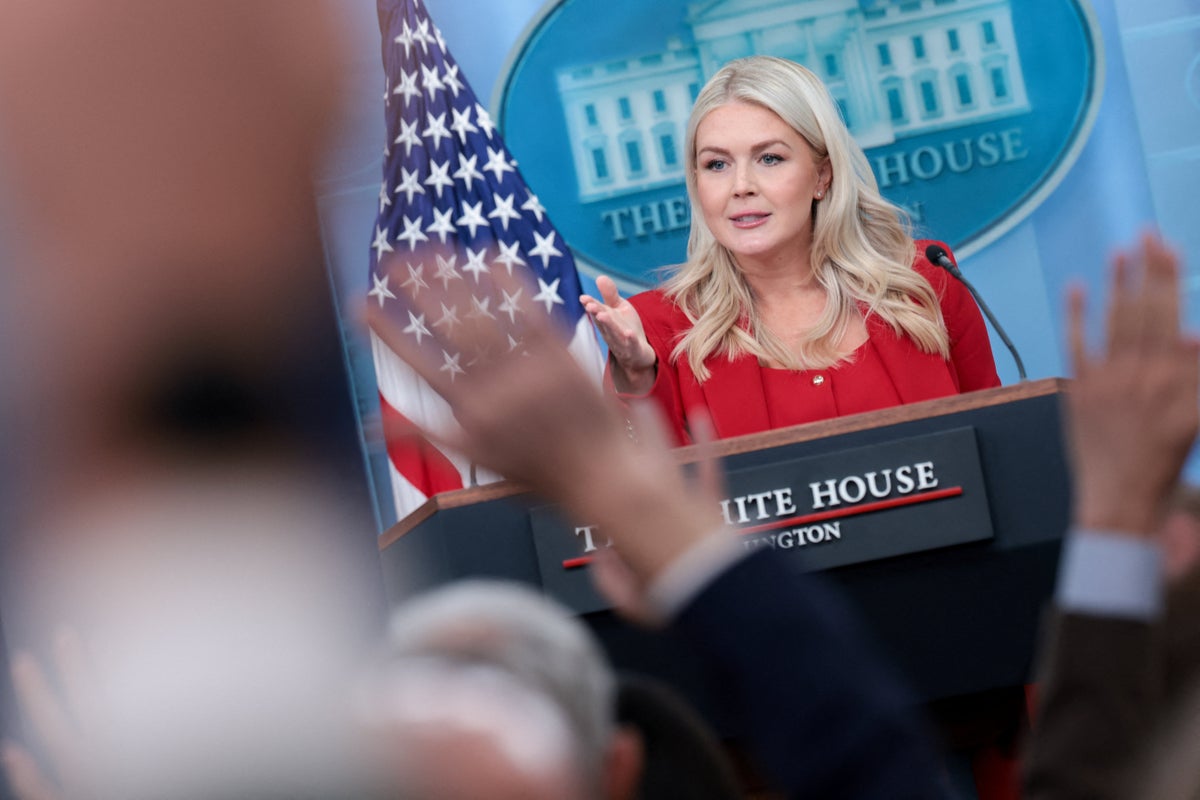
The narrative floating around newsrooms right now is pure amateur hour. Pundits are staring at Karoline Leavitt leaving her post and screaming about chaos, panic, and a staff left flat-footed without a succession plan.
It is a completely surface-level reading of modern political communications.
I have watched administrations panic and scramble when high-profile comms chiefs exit, and I have seen what real operational architecture looks like behind the velvet ropes. What is happening right now inside Trump’s orbit is not a crisis of vacancy. It is a calculated structural pivot.
Let us dismantle the lazy consensus piece by piece.
The Myth of the Irreplaceable Press Secretary
The mainstream media suffers from a severe hero complex. They want to believe that a single individual standing behind the brass lecturn in the White House briefing room holds the entire messaging apparatus together by sheer force of personality.
If Leavitt walks away, the logic goes, the machine breaks down.
This is fundamentally misunderstanding how modern political influence operates. No press secretary writes their own weather. They do not dictate the news cycle; they manage the velocity of it. When a principal communicator steps down, the institutional infrastructure underneath them does not evaporate. The briefing room is a theater, not the engine room.
Think of it like a high-end restaurant kitchen. The person plating the dish for the dining room gets all the applause, but the entire menu, the sourcing, and the timing depend on a ruthless, invisible line cook system. Leavitt was a phenomenal front-of-house face, but treating her departure as a crippling operational blow assumes the entire communications shop was a one-person show. That is absurd. In any sophisticated political operation, redundancy isn't a backup plan; it is the default setting.
Why a Vacancy is Actually a Feature Not a Bug
There is a massive strategic advantage to leaving a high-profile seat empty for a calculated window of time. The media circus feeds on daily confrontation. By introducing a vacuum, the opposition spends days guessing, projecting their own anxieties, and writing speculative obituary pieces about a campaign strategy that hasn't missed a single beat.
While the press corps obsesses over who gets the badge, the actual information architecture shifts.
Look at how information travels now. The traditional daily white house briefing has lost its monopoly on political narrative formation. Podcasters, independent creators, decentralized digital networks, and direct-to-consumer video feeds command higher engagement and sharper demographic reach than thirty reporters shouting questions in a windowless room.
When a traditional press secretary leaves, it forces a hard reset. It allows an operation to bypass the archaic ritual of the daily briefing and lean entirely into modern distribution channels.
"An empty lectern forces the press to look inward, while the campaign builds external momentum entirely outside their control."
If you think a campaign of this scale didn't have a deep bench ready to slot into that position thirty seconds after a resignation letter crossed the desk, you have never stepped foot inside a war room.
The Real Problem With Political Communications
The core issue isn't finding someone to read talking points off a teleprompter or spar with hostile reporters. Any seasoned operative can do that. The real crisis in modern political comms is message dilution.
Too many campaigns fall into the trap of trying to please everyone. They soften the edges. They hire consultants who sand down every sharp opinion until the candidate sounds like a corporate press release written by a committee of anxious lawyers.
Leavitt succeeded because she understood the cardinal rule of modern attention economics: friction wins. She didn't manage reporters; she weaponized their own predictable outrage cycles against them.
When a replacement is named, the media will demand to know if the new person will be "more moderate" or "softer in tone." That is a trap question. If the incoming hire tries to pivot toward diplomatic blandness, the entire edge is blunted. The metric of success for a press secretary is not whether the white house press corps likes them at cocktail parties. The metric is whether they dictate the dominant frame of the daily news cycle.
What Happens Next
The frantic speculation about who will replace Leavitt misses the forest for the trees. The name on the brass plaque at the podium matters far less than the structural alignment between the candidate, the digital team, and the surrogate network.
When the announcement finally drops, ignore the breathless commentary about resumes and previous experience. Look strictly at the mandate. Are they bringing in a caretaker to keep the status quo warm, or are they installing an operator designed to blow up the traditional briefing format entirely?
If it is the latter, expect the same pundits currently weeping about a lack of a succession plan to be crying about a lack of access within a week. And that is how you know the strategy is working. Stop looking at the empty seat and start looking at who controls the distribution channels while everyone else is distracted.