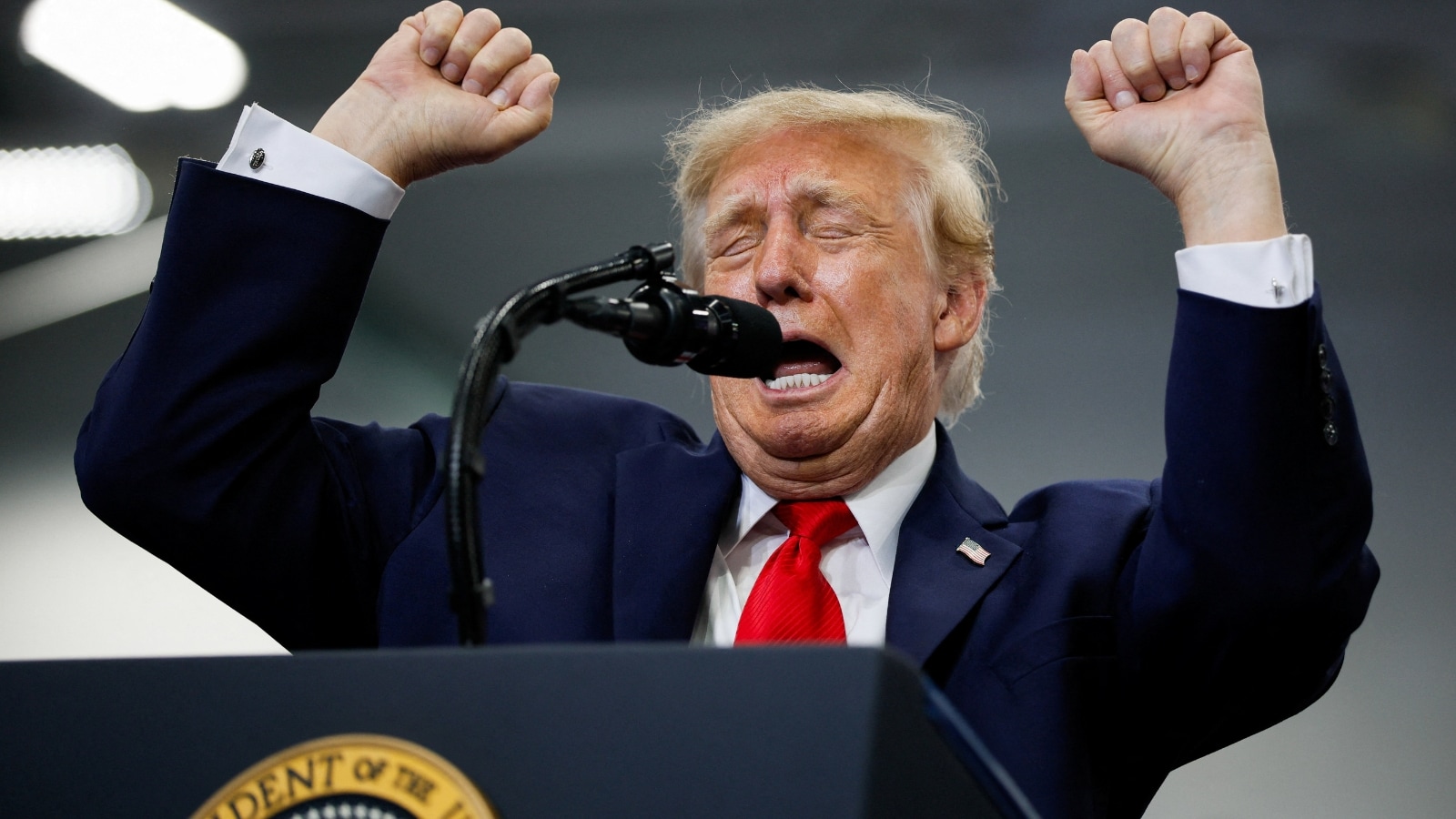
When a state executive threatens felony prosecution against federal actors or allied operatives over alleged polling place interference, the rhetoric masks a complex collision of constitutional federalism, statutory criminal law, and administrative deterrence. The confrontation between California Governor Gavin Newsom and Donald Trump ahead of the midterm elections illustrates a recurring structural vulnerability in American election administration: the decentralized execution of national contests. Understanding this conflict requires stripping away partisan theater to examine the exact legal mechanisms governing poll access, the operational incentives driving preemptive deterrence, and the constitutional boundaries that dictate whether state prosecutors can actually indict federal personnel.
The Architecture of Decentralized Election Administration
The United States does not conduct a single national election; it conducts thousands of simultaneous county-level elections governed by state statutes and constrained by federal constitutional baselines. Under Article I, Section 4 of the U.S. Constitution—the Elections Clause—states hold the primary authority to prescribe the "Times, Places and Manner" of holding elections for Senators and Representatives, subject to congressional alteration.
This structural design creates an asymmetric operational environment. While federal campaigns and national political committees operate with centralized messaging and nationwide strategy, physical polling locations are governed by hyper-local administrative rules enforced by state attorneys general, county district attorneys, and local law enforcement.
When a national political figure suggests deploying federal personnel, law enforcement, or organized monitors to polling locations in a specific state, they collide directly with state-level statutory perimeters. In California, the legal boundary around a voting site is strictly codified. The California Elections Code establishes a physical buffer zone—typically 100 feet from the entrance of a polling place or ballot drop box—within which electioneering, loitering, and unauthorized polling are prohibited. Crossing this threshold with the intent to dissuade, intimidate, or impede a voter transitions an administrative violation into a criminal offense.
The Three Pillars of State Deterrence Strategy
A governor's public declaration that election interference will result in felony charges functions as a calculated preemptive deterrence mechanism. Rather than waiting for incidents to occur on Election Day—when immediate judicial remedies are slow and voter suppression effects are irreversible—the executive branch uses statutory signaling to alter the risk calculus of potential bad actors. This deterrence framework rests on three distinct pillars:
- Statutory Escalation and Mens Rea: Under California Elections Code Section 18540, using or threatening to use force, violence, or coercion to compel a person to vote or refrain from voting is a felony punishable by imprisonment in state prison. Crucially, the statute does not require physical battery to trigger felony exposure; the mere presence of coordinated intimidation or deceptive practices designed to obstruct access satisfies the actus reus (the physical act) if paired with the requisite mens rea (criminal intent). By highlighting the felony classification upfront, state leadership forces potential operatives to weigh the personal cost of state prison against the marginal political utility of disrupting a precinct.
- The Pardon Immunity Gap: A critical variable in federal-state political clashes is the limit of executive clemency. Under Article II, Section 2 of the U.S. Constitution, presidential pardon power extends exclusively to offenses against the United States. A president cannot pardon an individual convicted of a state felony. When a governor emphasizes state-level felony prosecution, they are explicitly reminding political operatives, private contractors, and rogue actors that federal executive protection does not extend into state superior courts. This eliminates the moral hazard often present when operatives assume federal alignment guarantees legal immunity.
- Asymmetric Enforcement Speed: Civil rights litigation under federal statutes—such as the Voting Rights Act of 1965 or the Enforcement Act of 1871 (the Ku Klux Klan Act)—typically moves at the speed of federal district court dockets, often taking months or years to resolve. Conversely, state criminal statutes empower local sheriff's departments and municipal police to execute immediate arrests on Election Day to preserve public order. Publicizing this capability shifts the operational timeline from post-election litigation to real-time physical removal.
The Constitutional Chokepoint: Supremacy Clause Immunity
While a governor can threaten prosecution against private citizens, campaign volunteers, or independent political groups with clear legal authority, the calculus changes drastically if the alleged interference involves sworn federal officers acting under color of federal law. This introduces the doctrine of Supremacy Clause immunity, rooted in Article VI, Clause 2 of the Constitution and established by the Supreme Court in In re Neagle (1890).
If a federal official—such as a Department of Justice monitor, a U.S. Marshal, or an immigration enforcement agent—is deployed near a polling site and subsequently charged by a state prosecutor with voter intimidation, the case will inevitably trigger a jurisdictional battle. To secure immunity from state prosecution, the federal officer must satisfy a two-prong test:
- Authorization: The officer must have been performing an act that they were authorized to do by the law of the United States.
- Necessity and Propriety: In performing that authorized act, the officer must have done no more than what was necessary and proper for them to do, based on an objectively reasonable belief that their actions were required to fulfill their federal duty.
This legal reality reveals the primary limitation of a governor's prosecutorial threat. Federal law explicitly restricts the deployment of armed federal troops or federal agents at polling places. Under 18 U.S.C. § 592, it is a federal crime for any officer of the U.S. government to bring armed troops or armed men to any place where a general or special election is held, unless necessary to repel armed enemies of the United States. Therefore, if armed federal agents were ordered to patrol polling stations without a statutory mandate, their actions would be ultra vires (beyond their legal powers). Because an unlawful order negates the first prong of the Neagle test, Supremacy Clause immunity would collapse, leaving the individual federal agents exposed to state felony charges.
Conversely, if the federal presence consists of unarmed Department of Justice Civil Rights Division personnel conducting standard compliance monitoring under federal voting statutes, a state governor has zero authority to arrest or prosecute them. Any attempt by state law enforcement to impede authorized federal election observers would violate the Supremacy Clause and trigger immediate federal injunctive relief.
The Cost Function of Poll Disruption Tactics
To understand why political rhetoric repeatedly centers on polling place interference, analysts must evaluate the underlying game theory of voter turnout. In high-turnout midterm elections, margins in competitive congressional districts often compress to a few thousand votes. Within this narrow band, administrative friction acts as a direct tax on voter participation.
The economic cost function of voting dictates that an individual will cast a ballot only if the perceived utility of voting exceeds the transaction costs of doing so. Transaction costs include travel time, queue duration, opportunity cost of lost wages, and psychological stress. Poll interference tactics—whether executed through aggressive "poll watching," unauthorized checkpoint setups, or the spread of disinformation regarding law enforcement presence—are engineered specifically to spike these transaction costs in targeted precincts.
- Queue Latency: Challenging voter eligibility at the check-in desk forces poll workers to pause standard processing and initiate provisional ballot protocols. Even if a challenge is baseless, adding three minutes of processing time per voter across fifty voters creates a two-and-a-half-hour bottleneck. Longer lines directly correlate with higher voter abandonment rates, particularly among hourly wage earners who cannot afford extended absences from work.
- Chilling Effects via Ambiguity: The mere rumor of law enforcement checkpoints or immigration enforcement near polling locations depresses turnout among eligible, naturalized citizens who fear bureaucratic entanglement or harassment for family members. The physical deployment of agents is often unnecessary to achieve the suppressive effect; the public threat alone generates measurable turnout friction.
By issuing an equally public, severe counter-threat of felony prosecution, a state executive attempts to invert this cost function. The objective is to raise the personal transaction cost of executing a disruption tactic so high that local operatives refuse to participate, thereby neutralizing the ground-level execution of a national rhetorical strategy.
Operational Execution and Tactical Realities
Despite the clarity of statutory frameworks, the actual execution of anti-interference protocols on Election Day faces severe operational bottlenecks. A governor does not personally arrest or prosecute individuals; execution relies on a fragmented chain of command involving the California Secretary of State, the Attorney General, 58 independent County Registrars of Voters, and 58 independently elected District Attorneys.
This decentralization introduces three distinct points of failure:
- Evidentiary Thresholds in Chaotic Environments: Proving felony voter intimidation beyond a reasonable doubt requires documenting specific intent. In a crowded, noisy polling environment, distinguishing between aggressive, constitutionally protected First Amendment political speech outside the 100-foot buffer and illegal intimidation inside the perimeter is notoriously difficult for responding patrol officers. Without clear video evidence and corroborating witness statements from busy poll workers, prosecutors frequently decline to file felony charges, downgrading incidents to minor trespassing or disturbing the peace.
- Local Prosecutorial Discretion: While the California Attorney General holds supervisory authority over district attorneys and can step in to prosecute election crimes directly, initial intake almost always occurs at the county level. In politically polarized counties, local sheriffs and district attorneys may interpret the threshold for "interference" differently than the state executive in Sacramento, leading to uneven enforcement across neighboring jurisdictions.
- The Post-Hoc Fallacy: Criminal prosecution is an inherently retrospective tool. Even a successful felony conviction secured eighteen months after an election does not restore the franchise to a voter who walked away from a disrupted polling line on Election Day. Consequently, legal threats are only functionally successful if they prevent the incident from occurring in the first place.
Strategic Blueprint for Election Integrity Operations
For state administrators, legal counsel, and election officials managing high-friction election cycles, relying solely on executive rhetoric is an insufficient defense. Deterrence must be backed by pre-positioned operational architecture that removes ambiguity before polls open.
To neutralize polling place interference without escalating localized chaos, state election authorities must execute a four-part operational protocol:
First, establish bright-line physical perimeters at all voting centers prior to opening. Jurisdictions should use physical stanchions, high-visibility tape, and clear signage to mark the exact 100-foot statutory boundary. Removing spatial ambiguity eliminates the primary legal defense used by disruptive actors—that they were unaware of their proximity to the voting entrance.
Second, deploy rapid-response civil legal teams rather than relying exclusively on armed law enforcement. Pairing attorneys from the Attorney General's office with county election administrators allows for immediate, on-site de-escalation and statutory warnings. When an operative is handed a formal written notice citing the exact felony statute and penalty by a state prosecutor on camera, compliance rates spike immediately without requiring a physical arrest that could further disrupt voting operations.
Third, decouple ballot processing from challenge resolution. Poll workers must be trained to route any challenged voter immediately to a dedicated secondary station managed by a senior precinct supervisor. Isolating disputes prevents single-voter challenges from stalling the primary check-in queue, protecting the throughput rate of the polling location.
Fourth, maintain strict separation between state police and federal observers. State executives should issue clear directives to local law enforcement distinguishing between authorized, credentialed federal monitors from the Department of Justice and unauthorized private "ballot security" groups. Ensuring local police understand the exact credentials required for legal access prevents both unlawful interference with federal officials and passive tolerance of unauthorized militants.
Ultimately, the clash between state prosecutorial threats and national political rhetoric highlights a permanent reality of American governance: while national actors control the narrative, state administrators control the physical terrain. In future election cycles, the integrity of that terrain will depend less on the volume of executive warnings and more on the precision of local statutory enforcement.