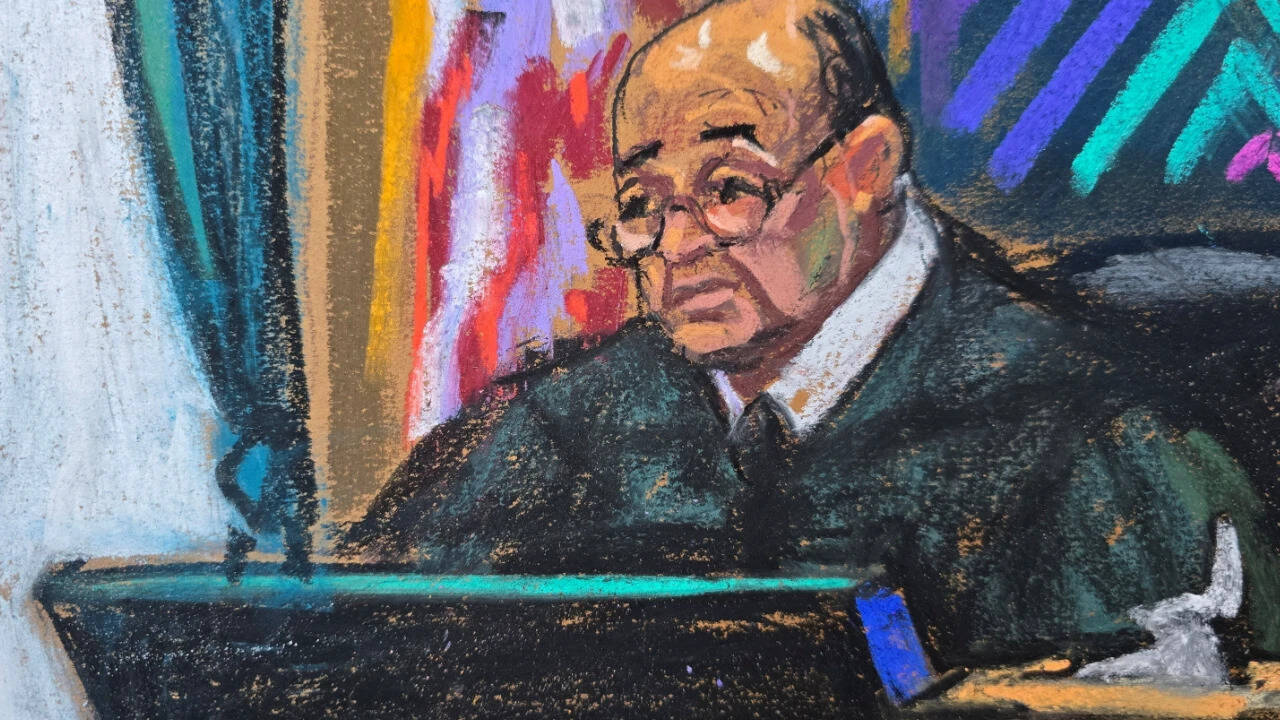
Federal Judge Alvin Hellerstein died at 92, leaving behind one of the most consequential judicial records in the Southern District of New York. If you only recognize his name from headlines connecting him to the high-stakes narco-terrorism prosecution of Venezuelan President Nicolás Maduro, you're missing nearly three decades of massive legal history.
He wasn't just another senior jurist sitting on a prestigious Manhattan bench. Hellerstein was an institutional force who routinely stared down presidents, intelligence agencies, corporate giants, and accused terrorists without blinking. When he took senior status in 2011, most observers assumed he'd quietly scale back his docket and enjoy an easier schedule. Instead, he kept taking the heaviest, most politically volatile cases in the country right into his nineties.
Understanding why his passing matters requires looking past the latest cable news chyron. You have to look at how a Bronx-born jurist built a reputation for relentless independence that frustrated the Bush, Obama, Trump, and Biden administrations alike.
Why Judge Alvin Hellerstein Mattered Beyond the Headlines
People tend to reduce federal judges to whoever appointed them. President Bill Clinton nominated Alvin Hellerstein to the U.S. District Court for the Southern District of New York in 1998. Yet anyone who walked into his Foley Square courtroom expecting predictable partisan rulings quickly learned how wrong they were.
He cared about procedure, constitutional limits, and executive accountability. That's it.
I've followed federal dockets in Manhattan for years, and few judges commanded a courtroom quite like Hellerstein. Lawyers knew they couldn't get away with vague rhetoric or bureaucratic stalling in front of him. If the government claimed national security required secrecy, Hellerstein demanded proof rather than taking officials at their word. If defense attorneys tried to turn a legal proceeding into a political circus, he shut it down in seconds.
Born in New York City in 1933, Hellerstein graduated from Columbia College and Columbia Law School before serving in the U.S. Army Judge Advocate General's Corps. He spent decades in private practice as a commercial litigator before taking the bench at age 64. That background gave him a sharp, practical eye for complex financial records, corporate liability, and institutional stonewalling. He didn't get bogged down in abstract theory when concrete facts were sitting right on the docket.
The Maduro Prosecution and International Narco-Terrorism
When federal prosecutors in Manhattan unsealed sweeping narco-terrorism and drug trafficking indictments against Nicolás Maduro and senior Venezuelan officials in March 2020, the case landed squarely on Hellerstein's docket. Suddenly, a nonagenarian judge in Lower Manhattan became the central judicial figure in a geopolitical standoff between Washington and Caracas.
The Department of Justice accused Maduro and his inner circle of leading the Cártel de los Soles, alleging they conspired with Colombian guerrilla groups to flood the United States with cocaine. Prosecutors framed the scheme not merely as criminal enterprise, but as a deliberate effort to use narcotics as a weapon against American society.
Handling a docket tied to a sitting foreign head of state involves massive legal landmines. Questions of sovereign immunity, extraterritorial jurisdiction, and classified intelligence immediately collided inside his courtroom. While Maduro himself remained in Caracas out of reach of U.S. marshals for years, several co-defendants—including former Venezuelan military intelligence chief Hugo Carvajal and retired general Clíver Alcalá—eventually appeared before Hellerstein.
He treated those proceedings with the exact same methodical rigor he applied to every other criminal case. Consider how he handled Clíver Alcalá's guilty plea in 2023. Rather than letting political theater dominate the sentencing phase, Hellerstein focused strictly on the evidentiary record, ultimately handing down a 21-year prison sentence in 2024 after scrutinizing Alcalá's role in supplying weapons and support to the FARC.
The Massive 9/11 Litigation Nobody Else Wanted
If you want to understand Hellerstein's true stamina, look back at the decade following September 11, 2001.
Congress created the September 11th Victim Compensation Fund to help families recover without endless litigation, while simultaneously funneling all traditional tort lawsuits related to the attacks into a single federal court. Every single wrongful death, personal injury, and property damage lawsuit tied to the hijacked flights landed on one judge's desk.
Alvin Hellerstein got the assignment.
For over ten years, he managed thousands of consolidated claims against airlines, airport security contractors, Boeing, and the Port Authority of New York and New Jersey. Legal analysts initially predicted the litigation would drag on for thirty years and bankrupt multiple industries. Hellerstein refused to let that happen. He pushed both sides toward structured settlements, ruled firmly on federal preemption issues, and forced transparency on security failures without letting the cases spiral out of control.
He also presided over the sprawling lawsuits filed by thousands of Ground Zero rescue and recovery workers who developed severe respiratory illnesses and cancers after breathing toxic dust at the World Trade Center site. When the City of New York and its contractors proposed an initial settlement in 2010, Hellerstein stunned the legal community by rejecting it. He looked at the numbers, calculated how much money would go to lawyers versus sick firefighters and police officers, and flatly declared the deal wasn't enough.
Because he stood his ground, the parties went back to the negotiating table and raised the settlement pool by tens of millions of dollars while capping legal fees. That single decision directly put more money into the hands of dying first responders.
Confronting Executive Power and Government Secrecy
A lot of judges talk about checks and balances during confirmation hearings. Hellerstein actually enforced them when it was deeply unpopular to do so.
During the War on Terror, the American Civil Liberties Union filed Freedom of Information Act lawsuits demanding the release of records detailing the torture and abuse of detainees at Abu Ghraib and other U.S. military facilities. The Bush administration—and later the Obama administration—fought tooth and nail to keep those photographs and memos hidden, arguing disclosure would endanger American troops abroad.
Hellerstein repeatedly ordered the government to turn over documents and release redacted detainee abuse photos, ruling that the public had a statutory right to see how its government operated. Even when Congress later passed targeted legislation allowing the Defense Secretary to block specific photos, Hellerstein forced the administration to justify every single withholding individually rather than granting a blanket pass.
He showed that exact same willingness to check executive authority during the Trump administration.
- Michael Cohen's Release: In July 2020, when federal prison officials abruptly sent Donald Trump's former personal lawyer Michael Cohen back to solitary confinement after he refused to sign an agreement barring him from publishing a tell-all book, Hellerstein intervened immediately. He ruled the government's action was unlawful retaliation aimed at silencing protected First Amendment speech, ordering Cohen released back to home confinement.
- The Hush Money Removal Bid: In 2023, when Trump's legal team tried to move his Manhattan criminal hush-money case from New York state court into federal court, Hellerstein rejected the bid. He wrote a crisp, direct opinion explaining that paying off an adult film actor wasn't an official presidential act under federal law.
- Harvey Weinstein's Civil Claims: He even took over pieces of the complex civil litigation surrounding disgraced film producer Harvey Weinstein, rejecting an early global settlement proposal in 2020 because he felt it unfairly shielded Weinstein and corporate directors while shortchanging accusers.
Notice a pattern here? Hellerstein didn't care who held power or how expensive their legal team was. If an argument violated basic constitutional principles or basic fairness, he tossed it out.
What Most Coverage Misses About His Judicial Philosophy
Media obituaries naturally gravitate toward famous names like Maduro, Trump, and Weinstein. Focusing only on celebrity defendants misses the deeper lesson of Hellerstein's career.
He represented a fading breed of generalist federal trial judge. Today, federal litigation often feels hyper-specialized and overly deferential to administrative agencies or procedural technicalities. Hellerstein operated differently. He believed a district judge's primary job was to reach a just, practical resolution as efficiently as possible while keeping the courthouse doors open to the public.
He was also deeply committed to his Orthodox Jewish faith, a fact that openly informed his respect for the rule of law and moral accountability without ever bleeding improperly into his legal rulings. In his chambers and in public speeches, he frequently spoke about the biblical mandate Tzedek, tzedek tirdof—"Justice, justice shall you pursue." For him, pursuit wasn't passive. You didn't wait for justice to happen on its own; you actively cleared away the bureaucratic roadblocks preventing it.
Critics occasionally accused him of moving too fast or intervening too aggressively in settlement talks. Defense lawyers sometimes grumbled that he kept them on too short a leash during oral arguments. Honestly, that impatience was usually aimed at lawyers wasting time or hiding behind technicalities to avoid accountability.
How His Passing Impacts Pending Federal Cases
When a senior federal judge in the Southern District of New York passes away, the court's administrative machinery moves quickly to reassign active dockets. Every pending criminal prosecution, civil dispute, and ongoing monitoring order under Hellerstein's supervision gets redistributed randomly among other active and senior district judges in Manhattan.
If you're tracking the ongoing fallout of the Venezuelan narco-terrorism indictments or related forfeiture proceedings, expect procedural delays over the coming months. A newly assigned judge has to absorb years of sealed filings, classified intelligence briefings under the Classified Information Procedures Act, and prior evidentiary rulings before scheduling major hearings.
Nothing gets dismissed simply because the presiding judge dies, though momentum inevitably slows while a new jurist gets up to speed.
Where to Read His Actual Rulings
If you want to understand how American federal courts actually function when tested by crisis, skip the pundit commentary and read Hellerstein's own written opinions. You can pull them directly through public legal databases:
- Search CourtListener or RECAP for In re September 11 Litigation to see how a single trial judge managed mass-tort chaos without sacrificing individual claimants.
- Look up ACLU v. Department of Defense in the Southern District of New York archives to read how federal courts weigh FOIA transparency laws against executive branch national security claims.
- Review his 2023 opinion in People of the State of New York v. Donald J. Trump for a masterclass in clear, jargon-free judicial writing on the limits of federal officer removal statutes.
Alvin Hellerstein proved that a single trial judge armed with stubborn independence can hold the most powerful institutions on earth to account.