The Myth of the Great Helmsman
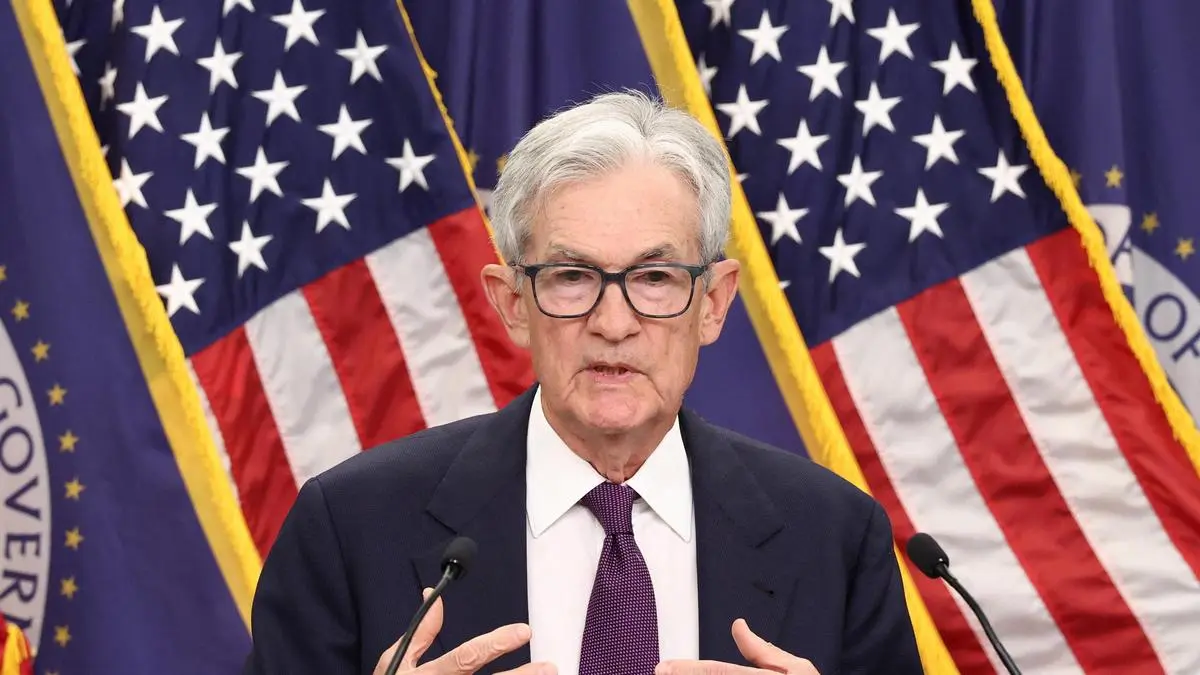
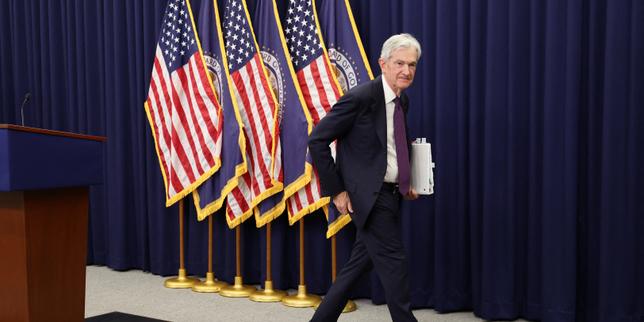
The financial press is currently obsessed with a fairytale. They call it "Jerome Powell’s Final Act." The narrative is as predictable as it is lazy: an aging statesman at the helm of the Federal Reserve, navigating the treacherous waters between a soft landing and a recessionary abyss, preparing to hand over a pristine legacy.
It is a comforting story. It is also a lie.
Jerome Powell is not "steering" the global economy. He is reacting to it with the grace of a man trying to catch a falling knife while wearing oven mitts. The consensus view suggests that Powell’s tenure has been a masterclass in flexibility. In reality, it has been a decade of profound institutional failure disguised as "data-dependent" pragmatism. To understand why the next few years will be a bloodbath for traditional portfolios, you have to stop looking at Powell as a leader and start seeing him as a lagging indicator.
The Transitory Trap was Not a Mistake
Every mainstream analyst treats the 2021 "transitory inflation" call as a minor oopsie—a technical glitch in the Fed's modeling. That is a fundamental misunderstanding of how the Eccles Building operates.
It wasn't a mistake. It was a choice.
The Fed chose to prioritize the solvency of the U.S. Treasury over the purchasing power of your paycheck. When debt-to-GDP ratios hit levels not seen since World War II, the central bank only has one move: financial repression. You keep interest rates below the rate of inflation for as long as humanly possible to melt away the real value of the debt.
Powell didn't "miss" inflation. He invited it. He let it run until the political pressure became a greater threat than the debt servicing costs. If you think the current pivot to rate cuts is about "mission accomplished" on the 2% target, you aren't paying attention to the fiscal math.
The Fallacy of the 2% Target
Why 2%?
Ask any economist, and they will give you a convoluted answer about "buffer zones" against deflation. The truth is far more cynical. 2% is a completely arbitrary number popularized by the Reserve Bank of New Zealand in the late 1980s. It has no basis in hard science. It is a psychological anchor.
By clinging to this target, Powell creates an illusion of precision. He wants you to believe the Fed has a thermostat for the economy. In reality, they are playing with a light switch in a house they don't own.
The Cost of Artificial Stability
When the Fed suppresses volatility, it doesn't disappear. It migrates. By keeping rates at zero for a decade and then spiking them to 5% in a frantic heartbeat, Powell has created a "brittle" system.
- The Zombie Economy: Cheap money kept unproductive firms alive. We have a generation of companies that only exist because the cost of capital was effectively negative.
- The Housing Lock-in: By fueling a mortgage frenzy and then slamming the door shut, the Fed has frozen the most important asset class in the world.
- The Wealth Gap: Quantitative Easing (QE) was the greatest transfer of wealth to the top 1% in human history.
I’ve spent twenty years watching traders hang on every word of a Fed minutes release as if it were scripture. It’s pathetic. While the market waits for Powell to give them a "signal," the actual plumbing of the financial system—the repo markets, the Eurodollar system, and shadow banking—is moving independently of his speeches.
Stop Asking About the Soft Landing
The most common question in finance right now is, "Can Powell stick the landing?"
It’s the wrong question. It assumes there is a runway.
The U.S. economy is currently a $28 trillion machine running on a $2 trillion annual deficit. We are in a state of permanent fiscal stimulus. Powell can raise or lower the Fed Funds Rate all he wants, but as long as the Treasury is pumping liquidity into the system through massive deficit spending, the Fed's "restrictive" stance is a theater performance.
The "Soft Landing" is a marketing term used to keep retail investors from selling their index funds. In a real economy, you need creative destruction. You need the weak firms to fail so capital can be reallocated to the strong. Powell’s greatest "achievement"—preventing a deep recession—is actually his greatest failure. He has prevented the necessary clearing of the brush, ensuring that the eventual forest fire will be catastrophic.
The Der des Der Delusion
The French call this his "der des der"—the last of the last. The final struggle. This implies that once Powell leaves, the "normalcy" of the pre-2008 era might return.
It won't.
The next Fed Chair won't be a technocrat; they will be a political appointee tasked with one specific job: debt monetization. The independence of the Federal Reserve is a ghost. It died in 2020 when the Fed began buying corporate bond ETFs and directly supporting Treasury auctions.
If you are waiting for a return to "sound money," you are waiting for a ship that has already sunk. The future of the Fed is not "inflation fighting." It is "yield curve control." They will eventually be forced to cap interest rates to prevent the government from going bankrupt, regardless of what inflation is doing.
The Insider's Truth: You Are the Liquidity
If you are following the "consensus" advice of 60/40 portfolios and "waiting for the Fed to cut," you are the exit liquidity for the people who actually understand the mechanics of the system.
Institutional players aren't looking at the dot plot. They are looking at the Term Premium. They are looking at the Real Yields. They are looking at the fact that the U.S. government now spends more on interest payments than it does on its entire defense budget.
$$Interest \ Payments > Defense \ Spending$$
That equation is the only thing that matters. It limits Powell’s options to a tiny, suffocating box. He can’t keep rates high enough to kill inflation because he’d kill the Treasury. He can’t lower them too far because the dollar would collapse. He is paralyzed, yet the media treats him like a grandmaster playing 4D chess.
How to Actually Play This
Discard the idea that the Fed is your friend or your protector.
- Short the Consensus: When the headlines scream "Soft Landing Confirmed," that is your signal to hedge. Markets price in perfection; reality rarely delivers it.
- Ignore the "Data-Dependent" Rhetoric: The Fed's data is backward-looking. Using CPI to set interest rates is like driving a car by only looking in the rearview mirror.
- Watch the Treasury, Not the Fed: Janet Yellen has more influence over market liquidity right now than Jerome Powell does. Watch the Treasury General Account (TGA) and the Quarterly Refunding Announcements. That is where the real "pivot" happens.
The risk of a "policy error" is 100% because the policy itself is based on the flawed premise that a small group of people can price the most important commodity in the world—time—more efficiently than a free market.
Powell’s legacy won't be that he saved the economy. It will be that he presided over the final erosion of the Fed’s credibility. He is the captain of a ship that is taking on water, telling the passengers that the breeze feels lovely.
Stop listening to the captain. Start looking for the lifeboats.