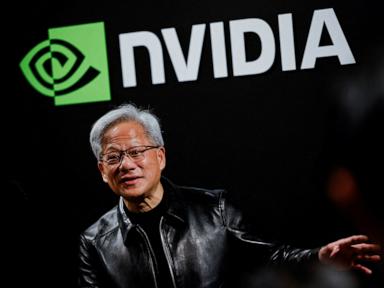
Everybody is obsessing over the wrong parts of the Jensen Huang soap opera.
They are gossiping about the affair with a former Megaspeed executive. They are hyperventilating over whispers of Beijing intelligence links. They are treating his November 12 resignation and his November 23 reinstatement like a scandalous palace intrigue straight out of a prestige television drama.
Stop looking at the bedroom. Look at the cap table and the White House switchboard.
The lazy consensus in the financial press frames this 11-day rollercoaster as a messy personal crisis resolved by an indispensable genius apologizing to his board and winning back his throne. That narrative is pure fiction. What actually happened between November 12 and November 23 was not a redemption arc. It was the formal death of independent corporate governance in American big tech, executed in broad daylight with a 33 percent stock surge as the victory lap.
The Competitor's Blind Spot: Treating an Institutional Coup Like Tabloid Gossip
Standard tech coverage loves a founder-hero story. When Huang posted on X admitting personal mistakes and saying he would return if asked, mainstream outlets treated it like a humble plea. When Nvidia's board initially shut the door and said it had no intention of bringing him back, pundits applauded the directors for upholding fiduciary duty and basic compliance.
Then, less than a week later, that same board voted unanimously to hand him back the CEO chair, the presidency, and his board seat.
Why? Not because new exculpatory evidence magically appeared in a Delaware law firm's binder. They folded because the most powerful political figures in Washington and the loudest billionaires in Silicon Valley formed a cartel to force their hand. President Donald Trump publicly demanded the board rehire him. Vice President JD Vance worked the backchannels. Elon Musk, Sam Altman, and Travis Kalanick cheered from the sidelines while lobbying behind closed doors.
Calling this a "scandal" misses the structural shockwave entirely. A scandal implies a breach of norms that gets punished. This was a stress test of whether a $4 trillion company actually has a board of directors, and the board failed in eleven days flat.
Key-Person Risk Is a Trap That Boards Build for Themselves
I have spent two decades advising enterprise boards and watching institutional investors light billions of dollars on fire because they convinced themselves that one executive was irreplaceable. Every single time, the story ends the same way: the founder realizes they have zero accountability, and the board realizes they are just decorative furniture.
Let us define key-person risk properly, because Wall Street abuses the term daily. Key-person risk is not the operational danger that a company loses money when a visionary leaves. True key-person risk occurs when a single executive accumulates so much undocumented architectural control, political leverage, and market aura that the company's governance structure becomes physically incapable of firing them—even when federal investigators are scrutinizing their personal life for foreign counterintelligence exposure.
Consider the timeline of Nvidia's collapse in spine:
- November 8: Huang admits to an extramarital affair with Alice Huang, a former executive at Singapore-based Megaspeed—a firm already under criminal scrutiny over suspected chip smuggling into China.
- November 12: Following revelations of additional relationships with direct reports inside Nvidia, the board accepts his resignation and names CFO Colette Kress interim chief.
- November 17: The board tells investors flatly that it will not reinstate him.
- November 23: After direct intervention from the White House claiming Huang poses no national security threat, the board reverses itself completely and restores all his titles.
Notice what disappeared during those 11 days. The compliance violations involving subordinate employees did not vanish. The questions surrounding Megaspeed's export-control probe did not evaporate. The only variable that changed was raw political and financial coercion.
When Nvidia shares shed over $600 billion after his exit and then added roughly $950 billion upon his return, the market sent an unmistakable message to every C-suite in America: if your market cap is big enough, HR rules, conflict-of-interest policies, and board oversight are completely optional.
Dismantling the "Unicorn Genius" Myth
If you search for coverage of this mess, you run into the same repetitive questions from retail investors and tech commentators. Every single one of those questions rests on a broken premise.
Did Nvidia have any choice given the stock crash?
Yes. A 15 percent drawdown on a hyper-inflated AI valuation is normal market digestion, not an existential crisis. Colette Kress is one of the sharpest operators in the semiconductor sector, backed by an engineering bench that spent thirty years building the CUDA software moat. Nvidia's hardware roadmap for the next 36 months was already locked in silicon before November. The board did not bring Huang back to save the company's engineering; they brought him back to pacify momentum traders and political patrons who treat a stock ticker like a scoreboard.
Does White House clearance settle the national security question?
Not even close. When senior executive branch officials assure a corporate board that an executive poses "no national security risk," that is a political judgment call, not a forensic counterintelligence clearance. Bipartisan lawmakers on Capitol Hill immediately blasted the reinstatement for a reason. Intelligence assessments from outlets like The Wall Street Journal noted that while officials had not proven Alice Huang was actively tasked with stealing state secrets, she had been in contact with Chinese intelligence during the relationship. In any normal defense or dual-use technology contractor, undisclosed contact with a foreign intelligence service via a romantic partner results in immediate suspension of access, not a triumphant return to the corner office.
Why did rivals like Sam Altman and Elon Musk lobby for his return?
Self-preservation. Think about the precedent if a founder-CEO of a trillion-dollar AI titan could actually be removed by an independent board over personal misconduct and governance failures. If Nvidia's directors could hold the line against Jensen Huang, then OpenAI's board, Tesla's board, and every other Silicon Valley governance committee suddenly gains teeth. Musk, Altman, and Kalanick were not defending Jensen Huang out of pure friendship. They were defending the doctrine of founder immunity—the idea that tech monarchs answer to no one. Notice how traditional institutional operators like Tim Cook, Sundar Pichai, Mark Zuckerberg, Satya Nadella, and Jeff Bezos stayed dead silent. They know an institutional liability when they see one.
The Hidden Bill Coming Due for Shareholders
Let me be completely honest about the downside of my own argument. In the short term, betting against Jensen Huang's operational execution is a widow-maker trade. The man built a $4 trillion juggernaut from a Denny's booth, and his relentless pace is real. Shareholders who held through the 11-day panic made a fortune when the stock ripped 33 percent on Monday morning. If you only care about next quarter's data center revenue, the board's capitulation looks like a brilliant pragmatic pivot.
That short-term sugar high hides three toxic liabilities that will haunt Nvidia for years:
- Weaponized Regulatory Exposure: By relying on direct White House intervention to rescue his job, Huang turned Nvidia from an independent commercial supplier into a political pawn. What one administration grants via phone calls and Truth Social posts, the next administration—or a hostile congressional committee—can dismantle through subpoenas and Commerce Department export bans.
- Internal Cultural Rot: Every compliance officer, HR manager, and mid-level director at Nvidia just watched the CEO survive relationships with subordinates and a foreign intelligence scare without losing a single share of unvested equity. Try enforcing a code of conduct on a senior vice president after that. You cannot.
- Zero Succession Credibility: Any executive with the talent to eventually succeed Huang just learned that the board will never actually hand over the keys. The smartest lieutenants at Nvidia will quietly start taking calls from rival hyperscalers building custom ASICs, accelerating the very competition Nvidia needs to crush.
What Institutional Investors Should Actually Do Now
If you manage capital or sit on a governance committee, stop treating this episode as a quirky Silicon Valley anecdote. Apply three hard rules immediately:
- Price in the Political Beta: Stop modeling Nvidia purely on semiconductor supply chains and hyperscaler capex. You now own a stock whose leadership stability depends on executive branch favor. Discount your valuation multiples accordingly to account for partisan whiplash.
- Demand Structural Separation: When a founder returns under political pressure, institutional shareholders must push for an independent non-executive chair with sole authority over compliance, export-control audits, and related-party reviews. Letting Huang hold the CEO title and a board seat simultaneously after a governance meltdown is asking for a repeat.
- Audit the Lieutenants, Not the King: Watch the turnover rate among Nvidia's top hardware and CUDA architects over the next two quarters. When founder immunity becomes absolute, talent drains from the second tier down.
Corporate boards exist for one reason: to protect the long-term enterprise from the destructive impulses of the people running it. On November 23, Nvidia's directors proved they no longer serve the company, the law, or the shareholders. They just work for Jensen.