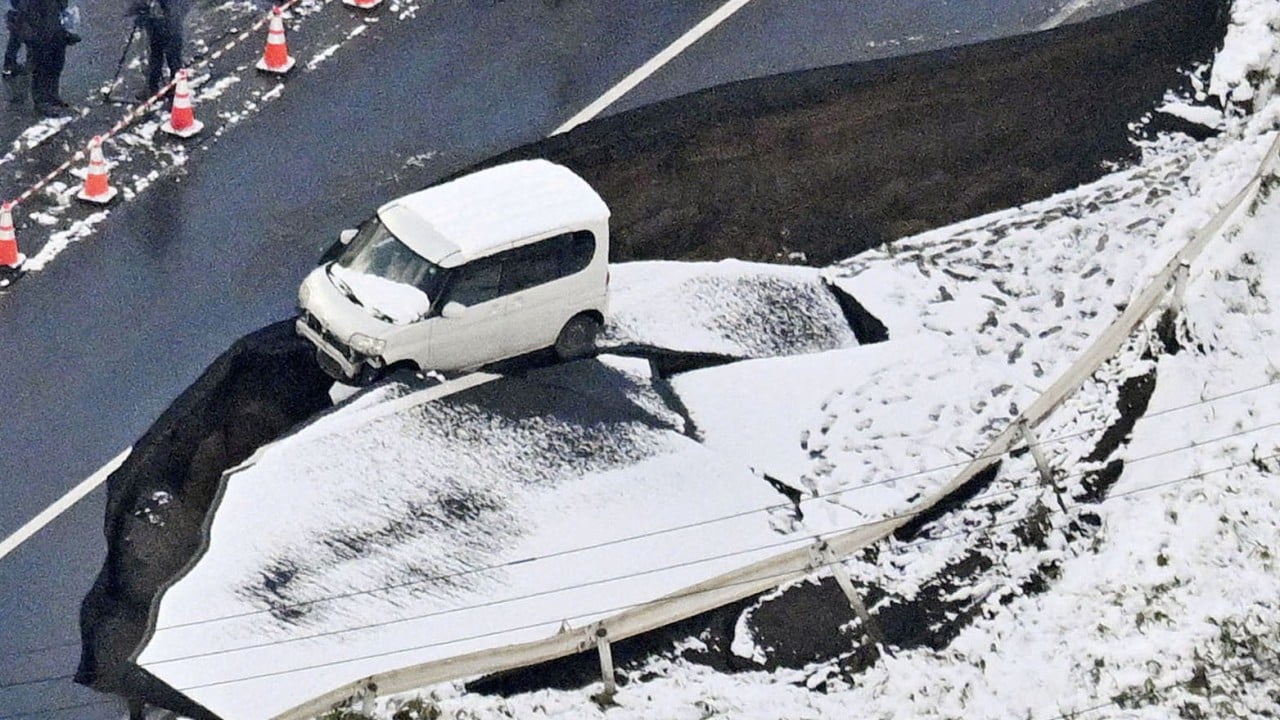
Predicting a major earthquake is a notoriously tricky business, but in Japan, scientists thought they had the math figured out. For decades, the official narrative surrounding the Nankai Trough—a massive undersea trench stretching off Japan's Pacific coast—was straightforward: a devastating megaquake hits every 100 to 150 years with clockwork precision. Government warnings routinely project a 70% to 90% chance of a magnitude 8 to 9 cataclysm within the next 30 years.
Then the fault plane moved in a way nobody anticipated.
Recent geological studies show that the "locked zone"—the stuck area of the fault accumulating energy before a major rupture—isn't stationary. It creeps, shifts position, and alters its geometry over time. That shifting boundary is upending traditional seismic models, leaving researchers scrambling to recalculate how, when, and where Japan's most dangerous fault line will snap.
The Myth of the Rigid Clockwork Fault
For years, earthquake forecasting relied heavily on historical regularity. Scientists analyzed centuries of written records—dating back to the Hakuhō earthquake in 684 AD—and noted that the Nankai Trough ruptures in fairly consistent cycles. The logic seemed rock-solid: the Philippine Sea Plate slides under the Eurasian Plate at a steady rate, friction locks the boundary, strain builds up, and eventually, the plate snaps back in a massive quake.
Except nature doesn't follow rigid human spreadsheets.
New high-resolution seafloor monitoring revealed that the stuck region of the fault isn't a fixed block. Instead, the contact patch between the two tectonic plates expands, shrinks, and migrates across the subduction zone. In simple terms: the engine driving the megaquake is constantly changing its shape.
This dynamic behavior creates a massive forecasting dilemma:
- Shifting epicenters: If the locked zone moves, the starting point of the next rupture changes completely.
- Unpredictable magnitude: A shifting contact area means energy accumulates unevenly, making it nearly impossible to estimate if the next quake will be a localized magnitude 8.0 or a coast-shattering magnitude 9.0+.
- Misleading warning signs: Slow-slip events—where plates slide past each other silently without shaking—happen in unexpected spots along the trench, sending false signals or hiding actual stress buildups.
       [ Eurasian Plate (Japan) ]
               \
  Locked Zone   \  <- (Shifts over time, altering stress points)
   (Creeps)      \
------------------\--------------------------
                   \   Philippine Sea Plate
                    v  (Subducts under Japan)
Why Static Probability Calculations Fall Short
If you've spent any time reading Japanese news, you've seen the figure: "80% chance in 30 years." It sounds terrifyingly precise. Yet that percentage has hovered around the same range for decades.
The problem lies in the statistical models. Standard models assume a fixed fault geometry with constant friction parameters. When you plug in a shifting locked zone, those probability curves broaden significantly.
When a subduction zone is dynamic, a 30-year window is essentially an educated guess. The fault might release its energy through a series of smaller, less destructive earthquakes spread over decades, or it could unleash everything at once in a worst-case megathrust event. The shifting behavior means both scenarios remain equally plausible at any given moment.
Real Stakes and Massive Economic Projections
This uncertainty isn't just an academic debate among seismologists. It drives national infrastructure policy, building codes, and emergency management for tens of millions of people.
The Japanese government's worst-case models project staggering numbers if a full-scale Nankai Trough megaquake strikes:
- Casualties: Up to 298,000 direct and indirect fatalities, mostly driven by massive tsunamis reaching Pacific coastal towns.
- Economic impact: Estimated direct and indirect economic damage reaching nearly 292 trillion yen (over $1.9 trillion USD), wiping out nearly half of the country's annual GDP.
- Infrastructure disruption: Tens of millions of residents losing power, water, and sewage access across 31 prefectures.
Because the potential devastation is so immense, issuing public warnings is a tightrope walk. In August 2024, after a magnitude 7.1 quake struck off Kyushu, Japan issued its first-ever official Nankai Trough "Megaquake Advisory." Beaches closed, travel was disrupted, and people panicked-bought supplies. Yet, no megaquake followed.
If forecasts remain imprecise due to shifting fault dynamics, warning fatigue becomes a very real threat. Cry wolf too often, and people stop evacuating when the true disaster strikes.
Rethinking Early Warning and Preparedness
The realization that the Nankai Trough isn't a simple, repeating clock has forced a major shift in how Japan approaches disaster readiness. Relying on long-term time forecasts is giving way to real-time ocean-floor monitoring.
Japan has deployed extensive undersea networks, such as DONET (Dense Oceanfloor Network system for Earthquakes and Tsunamis) and S-net, featuring thousands of sensors, strainmeters, and seismometers placed directly on the seafloor. Instead of trying to guess when the quake will happen 20 years from now, these systems track instantaneous crustal movements down to the millimeter.
What does this mean for anyone living in or visiting Japan?
- Focus on immediate response, not dates: Stop worrying about whether the quake happens tomorrow or in 2040. The probability metrics are moving targets.
- Understand local tsunami risk: Since a shifting fault can direct tsunami energy differently, coastal evacuation plans must assume the absolute maximum wave height—up to 34 meters in some regions—regardless of the initial quake magnitude.
- Rely on real-time alerts: Japan's J-Alert and early warning systems process initial P-waves within seconds. Those crucial seconds matter far more than long-term forecast percentages.
Scientists haven't given up on understanding the Nankai Trough, but the shifting fault line is a humbling reminder of nature's complexity. Static models are out; dynamic, real-time monitoring is in. Until the deep earth gives up its secrets, adaptability remains Japan's best defense.
Japan's megaquake risk explained
This short video provides crucial background context on the Nankai Trough megaquake risk and explains why Japanese authorities issued unprecedented public advisories.

/https://i.s3.glbimg.com/v1/AUTH_e84042ef78cb4708aeebdf1c68c6cbd6/internal_photos/bs/2026/g/B/3vpkvHQKizRKAfzDxjXA/vini-jr-antes-e-depois.jpg)