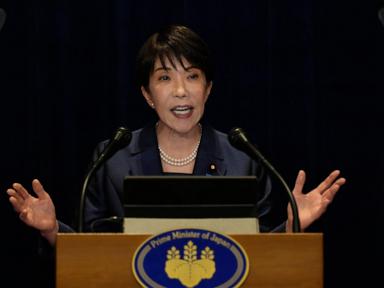
Mainstream foreign policy pundits love a clean binary. Either two nations are allies holding hands, or they are sworn enemies cutting off every phone line. When Japanese Prime Minister Sanae Takaichi stated that Tokyo and Moscow will keep talking despite deeply chilled diplomatic relations, the predictable chorus of armchair analysts called it weak, contradictory, or pointless.
They missed the entire board.
Keeping diplomatic channels open with an adversary while maintaining strict sanctions is not a sign of hesitation. It is the textbook definition of ruthless, pragmatic statecraft. While Western commentators treat silence as a virtue, Tokyo understands a brutal reality of geography and resource security that Washington and Brussels often forget. You cannot relocate an archipelago. Russia sits right next door to northern Japan, and pretending a nuclear-armed neighbor does not exist is a luxury Tokyo cannot afford.
The Lazy Consensus of Diplomatic Purism
Standard coverage of Russo-Japanese relations frames the situation as a failed romance. Articles obsess over the stalled peace treaty formally ending World War II hostilities, the frozen negotiations over the Northern Territories—known in Russia as the Southern Kuril Islands—and Japan’s alignment with G7 sanctions over Ukraine. The lazy conclusion is that because these big-ticket items are dead in the water, talking to Moscow achieves nothing.
That analysis confuses diplomacy with friendship.
Diplomacy is not a reward you hand out to countries that behave well. It is a risk-management tool you use specifically when a relationship turns toxic. I have watched corporate executives and policy teams burn billions of dollars in value because they let personal outrage dictate their communication strategy. When you stop talking to a hostile counterparty, you do not punish them. You blind yourself. You surrender your early-warning system, forfeit your ability to manage localized crises, and hand total narrative control to the other side.
Takaichi is known across Tokyo as a staunch conservative hawk. Nobody in the Liberal Democratic Party mistakes her for soft on national security. Precisely because her hawkish credentials are unassailable, she has the political capital to maintain pragmatic backchannels without looking like an appeaser. Critics who read her statement as a retreat are projecting their own simplistic worldview onto a far more calculated maneuver.
Geography Dictates Reality, Not Ideology
Look at a map of the Sea of Okhotsk. The distance between Hokkaido and Russian-controlled Kunashiri Island is roughly ten miles. On a clear day, Japanese fishermen can see Russian border patrol boats with the naked eye.
When relations freeze, the friction does not stay in abstract diplomatic cables. It hits the water immediately.
- Fisheries and maritime safety: For decades, bilateral agreements allowed Japanese vessels to operate safely in disputed waters around the Kurils. When Moscow suspends those frameworks in retaliation for sanctions, local Japanese coastal economies take a direct hit, and the risk of a naval miscalculation spikes.
- Search and rescue: Commercial shipping lanes and aviation corridors in Northeast Asia rely on real-time coordination between Tokyo and Moscow. A mechanical failure or severe storm in the North Pacific requires functioning hotlines between coast guards, regardless of what happens in Eastern Europe.
- Energy security: Japan imports roughly 90 percent of its energy. While Tokyo has aggressively diversified away from Russian coal and crude oil, liquefied natural gas from the Sakhalin-2 project remains a critical baseload component for Japanese utilities. Cutting off dialogue means risking sudden supply shocks that would force Japanese manufacturers to pay spot-market premiums, directly fueling domestic inflation.
Ideologues sitting in think tanks thousands of miles away can demand total isolation because they do not have to keep the lights on in Tokyo or protect fishing fleets off Nemuro. A sitting Prime Minister does not have that excuse.
The Strategic Wedge Nobody Mentions
There is a much larger geopolitical game playing out behind Takaichi’s refusal to slam the door shut. It has less to do with Moscow and everything to do with Beijing.
Total Western isolation pushes Russia straight into the arms of China, turning Moscow into a junior resource colony for Beijing. From Tokyo’s perspective, a fully integrated Sino-Russian military and economic bloc on its northern and western flanks is a nightmare scenario. Every time Russian and Chinese bombers conduct joint patrols near Japanese airspace, defense planners in Ichigaya feel the squeeze.
By keeping a narrow, functional diplomatic channel open with Moscow, Tokyo preserves a thin wedge. Japan signals that while it stands firmly with the G7 on international law and territorial integrity, its relationship with Russia is not entirely outsourced to Washington or dictated by Beijing. Maintaining autonomous lines of communication gives Tokyo minimal, yet vital, room to maneuver in Northeast Asia. It reminds Moscow that its long-term economic future in the Pacific does not have to depend exclusively on Chinese buyers who demand steep discounts.
What Everyone Gets Wrong About Sanctions and Dialogue
A common misconception among casual observers is that talking undermines sanctions. People assume that if a diplomat sits across from a Russian counterpart, the economic pressure somehow evaporates.
The exact opposite is true. Sanctions without communication are blunt instruments that lose their coercive precision. If you want an adversary to understand the exact conditions required to ease pressure—or the exact red lines that will trigger devastating escalation—you have to talk to them.
Consider the classic Cold War precedent. During the height of the Cuban Missile Crisis, when the world stood minutes away from nuclear exchange, Washington and Moscow did not stop talking. They scrambled to build faster, more direct communication channels. Henry Kissinger and George Kennan both emphasized throughout their careers that diplomatic contact with adversaries is an operational necessity, not a moral endorsement.
Takaichi’s approach separates tactical communication from strategic alignment. Tokyo continues to enforce export controls on dual-use technologies, freeze Russian assets, and support Ukraine financially and logistically. At the same time, Japanese diplomats keep talking to Moscow about consular access, grave visits for elderly former islanders, maritime safety, and regional stability.
Why This Approach Carries Real Risks
Acknowledging the brilliance of Tokyo’s dual-track strategy does not mean ignoring its traps. Walking this tightrope carries serious political and operational hazards.
First, Moscow routinely weaponizes diplomatic engagement for domestic propaganda. Russian state media will inevitably spin any meeting with Japanese officials as proof that the G7 front is cracking and that Asian powers are eager to normalize ties. Tokyo has to constantly manage the optics to ensure its allies in Washington, London, and Kyiv do not misread pragmatic maintenance as political drift.
Second, talking to a regime that views agreements as temporary tactical pauses yields diminishing returns on major disputes. Anyone expecting these ongoing talks to magically unlock a peace treaty or return the Northern Territories anytime soon is delusional. Moscow has explicitly declared peace treaty negotiations dead and fortified the disputed islands with coastal defense missile systems. The talks will not solve the big problems; they will only prevent small problems from turning into shooting wars.
Third, domestic politics in Japan remain volatile. Hardline voters may question why Tokyo bothers engaging a neighbor that routinely conducts military drills near Hokkaido and arrests Japanese citizens on espionage charges. Takaichi has to continually prove that talking yields tangible protective results for Japanese nationals and businesses, rather than serving as empty diplomatic theater.
Dismantling the Common Myths Around Russo-Japanese Ties
Can Japan and Russia actually sign a peace treaty while sanctions are in place?
No. That ship has sailed for the foreseeable future. Moscow formally withdrew from peace treaty talks in 2022 after Japan joined G7 sanctions. Current dialogue is strictly about crisis management, bilateral friction points, and keeping basic state-to-state functions alive.
Does keeping talks open mean Japan is weakening its support for Ukraine?
Not at all. Japan has committed billions of dollars in humanitarian, financial, and non-lethal defense aid to Ukraine, while imposing some of the strictest export bans on semiconductors and industrial machinery in Asia. Talking to Moscow does not change Tokyo’s material commitment to Kyiv; it simply protects Japanese national interests in the North Pacific.
Why doesn't Japan just cut off all Russian energy imports immediately?
Because physics and economics do not care about press releases. Shutting down imports from Sakhalin-2 overnight would trigger severe electricity shortages across industrial Japan and force utilities to buy expensive LNG on the global spot market, spiking energy costs globally—including for European allies. Phasing out dependence requires multi-year infrastructure adjustments, not a sudden press conference.
The Playbook for High-Stakes Diplomacy
If you want to understand how serious nations navigate hostile environments, stop listening to pundits who treat foreign policy like a high school popularity contest. Watch what Tokyo actually does.
- Separate morality from mechanics. Condemn aggression clearly and enforce economic consequences relentlessly, while keeping technical channels open to manage shared borders, supply chains, and human safety.
- Never surrender your own situational awareness. Cutting off contact with a rival blinds your intelligence and diplomatic corps, forcing you to guess their intentions instead of reading them directly at the table.
- Protect your core vulnerabilities first. Energy grids, maritime borders, and citizen safety come before ideological purity. No leader survives sacrificing their domestic economy on the altar of performative outrage.
Prime Minister Takaichi is not clinging to a dead diplomatic fantasy. She is managing a dangerous neighbor with cold, clear-eyed realism. In a world rapidly fracturing into hostile, non-communicating blocs, keeping the phone line plugged in while keeping your guard up is not weakness. It is survival.