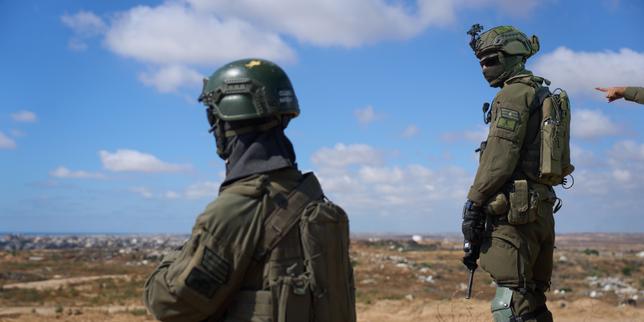
Israel just dropped the diplomatic mask. The defense ministry confirmed what many analysts suspected for months. The military plans to maintain an indefinite presence in designated security zones across Lebanon, Syria, and Gaza. This isn't a temporary occupation anymore. It is a long-term structural shift in Middle Eastern geopolitics.
If you thought the recent conflicts were leading toward a classic post-war reconstruction or a traditional peacekeeping deployment, you missed the bigger picture. The Israeli government is redrawing the security map of the region. They are establishing hard buffer zones that they control directly. It completely upends decades of international diplomacy and regional state sovereignty.
Understanding this strategy requires looking past the daily headlines. It means analyzing what an indefinite military footprint actually looks like on the ground.
The Reality of Indefinite Buffer Zones
Security zones aren't a new concept in Israeli military doctrine. Anyone familiar with the history of southern Lebanon before the year 2000 knows how this works. The difference today lies in the sheer scale. We are looking at a simultaneous, multi-front buffer strategy stretching across three borders.
In Gaza, this manifests as a widened perimeter along the fence and strategic corridors cutting through the strip. The military secures these areas by clearing structures to create clear lines of sight. It makes returning to any semblance of the pre-war status quo impossible.
In southern Lebanon, the strategy targets the topography south of the Litani River. The goal is simple. Eliminate the possibility of cross-border raids and push anti-tank missile threats out of range.
Syria presents a slightly different challenge. There, the focus centers on the Golan Heights frontier and stopping Iranian weapons convoys. Israel intends to keep a tight grip on these spaces. They won't rely on international observers or local proxies to do the job.
Military experts point out that holding these zones indefinitely requires massive infrastructure. You don't just park tanks in a field and call it a day. You build fortified outposts. You install paved supply roads. You deploy permanent surveillance towers and automated defense systems. This requires billions in funding and a constant rotation of troops. It shifts the military from a high-intensity combat footing to a permanent garrison force.
What the Defense Ministry Strategy Means for Regional Sovereignty
This policy severely weakens the concept of national sovereignty in the Middle East. When a state declares it will hold land inside another nation's borders indefinitely, traditional international law goes out the window.
The Lebanese government in Beirut remains fragile. It cannot project power into its own southern region effectively. By establishing a permanent zone, Israel effectively cuts off a portion of Lebanese territory from state control. This creates a de facto border shift without any formal treaty.
The situation in Syria is equally complex. The government in Damascus has tolerated years of pinpoint airstrikes. A permanent Israeli ground presence or expanded buffer zone in the southwest alters that dynamic. It forces the Syrian state to accept a permanent foreign army on its soil, beyond the already contested Golan Heights.
Gaza faces the most direct impact. An indefinite security zone inside the strip reduces the total land area available to Palestinians. It restricts agricultural access and complicates any future governance plans. No matter who runs the civilian administration in Gaza tomorrow, they will operate under the shadow of Israeli observation towers.
Why Conventional Diplomacy Failed to Stop This Shift
For decades, western diplomats relied on a specific playbook. They pushed for ceasefire agreements, international monitoring forces, and economic incentives. They believed that long-term stability came from political treaties.
That playbook failed. The United Nations Interim Force in Lebanon, known as UNIFIL, proved unable to enforce disarmament provisions. Diplomatic frameworks did nothing to prevent the buildup of massive rocket arsenals right on Israel's doorstep. From the perspective of Israeli defense planners, relying on third-party guarantees is a recipe for disaster.
They looked at the failures of past agreements and decided that physical control is the only asset that guarantees safety. This shift reflects a profound skepticism toward international institutions. If the UN or regional coalitions can't guarantee a quiet border, the Israeli military will do it themselves.
This perspective enjoys broad support within the Israeli defense establishment. It crosses political lines. Even moderate military figures see permanent buffers as a logistical necessity rather than a political choice. They view it as a hard lesson learned from past withdrawals. When Israel pulled out of Lebanon in 2000 and Gaza in 2005, the resulting vacuums were filled by hostile actors. The current establishment has zero intention of repeating those experiments.
The Long-Term Costs of Permanent Occupation
Maintaining an indefinite presence across three distinct theaters brings massive complications. It isn't a simple victory. It's a heavy, ongoing burden.
First, consider the economic strain. Guarding hundreds of miles of hostile buffer zones costs an incredible amount of money. It pulls reservists away from their civilian jobs for extended periods. It drains the national budget. The defense spending required to sustain this posture will force deep cuts in civilian sectors, sparking domestic political friction over time.
Second, there is the human cost. Stationary troops in a security zone make predictable targets. They face guerrilla tactics, roadside bombs, and drone strikes. History shows that buffer zones often turn into wars of attrition. Instead of protecting citizens, the troops inside the zone become the primary targets.
Finally, the political isolation cannot be ignored. Even Israel's closest allies, including the United States, view permanent land seizures and indefinite occupations as a major hurdle to regional integration. It complicates normalization efforts with Arab states. It keeps the region in a state of perpetual tension, making long-term economic partnerships much harder to sustain.
Moving Past the Old Security Frameworks
The international community needs to stop waiting for a return to the old status quo. That reality is gone. The introduction of permanent security zones means foreign policy must adapt to a fractured landscape.
If you are tracking regional risk, look at the construction of permanent military infrastructure rather than the text of ceasefire proposals. Watch the budget allocations for long-term border fortifications. Pay attention to how Israel manages local populations near these zones. Those are the metrics that matter now.
The immediate step for regional observers is to assess how neighbors react to this permanent footprint. Will it provoke a continuous, low-level insurgency, or will it force a cold, pragmatic acceptance of the new borders? The answer will determine the stability of the region for the next decade. The old maps are outdated. The new ones are being written in concrete and steel along the fault lines of the Middle East.