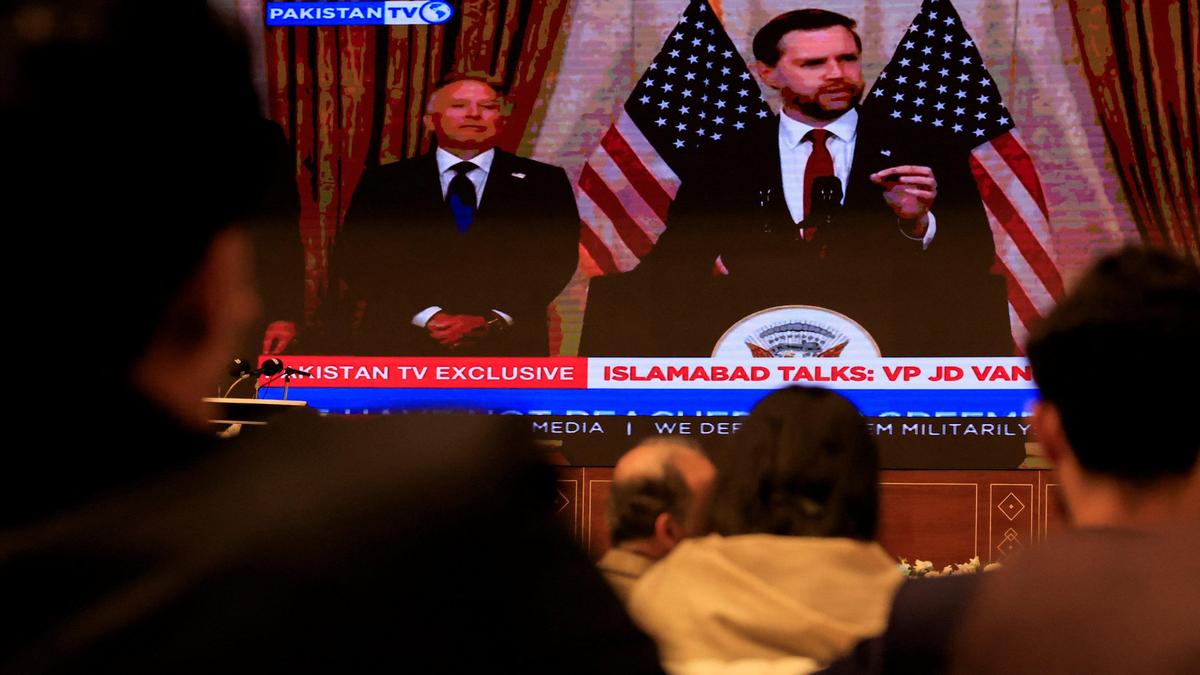
Twenty-one hours in a luxury hotel doesn't fix fifty years of hate. That’s the blunt reality coming out of Islamabad’s Serena Hotel this morning. If you’ve seen the news, you know the vibe is heavy on "no breakthrough" and "failed negotiations." But that's a lazy take. While the U.S. and Iran didn't sign a grand peace treaty on Sunday, something happened in those rooms that we haven't seen since the 1979 Revolution. They sat down. They stayed. And remarkably, they didn't walk out until the job was done, even if the "job" was just admitting how far apart they still are.
Vice President JD Vance called it the "final and best offer." The Iranians called it "excessive demands." It's easy to look at those quotes and think we're headed back to total war, but if you look at the mechanics of the meeting, the door isn't just open—it's propped up with a heavy brick.
The Logistics of Mutual Distrust
The setup inside the Serena Hotel was a masterpiece of diplomatic awkwardness. You had the U.S. delegation in one wing, the Iranians in another, and a common area where they actually had to look each other in the eye. No phones. No leaks in real-time. Just high-stakes staring contests. Pakistani mediators, including Army Chief Asim Munir, spent the night running between suites like hyper-caffeinated messengers.
It’s worth noting that this wasn't just some low-level staff meeting. We’re talking about the Vice President of the United States and the Speaker of the Iranian Parliament, Mohammad Baqer Qalibaf. When people at that level spend 21 hours in a room, they aren't just there for the Pakistani tea. They’re testing the "red lines" to see which ones are actually written in blood and which ones are just posturing.
What’s Actually Stopping a Deal
Everyone wants to know why they couldn't just shake hands and end the six-week-old war. It basically boils down to two things: the Strait of Hormuz and nuclear "tools."
- The Nuclear Wall: The U.S. isn't just asking Iran to stop building a bomb. Vance made it clear that Washington wants an "affirmative commitment" that they won't even seek the tools to build one. That's a massive ask. For Tehran, giving up the infrastructure is like giving up their insurance policy.
- The Hormuz Toll: Since the war started on February 28, Iran has been treating the Strait of Hormuz like a private toll road. The U.S. wants it open, free, and cleared of mines. Iran wants to keep their hands on the faucet of global energy.
If you think this is just about "diplomacy," look at the oil prices. Every time a rumor leaked from the hotel that a deal was "80% there," the markets dipped. Every time Vance looked stern on camera, they spiked. This isn't just a political spat; it's an economic hostage situation.
Why Nobody is Walking Away
You’d think after a failed 21-hour marathon, both sides would go home and start loading missiles. Instead, they’re both leaving the door open for a "return to Islamabad." Why? Because neither side can afford the alternative.
The U.S. is dealing with a domestic audience that has zero appetite for another "forever war," even if Donald Trump is posting on Truth Social that "we win, regardless." On the flip side, Iran is reeling from the strikes that killed Supreme Leader Ayatollah Ali Khamenei. They’re bruised, they’re angry, but they’re also realistic. They need the sanctions lifted and their assets unfrozen.
Honestly, the "failure" of these talks is a bit of a misnomer. In the world of high-stakes diplomacy, not ending the conversation is a win. They've moved from "we don't talk to terrorists" to "we'll see you in a few weeks." That’s a massive shift in the tectonic plates of Middle Eastern politics.
The Pakistani Factor
Don't overlook the role of Islamabad here. Pakistan didn't just host; they managed the "mood swings" in the room. When things got tense around 3 AM, it was the Pakistani officials who kept the delegations from packing their bags. They have a vested interest in this working out—stability in the region means stability for their own borders and economy.
Foreign Minister Ishaq Dar is already pushing for both sides to keep the ceasefire alive. If the ceasefire holds, the talks aren't a failure. They’re just Part One of a very long, very painful mini-series.
Practical Realities for the Next Round
If you're following this, don't wait for a "Mission Accomplished" banner. Watch the Strait of Hormuz instead.
- Watch the Mine-Clearing: CENTCOM is already starting to clear sea mines. If Iran doesn't interfere, the ceasefire is real. If they do, the Islamabad talks were a stall tactic.
- Monitor the Tolls: If supertankers start moving through the Gulf without paying "protection money" to Tehran, it means a back-channel deal on assets was probably reached, regardless of what the public statements say.
- Listen to the Tone: Vance left with a "final offer." If the U.S. comes back to the table without Iran accepting those exact terms, it means Washington is willing to bend on its "red lines."
Don't get distracted by the "no deal" headlines. The real story is that they're still talking. In this part of the world, that’s as close to a miracle as you’re going to get. Expect a new round of talks within the next ten days. Until then, keep an eye on the oil charts and the movement of the U.S. destroyers in the Gulf.