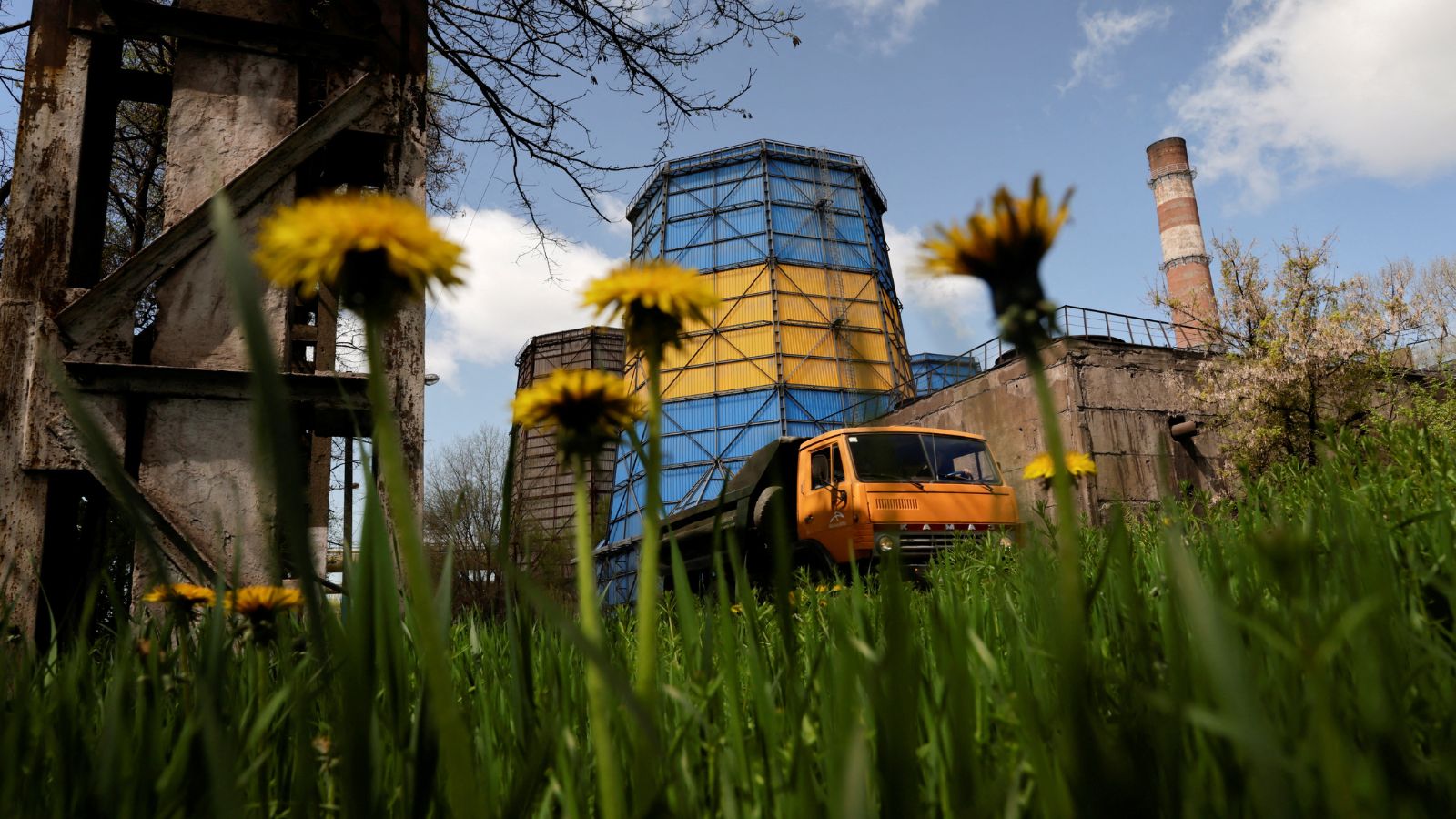
Steel is not supposed to bleed.
We think of it in slabs, in heavy grey tonnage, in the cool geometry of beams holding up the sky or tracks guiding trains through the dark. It is an industrial abstraction. We look at numbers on a quarterly report, metrics of production capacity, and the quiet logistics of global supply chains owned by billionaires like Lakshmi Mittal. But steel is made by people. And when you strike a steel plant, you are not just breaking iron. You are breaking the bones of a town.
Morning in Kryvyi Rih usually smells like sulfur, wet coal, and ozone.
It is a city built entirely around the furnace. For generations, smoke rising from the stacks of the ArcelorMittal facility was simply the rhythm of life. It meant wages, bread, rent, and a future. When the air sirens wail, that rhythm fractures. People run. They dive into concrete corridors, basements, and makeshift shelters, clutching heavy coats and listening to the sky.
They know the sound of a incoming rocket. It is a tearing hiss, like canvas ripping open, followed by a concussive thud that rattles teacups on kitchen tables three miles away.
The missile did not care about the ownership papers. It did not care that this sprawling metallurgical complex is one of the largest foreign investments in Ukraine, or that its parent company spans continents. It fell where coordinates dictated.
Silence. Then the sirens change their pitch.
Two lives ended in the soot and mangled girders. Two workers who had probably clocked in that morning with the quiet resignation of people enduring the unendurable. They were doing what people in wartime do: showing up. Because if everyone stops showing up, the country stops breathing entirely.
Consider the mechanics of industrial resilience.
When a nation is under siege, its factories become frontline targets. Every blast furnace operational is a middle finger to destruction. Every ton of rolled steel leaving the yard is proof that the state refuses to die. That is why the factory was hit. It is not just economic infrastructure. It is morale made tangible.
The air is thick with drywall dust and pulverized brick.
Emergency crews move like ghosts through the grey haze, their flashlights cutting beams through the settling smoke. Fire hoses hiss against white-hot metal. This is the reality behind the dry headline of a missile strike. It is not a data point on a conflict map. It is a blown-out control room, twisted ladders hanging into empty air, and helmets resting on a bench where someone was eating a sandwich twenty minutes prior.
Loss settles heavy over Kryvyi Rih.
People gather near the perimeter fence, watching the smoke drift lazily toward a pale sky. They do not weep loudly. War has worn the shock down to a hard, grey stubble. They talk in low murmurs. They check their phones for news of friends on the morning shift.
(Note: While the specific identities of the fallen are often withheld in immediate hours to allow families to be notified away from the glare of public media, the human cost is universal in these workshops—every worker has a name, a kitchen table left waiting, and a family holding their breath.)
This is the hidden cost of modern conflict. It is fought not just in the trenches of the Donbas, but in the breakrooms of steel mills and the rail yards of industrial hubs. The battlefield has no perimeter. It bleeds into every corner where human beings try to maintain a semblance of normal life against impossible odds.
ArcelorMittal released statements. Corporate boards issued condolences. Stock prices flickered on screens in London and New York. But none of that matters in the shadow of the crushed administration building.
What matters is the welder who survived, standing outside the gates, staring at his calloused hands. He has to go back in tomorrow. Or somewhere else. Because the furnaces must be tended, the metal must move, and life—stubborn, terrified, and defiant—refuses to be unmade by fire.
The smoke clears slowly over the Dnieper basin.
The sirens fall silent. Another shift begins in the dark, beneath a sky that remembers every flash.
:max_bytes(150000):strip_icc()/lake-mead-173940030-5c25228846e0fb00014e8584.jpg)
