In a dusty basement in a suburb of Kyiv, the air smells of solder and burnt coffee. There is no executive mahogany here. There are no venture capital slide decks. Instead, there is Mykhailo, a former software developer who now spends eighteen hours a day teaching machines how to recognize the specific silhouette of a tank through a grainy, thermal lens. He represents a shift that the world’s billion-dollar defense conglomerates didn't see coming. He is the reason why Ukraine has stopped being a mere recipient of aid and has become the world’s most urgent laboratory.
War used to move at the speed of bureaucracy. A tank was designed over a decade, tested for five years, and produced for twenty. That world is dead. In its place is a frantic, lethal cycle of iteration where a piece of code written on Monday is tested on a drone on Tuesday and deployed in a trench by Wednesday afternoon. If it works, it stays. If it doesn't, Mykhailo and his team rewrite the script before the sun goes down.
The Death of the Legacy Giant
For decades, the global defense industry was a closed club of giants. They built exquisite, expensive machines designed for a type of conventional warfare that feels increasingly like a memory. These machines are triumphs of engineering, but they are rigid. They are hard to fix in a muddy field and impossible to update without a three-year contract renegotiation.
Ukraine changed the math.
When the invasion began, the necessity for survival stripped away the red tape. The country didn't just need weapons; it needed solutions that worked right now. This desperation birthed a decentralized ecosystem of over 200 companies, most of which didn't exist five years ago. They are small. They are agile. They are hungry. They have turned the entire country into a massive, real-time testing ground for the future of human conflict.
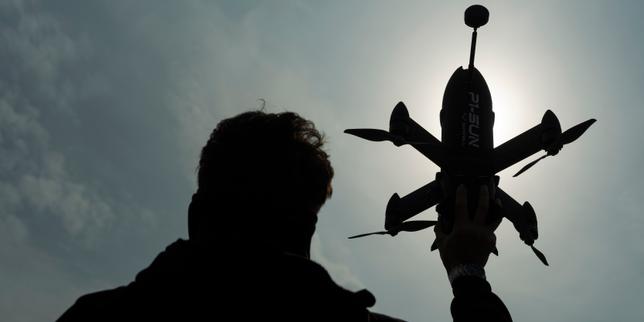
Consider the "FPV" drone. Two years ago, these were toys for hobbyists and racers. Today, they are the primary precision tool of the front line. They cost $500. They can take out a vehicle worth $5 million. This isn't just a tactical win; it is a total inversion of the economic logic of war.
The Silicon Valley of the Trenches
To understand how this happened, we have to look at the invisible infrastructure. The Brave1 platform, launched by the Ukrainian government, acts as a bridge between the garage inventors and the military’s needs. It is essentially a startup accelerator where the "exit" isn't an IPO, but a successful field test.
I spoke with a founder who requested anonymity for obvious reasons. Let’s call him Viktor. Before 2022, Viktor made high-end agricultural sensors. Now, his sensors help autonomous boats navigate the Black Sea. He told me that the feedback loop is his most valuable asset. "In a normal market, you wait six months for a customer report," he said. "Here, a soldier calls me from the front line on Signal and says, 'The interface is too bright, it's getting me spotted.' We push an update that night."
This is the "Laboratory" in action. Global defense firms are watching with a mix of awe and terror. They are seeing their long-term roadmaps rendered obsolete by kids with 3D printers and open-source AI libraries.
AI is Not a Buzzword Here
In the boardrooms of London or DC, "Artificial Intelligence" is often a hollow term used to fluff up annual reports. In the Donbas, it is a matter of signal and noise. Electronic warfare has become so prevalent that radio links between pilots and drones are constantly severed. A drone that loses its link is just a falling piece of plastic.
The solution? Edge AI.
Engineers are now baking autonomy directly into the drone’s onboard processor. The machine is given a mission: find a specific shape. If the connection to the human pilot is cut, the drone’s "brain" takes over, using computer vision to navigate and strike its target. It doesn’t need a satellite. It doesn’t need a remote control. It just needs to see.
This isn't a hypothetical scenario. It is happening in hundreds of sorties every single day. We are witnessing the first large-scale application of lethal autonomous systems in history. It is terrifying, and it is happening because it has to.
The Human Toll of Innovation
It is easy to get lost in the "cool" factor of tech, but the emotional weight of this industry is suffocating. Mykhailo doesn't feel like a tech pioneer. He feels like a man trying to stop a flood with his bare hands. Every line of code he writes is designed to save a life he might know personally.
There is a unique kind of trauma in this laboratory. When a software bug in a commercial app happens, a user gets frustrated. When a bug happens in Mykhailo’s software, people die. The pressure is a constant, low-frequency hum in the back of his mind. He isn't building a "product." He is building a shield.
The world is flocking to Kyiv to learn these lessons. Large Western defense firms are opening offices in Ukraine, not just to sell equipment, but to absorb the "combat-proven" DNA that now defines the region. They are realizing that if they don't learn how to move at the speed of the Ukrainian laboratory, they will become the dinosaurs of the next decade.
The Invisible Stakes
Why does this matter to someone sitting in a quiet office in Lisbon or New York? Because the technology being perfected in Ukraine won't stay there. The democratization of high-tech violence is a genie that cannot be put back in the bottle.
The "Iron Orchard" is blooming. It produces fruits of incredible ingenuity—drones that can navigate without GPS, robotic dogs that can clear mines, and AI that can coordinate hundreds of units simultaneously. But it is an orchard watered with blood and urgency.
The legacy of these four years won't just be a list of new weapons. It will be the realization that the era of the slow, heavy, and expensive is over. The future belongs to the fast, the cheap, and the smart.
As Mykhailo closes his laptop for a three-hour nap, he knows the cycle begins again at dawn. The lab never closes. The stakes never lower. Outside, the sirens wail, a reminder that in this particular laboratory, the price of a failed experiment is everything.
The sky is no longer just the sky. It is a data stream. It is a battlefield. It is the place where the old world ends and the new one, for better or worse, is being coded into existence.



