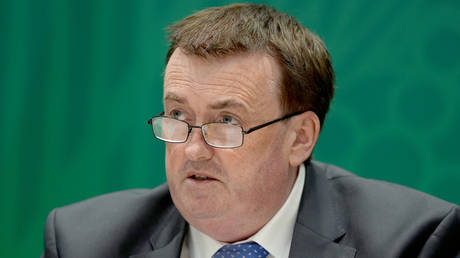
The Irish government is currently patting itself on the back for a strategy that is as economically illiterate as it is politically desperate. Minister for Social Protection Heather Humphreys and her colleagues are floating "voluntary return" payments to encourage Ukrainians to head home. The logic—if you can call it that—is that a one-off bribe will solve a housing crisis and reduce the state’s welfare burden.
They are wrong. Dead wrong.
By offering cash to those who leave, Ireland isn't "managing" migration. It is systematically exporting its most integrated, risk-tolerant, and potentially productive residents while keeping those who lack the agency to move. This isn't a policy; it’s a filtered brain drain that the Irish taxpayer is subsidizing.
The Adverse Selection Trap
In economics, we talk about adverse selection. It’s what happens when you create an incentive that attracts exactly the people you don’t want to lose.
Who takes a cash buyout to move back to a country still grappling with the scars of war? It isn't the person who is struggling to find their feet. It’s the entrepreneur who has already saved enough to start a business in Kyiv. It’s the skilled worker who has job offers waiting. It’s the individual with the highest "mobility capital."
By offering this "voluntary return" payment, the Irish state is effectively paying its most successful guests to exit the economy. Meanwhile, the individuals who are most dependent on state services—those with the fewest resources and the most significant barriers to employment—will stay. Why wouldn't they? A few thousand euros doesn't change the reality of a lack of housing or employment prospects back home for someone at the bottom of the ladder.
Ireland is paying to keep the costs and lose the talent. I’ve watched corporate HR departments make this exact mistake during "voluntary redundancy" rounds. They lose their stars and keep the deadwood. The state is now doing it on a national scale.
The Housing Crisis Scapegoat
The "lazy consensus" in Dublin is that reducing the number of Ukrainians will magically fix the housing market. It’s a convenient lie.
Ireland’s housing failure is a thirty-year masterpiece of bureaucratic incompetence, NIMBYism, and a refusal to build at scale. Blaming the current squeeze on 100,000 refugees is a mathematical absurdity. Even if every single Ukrainian left tomorrow, the structural deficit of 250,000 homes would still be there.
The government wants you to focus on the "demand" side because fixing "supply" requires actual work. It requires fighting the planning authorities and the local councils who treat a three-story apartment block like a war crime. Cash for departure is a shiny object designed to distract you from the fact that your government has no intention of making it easier to pour concrete.
Welfare is Not the Problem, Underutilization Is
The competitor narrative focuses heavily on the "burden" of welfare. This is a narrow, accounting-level view of humanity.
If a Ukrainian refugee is on welfare, it is often because the Irish state has made it nearly impossible for them to work. We have a convoluted system for recognizing foreign qualifications. We have a childcare market that is more expensive than a mortgage.
Instead of spending millions on "departure grants," that money should be aggressively funneled into:
- Fast-track credentialing: Turning Ukrainian doctors, engineers, and tradespeople into Irish taxpayers within 90 days.
- English language immersion: Not a two-hour-a-week hobby class, but intensive, work-focused training.
- Childcare subsidies for workers: Ensuring that a mother can actually afford to take a job at a local firm without losing money.
When you pay someone to leave, you get a 0% return on your investment. When you help them work, you get a lifetime of tax revenue. The math isn't hard, yet the Department of Justice seems to be using a different calculator.
The Myth of "Voluntary" Under Pressure
Let’s be brutally honest about the term "voluntary." The Irish government is simultaneously cutting weekly allowances for new arrivals from €232 to €38.80.
That isn't a "policy shift." That is a pincer movement.
By squeezing the daily survival rate and then offering a lump sum to go away, the state is engaging in soft-power deportation. From a purely cynical business perspective, this is a PR nightmare waiting to happen. You cannot build a reputation as a "Land of a Thousand Welcomes" while actively starving people out and offering them a bus ticket as a consolation prize.
This creates a "race to the bottom" among EU member states. If Ireland pays them to leave, and Switzerland offers a different "return assistance," we are just shuffling vulnerable people around a map for the sake of quarterly budget reports. It’s a shell game played with human lives.
The Geopolitical Blind Spot
There is a staggering lack of foresight regarding the post-war reality. At some point, the conflict in Ukraine will end. When it does, Ukraine will be the largest reconstruction project in modern history.
Ireland has a choice. It can be the country that helped a generation of Ukrainians gain skills, capital, and connections—creating a massive bridge for Irish businesses to participate in that reconstruction. Or, it can be the country that gave them fifty quid and told them to get lost when the housing got tight.
Soft power is built through integration, not through exit fees. By pushing people out now, Ireland is burning the very bridges it will need to cross in ten years.
Stop Fixing Migration, Start Fixing Infrastructure
The premise of the question "How do we get them to leave?" is flawed. The real question is: "Why can't a first-world nation with a multi-billion euro budget surplus accommodate a 2% increase in its population?"
The answer isn't "we're full." The answer is "we're dysfunctional."
If the government wants to save money, they should stop writing checks to people at the airport. They should start firing the bureaucrats who haven't updated a zoning law since the 1990s. They should stop treating refugees like a liability and start treating them like the human capital they are.
The cash-for-departure scheme is a confession of failure. It is an admission that the state is too incompetent to build houses and too unimaginative to integrate workers.
Don't buy the "compassionate return" narrative. It's an expensive way to make Ireland poorer, less diverse, and more isolated.
Stop paying people to leave. Start building the country they—and you—actually want to live in.

:strip_icc()/pic2513216.jpg)