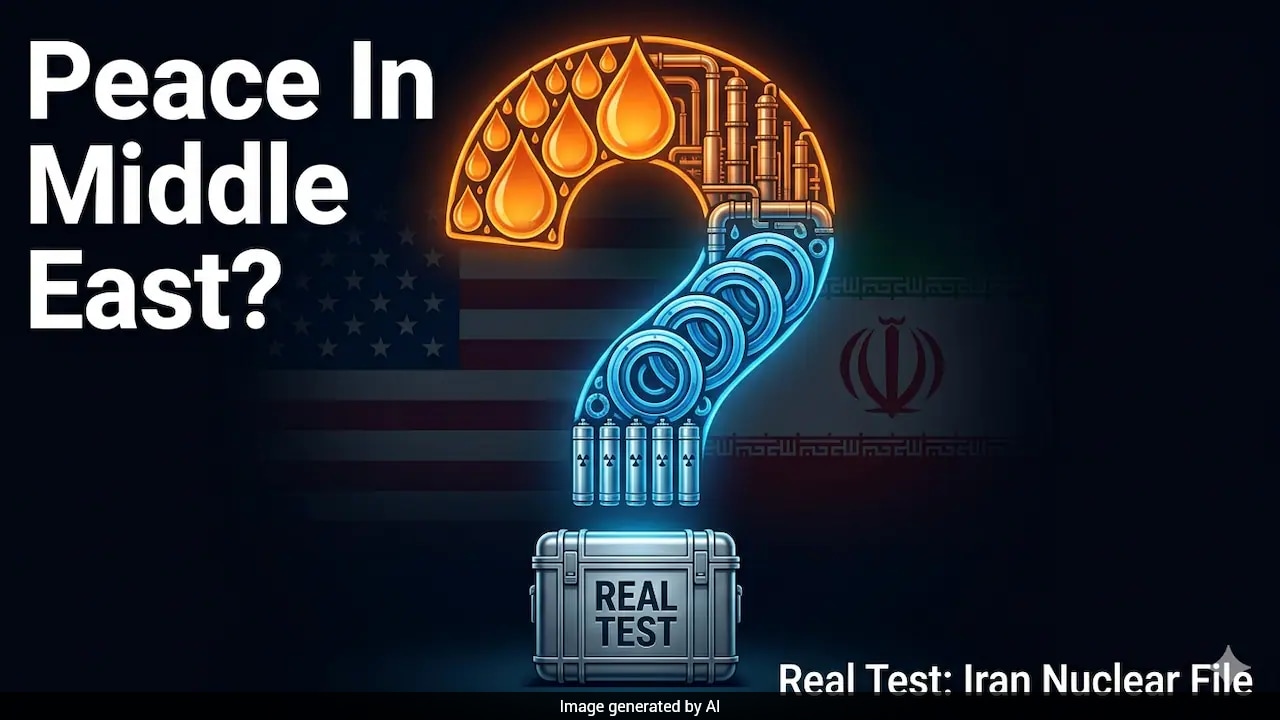
Foreign policy circles are suffering from a collective delusion. For decades, the consensus surrounding the Joint Comprehensive Plan of Action (JCPOA) and subsequent diplomatic maneuvers has rested on a single, unchallenged premise: that preventing a Iranian nuclear weapon is the ultimate endgame for stability in the Middle East. Media outlets constantly scream about breakout times, enrichment percentages, and centrifuges spinning in deep underground bunkers. They treat the nuclear file as the definitive test of diplomacy.
They are completely missing the point.
The obsession with Iran’s nuclear program is a brilliant, decades-long head fake. While Western diplomats waste years haggling over uranium stockpiles at the negotiating table, Tehran achieves its actual strategic objectives right out in the open, using conventional proxies and asymmetric warfare. Focusing exclusively on the nuclear file to achieve peace in the Middle East is like trying to put out a house fire by monitoring the thermostat. You are measuring the wrong metric entirely.
The Lazy Consensus of the Non-Proliferation Industry
Spend any time dealing with think-tank analysts or State Department veterans, and you will hear the same exhausted argument: a nuclear Iran triggers a regional arms race, dooms the non-proliferation treaty, and guarantees a cataclysmic war.
This view is structurally flawed for three distinct reasons.
First, it misunderstands the regime's primary goal. The leadership in Tehran does not view a nuclear weapon as an offensive tool to initiate a holy war; they view it through the lens of cold, hard realism as the ultimate regime-survival insurance policy. They watched what happened to Muammar Gaddafi in Libya after he voluntarily surrendered his nuclear program. They watched what happened to Saddam Hussein in Iraq. Then they look at North Korea, which openly defies the West with impunity because it possesses a nuclear deterrent. The nuclear program is a shield, not a sword.
Second, the fixation on a regional nuclear arms race assumes countries like Saudi Arabia or Turkey will instantly build their own bombs the moment Iran crosses the threshold. Building a nuclear infrastructure takes decades of specialized engineering, supply chain cultivation, and immense capital. You cannot simply buy a turnkey nuclear arsenal off the shelf, regardless of sovereign wealth fund balances.
Third, and most importantly, the focus on enrichment percentages completely ignores the reality on the ground. Iran does not need a nuclear bomb to dominate the region. It already does.
The Real Threat Is Asymmetric, Cheap, and Working
While Western negotiators argue about IR-6 centrifuges, Tehran has successfully built a land corridor stretching from the Zagros Mountains to the Mediterranean Sea. They did not need a single gram of weapons-grade uranium to accomplish this.
I have watched billions of dollars in Western defense resources poured into countering theoretical strategic threats, while low-cost, decentralized tactics fundamentally altered the geopolitical map. The real machinery of regional influence consists of three components.
1. The Proxy Architecture
Iran has mastered the art of hybrid warfare by outsourcing its foreign policy to highly motivated, indigenous local actors. Groups like Hezbollah in Lebanon, the Houthis in Yemen, and various militias in Iraq offer the regime complete plausible deniability.
[Tehran Strategic Command]
       │
       ├─► Hezbollah (Lebanon) ──► Mediterranean Front
       ├─► Houthis (Yemen)     ──► Red Sea Chokepoint
       └─► PMF (Iraq)          ──► Overland Supply Lines
This decentralized network allows Tehran to project power across multiple fronts simultaneously. If the West retaliates, they hit a local proxy, not the source. It is an incredibly efficient asymmetric return on investment.
2. Precision Drone and Missile Proliferation
You do not need a nuclear warhead when you can achieve strategic deterrence with a thousands-of-dollars Shahed drone or a precision-guided ballistic missile. In 2019, a swarm of low-altitude drones and cruise missiles struck the Abqaiq and Khurais oil processing facilities in Saudi Arabia. The attack temporarily knocked out half of Saudi oil production—nearly 5% of the global supply. No nuclear material was required. The strike proved that cheap, conventional precision weapons can bypass advanced air defense systems and inflict catastrophic economic damage.
3. Maritime Chokepoint Dominance
By backing the Houthi movement in Yemen, Iran gained a strategic stranglehold over the Bab al-Mandeb strait, a crucial chokepoint for global shipping and energy transit. The ability to disrupt international commerce at will via anti-ship ballistic missiles and sea drones provides far more immediate geopolitical leverage than a theoretical weapon tucked away inside a mountain in Natanz.
Dismantling the "People Also Ask" Flawed Premises
When looking at public debates around this issue, the core questions asked by the public and analysts alike are fundamentally misdirected. Let us answer them directly by exposing their faulty premises.
Does a new diplomatic agreement guarantee regional stability?
No. This question assumes that a piece of paper signed in Geneva or Vienna dictates actions on the ground in Sana'a, Beirut, or Baghdad. The original JCPOA deliberately separated the nuclear issue from Iran’s regional behavior and ballistic missile development. The logic was that a non-nuclear Iran would be easier to manage.
The reality proved the exact opposite. The influx of sanctions relief and unfrozen assets from the 2015 deal did not moderate the regime's foreign policy. Instead, it provided the liquidity needed to fund regional operations, stabilize proxy balance sheets, and accelerate conventional missile development. A deal that freezes centrifuges while ignoring the regional proxy network is not a peace plan; it is a financing mechanism for asymmetric warfare.
Can targeted military strikes permanently eliminate the nuclear threat?
This is the favorite talking point of Washington hawks. It is a dangerous fantasy. You cannot bomb knowledge out of existence. The Iranian nuclear program is no longer a collection of imported components that can be destroyed in a single raid, like the Osirak reactor in Iraq in 1981.
Iran's scientists have mastered the nuclear fuel cycle. They design and manufacture their own advanced centrifuges. They have buried their enrichment facilities deep beneath layers of reinforced concrete and granite at Fordow. A military campaign might delay the program by a few years, but it would inevitably drive it completely covert, expel international inspectors permanently, and provide the regime with the absolute geopolitical justification to race toward a breakout. The cost of the strike would be a total regional conflagration; the benefit would be a temporary pause.
The Uncomfortable Truth About Sanctions
The mainstream foreign policy establishment loves sanctions. They are the preferred tool because they allow politicians to look tough without putting boots on the ground. But the "maximum pressure" campaign demonstrated the strict limitations of economic warfare against an entrenched ideological regime.
Sanctions are not a strategy; they are a tactic. When applied indefinitely without a realistic diplomatic off-ramp, they yield diminishing returns. The Iranian economy did not collapse. Instead, it adapted by developing a sophisticated, parallel "resistance economy."
Tehran established illicit financial networks, relied on front companies in third countries, and found an eager buyer for its discounted crude oil in Beijing. By forcing Iran completely out of the Western financial system, the West inadvertently pushed Tehran into a strategic, anti-hegemonic alliance with Russia and China. This trilateral alignment provides Iran with diplomatic cover at the UN Security Council, joint military exercises, and a market for its defense exports, such as thousands of operational drones.
If your strategy relies on starving a regime out of its core geopolitical ambitions, you have already lost.
A Brutal Realist Alternative
If the current approach is broken, how do you actually address the challenge? It requires abandoning the utopian fantasy of a grand bargain that transforms Iran into a status-quo power. It requires embracing a policy of aggressive, cold-eyed containment.
- Stop prioritizing the nuclear file over conventional aggression. Every diplomatic engagement must tie sanctions relief directly to the cessation of drone and missile transfers to proxies. If a deal allows regional destabilization to continue, walk away.
- Establish hard, undeniable red lines on maritime security. The global economy cannot tolerate the disruption of major shipping lanes. The response to proxy attacks on international shipping must be direct, asymmetric costs imposed on the assets of the planners, not just the proxies pulling the triggers.
- Build a robust, integrated regional air and missile defense architecture. Instead of trying to change the regime in Tehran, focus on making its conventional weapons obsolete. This means integrating radar systems, early-warning data, and missile interceptors across Gulf cooperation states and regional partners.
This approach has distinct downsides. It is messy. It requires a long-term, sustained commitment of naval and air assets. It means acknowledging that the Iranian regime is a permanent, hostile feature of the Middle East landscape for the foreseeable future, not a problem to be solved with a single diplomatic signing ceremony.
Stop waiting for a breakthrough on the nuclear file to magically bring peace to the Middle East. The nuclear issue is a sideshow. The real conflict has been happening in the shadows, on the waves, and through the skies for years. It is time the West started playing the right game.