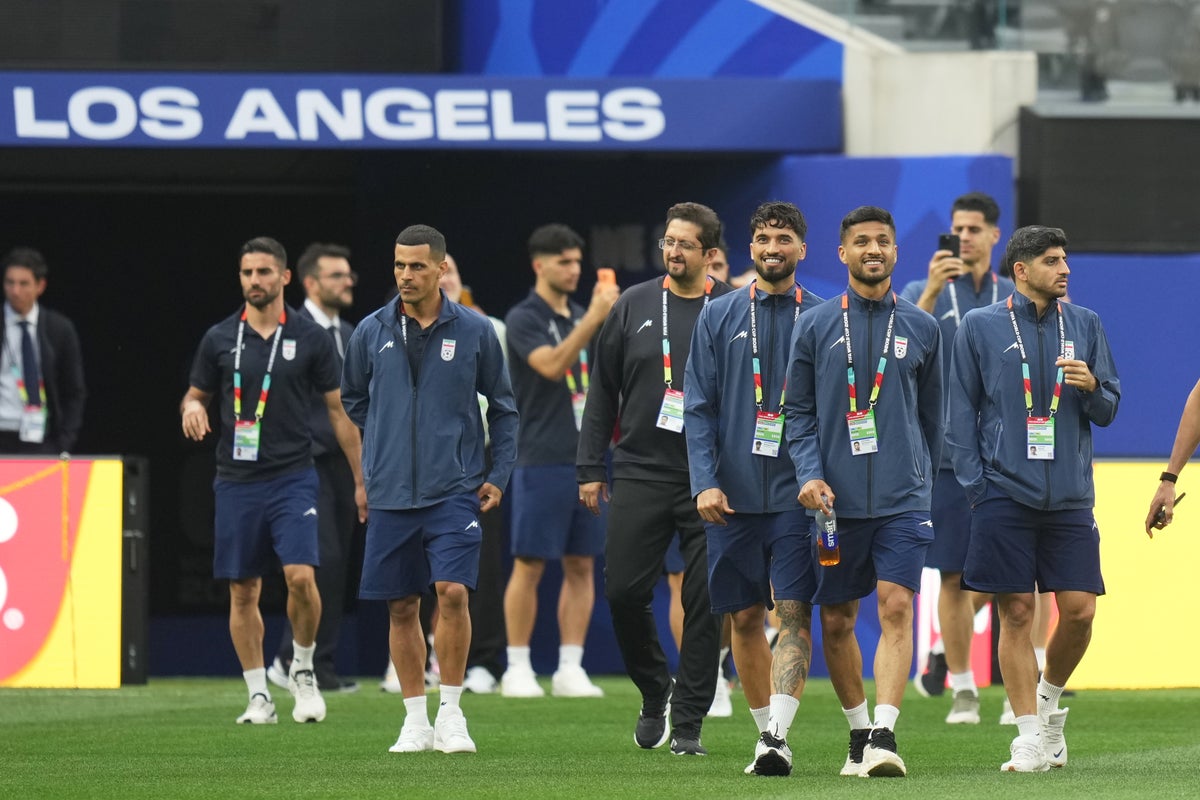
SoFi Stadium is about to become a pressure cooker, and it has nothing to do with soccer tactics.
When the whistle blows for Iran's opening World Cup match against New Zealand in Inglewood, California, the real drama won't be on the grass. It will be in the stands and on the streets outside. For the massive Iranian-American community in Southern California, this game isn't a distraction from geopolitics. It's the epicentre of it.
Walk through "Tehrangeles"—the vibrant hub of Persian restaurants, grocery stores, and bookstores just ten miles from the stadium—and you'll quickly realize nobody can agree on what this game means. Some fans are gathering for passionate watch parties, desperate to see their beloved players succeed. Others are furious that the team is even allowed to play, organizing massive protests outside the gates.
It is a painful, deeply personal divide. The beautiful game has never felt so heavy.
The Myth of Team Melli
For decades, the Iranian national soccer team has been known affectionately as Team Melli—the team of the nation. It was the one thing that could unite Iranians across political, religious, and generational divides. When the team won, everyone celebrated.
That unity is completely gone now.
Activists and diaspora members are openly rejecting the name. They argue that the squad no longer represents the citizens of Iran, but rather the oppressive regime in Tehran. Critics point to the devastating government crackdowns on dissent inside Iran, particularly following major protests, as the reason why normal sports fandom is dead.
"This is not Team Melli," says Ali Javahery, a 59-year-old consultant living in Orange County who chose to join the protests outside rather than buy a ticket. "This is Team Islamic Republic."
The anger runs deep. Many older immigrants who fled after the 1979 Islamic Revolution see the current team as a walking propaganda tool for the ayatollahs. Former international players have even joined the fray. Asghar Adibi, who proudly wore the national jersey in 1970, spoke at a pre-tournament rally in Los Angeles and pulled no punches. He alleged that the current sports establishment is heavily controlled by the Islamic Revolutionary Guards Corps (IRGC), making it impossible to separate the athletes from the state.
Banned Flags and Smuggling Schemes
The battlefield inside the stadium is going to center around a piece of fabric.
Protesters are flooding the area with the old Iranian flag—the pre-revolution banner featuring a golden lion and sun set against green, white, and red stripes. It is a symbol of resistance against the current government.
FIFA has strict, rigid rules against displaying political symbols inside venues. The organization has explicitly banned the Lion and Sun flag from World Cup stadiums. But the diaspora has absolutely no intention of complying.
Organizers like 65-year-old Sid Mohasseb have been chartering buses to bring tens of thousands of demonstrators to the stadium perimeter. Inside, ticket holders are getting creative. Activists admit they've printed the forbidden Lion and Sun emblem onto T-shirts, layering them under hoodies and jackets to bypass stadium security. Once in their seats, they plan to strip off the outer layers.
The tension has reached the point where the Iranian team management reportedly threatened to halt the game if the pre-revolutionary banners are unfurled inside the venue.
For 22-year-old political science student Sara Barahman, that threat is a joke. She doesn't care if the match gets canceled or if Iran loses by five goals. To her generation of activists, disrupting the regime's moment on the global stage is infinitely more important than three points in the group stage standings.
The Impossible Position of the Players
It is incredibly easy to judge from the comfort of a sports bar in California, but the view looks very different when you examine what the players actually face back home.
Elite Iranian athletes walk a terrifying tightrope. If they speak out against the government, they face career ruin, asset seizure, or prison. If they stay silent, the diaspora labels them as traitors and regime puppets.
The pressure is real, and the consequences are documented. Look at the history. In 2022, a prominent former member of the national team was arrested after showing solidarity with domestic protests. For this 2026 cycle, star striker Sardar Azmoun was left off the World Cup squad entirely, a move widely believed to be retaliation for an outspoken social media post that angered government authorities in Tehran.
The players know exactly how hostile the environment is. During the tournament's opening ceremonies in Los Angeles, sections of the American crowd loudly booed when the Iranian flag was presented on the field.
Team captain Mehdi Taremi tried to cool the temperature during his pre-match press conference, pleading for a focus on football. He stated that the squad plays for every single Iranian, whether they live at home or in the diaspora, and that their goal is simply to bring joy to people who have suffered immensely. But in an environment this toxic, neutrality is an luxury nobody is willing to grant them.
Watching Through Pain
Despite the rage, plenty of Iranian-Americans are still choosing to watch and cheer. They just do it with a heavy heart.
Many families bought tickets months ago when the World Cup groups were first drawn, ecstatic at the rare chance to see Iran play on American soil. Then reality intervened. The geopolitical situation deteriorated sharply, marked by direct military conflict involving U.S. and Israeli forces against Iranian interests. The team's preparation was messy; they had to move their training camp from Tucson, Arizona, to Mexico because several top soccer officials were denied U.S. visas.
In response to the domestic crackdowns and the chaos, some local fans quietly sold off their tickets on resale markets, unable to stomach the idea of cheering in the stadium. Others are choosing to stay home with family.
Reza Garajedaghi, 57, decided to skip the expensive stadium seats to watch the game on television with his 96-year-old father in San Diego. For him, supporting the players is a way to maintain a connection to his homeland, entirely separate from the politicians who rule it. He represents a massive, quiet segment of the diaspora that feels completely torn apart by conflicting loyalties. They hate the regime, but they still love the boys wearing the shirts.
There are no easy answers here. The 2026 World Cup was supposed to be a massive celebration of soccer in North America, but for the Iranian diaspora, it has pulled back the curtain on wounds that refuse to heal. When the game starts, one thing is certain: the loudest noise won't be coming from the scoreboard.
If you are heading down to Inglewood or planning to watch the match with friends, keep these realities in mind. Talk to the older generation in your family about what the team used to mean to them before 1979. Respect the fact that people are mourning real losses back home, and understand that for many, a soccer match is never just a soccer match.