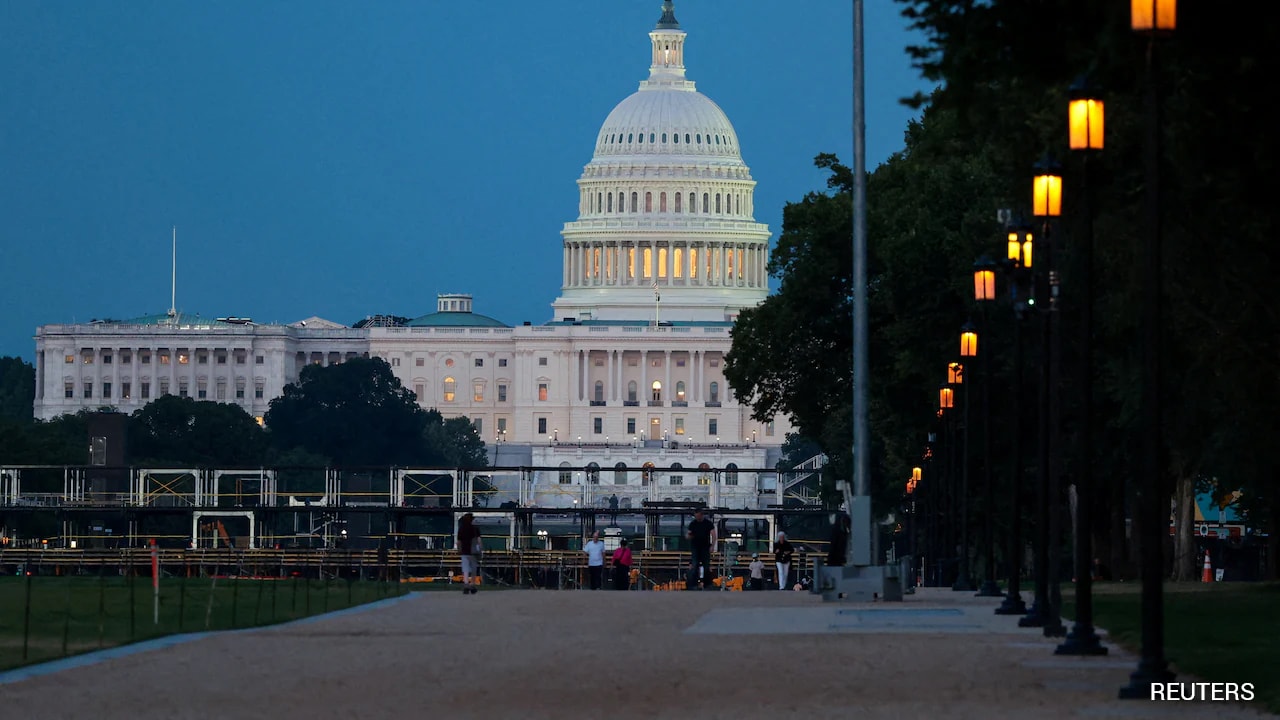
Every four years, political pundits dust off the same tired playbook. They pick three shiny, terrifying nouns, staple them to a headline, and tell you the republic hangs in the balance. This cycle, the lazy consensus insists the 2026 US midterm elections come down to a neat little triad: war in the Middle East, artificial intelligence, and Donald Trump.
It is a comforting narrative for cable news producers. It is also completely wrong. Don't forget to check out our recent coverage on this related article.
I have spent the last fifteen years advising campaigns, dissecting precinct-level voter files, and watching candidates torch hundreds of millions of dollars chasing ghosts manufactured in Washington green rooms. When you step outside the Beltway echo chamber and look at actual voter behavior, those three supposedly dominant issues do not operate the way the pundit class claims. In fact, obsessing over them as standalone headlines is the fastest way to misread the 2026 map.
To understand what is actually deciding control of Congress, you have to strip away the theater and look at the underlying mechanics. If you want more about the history of this, BBC News provides an in-depth breakdown.
The Iran Mirage and the Myth of the Foreign Policy Voter
Foreign policy rarely decides midterm elections unless body bags are coming home in massive numbers or gas hits five dollars a gallon in Ohio. Yet, political analysts keep treating geopolitical conflict with Iran as a primary ballot-box driver for suburban swing voters.
They are confusing media saturation with voter motivation.
When military strikes dominate the evening news, pollsters dutifully ask voters if foreign affairs matter. Voters, not wanting to sound ignorant, say yes. Campaigns then panic, cut millions of dollars in hawkish or dovish television spots, and wonder why their internal tracking numbers do not budge.
The reality of American electoral behavior is brutally simple. Voters do not pull a lever based on naval deployments in the Strait of Hormuz; they pull a lever based on what happens at the checkout counter in Peoria. Geopolitics only pierces the domestic armor when it translates directly into inflation, supply chain bottlenecks, or energy shocks.
The Lag Effect Nobody Tracks
Political strategists consistently miscalculate the lag time between an international crisis and domestic pain. If oil markets spike in September, the inflationary ripple hits grocery logistics and utility bills weeks later—often right as early voting opens. Pundits call this a "foreign policy backlash." It is not. It is a pocketbook rebellion wearing camouflage.
- The Pundit Assumption: Swing voters are weighing complex deterrence strategies and regional alliances.
- The Ground Reality: Swing voters are looking at their heating bills and blaming whoever holds the gavel in Washington.
If you want to know how the Middle East impacts a House race in Pennsylvania or Arizona, stop reading diplomatic cables and start tracking diesel prices. Everything else is noise.
Artificial Intelligence Is a Red Herring for Labor Anxiety
The second pillar of the conventional wisdom is that AI has suddenly become a defining political issue. Tech lobbyists and Washington think tanks love this framing because it makes them feel central to the national conversation. They talk endlessly about algorithmic bias, copyright disputes, and deepfake regulations as if swing voters in Michigan are lying awake at night debating model weights.
Nobody in Macomb County cares about generative AI regulation. They care that their employer just froze hiring for entry-level analysts, or that their local utility bill jumped because a hyperscale data center moved in down the road and sucked up half the regional power grid.
The Infrastructure Backlash
We are witnessing a massive disconnect between how elites talk about technology and how working people experience it. While politicians in Washington hold hearings on existential risks and election misinformation, local elections across the country are being quietly upended by physical infrastructure fights.
Consider what actually happens when a multi-billion-dollar AI data center breaks ground in a battleground district:
- Grid Strain: Local residents suddenly face rate hikes and brownout warnings to subsidize corporate compute capacity.
- Water Consumption: Agricultural communities watch millions of gallons of water get diverted for server cooling during drought seasons.
- Zero Local Jobs: Once the construction crews leave, a massive facility might employ fewer than fifty full-time technicians.
Calling this an "AI election" misses the point entirely. This is a classic populist fight over corporate subsidies, land use, and energy costs. When candidates run ads talking about "harnessing innovation," voters tune out. When candidates attack incumbents for letting tech giants jack up residential electricity rates, margins shift by five points overnight.
The Deepfake Panic Is Backward
Similarly, the hand-wringing over AI-generated election disinformation has been wildly overblown by consultants looking to justify new retainer fees. The real threat to campaign communications in 2026 is not a hyper-realistic fake video fooling millions of people. It is the liar's dividend—the ability of any caught-red-handed politician to dismiss genuine, damaging audio or video as an AI fabrication.
When voters can no longer trust their own eyes, they do not become gullible; they become cynical. Cynical voters stay home. And in a midterm election, turnout suppression is far more lethal than persuasion.
The Trump Factor Has Inverted
For a decade, the easiest job in political journalism was writing that every election is a referendum on Donald Trump. It was true in 2018. It was largely true in 2020 and 2022. Treating 2026 as just another sequel to that exact same movie is pure intellectual laziness.
By the second midterm of any presidency, the novelty wears off and the structural gravity of governance takes over. Voters stop reacting to the personality in the Oval Office as an abstract cultural symbol and start grading the administration strictly on execution.
I have watched campaign teams make the fatal mistake of running against a caricature when voters are looking at a balance sheet. When a political figure has been the center of gravity in American life for over ten years, there are no undecided voters left on his character. Zero. Every single person in the country already has a baked-in, immutable opinion on him.
Why Referendum Politics Fails Now
Spending millions of dollars to remind swing voters that they dislike a politician's rhetoric is burning cash for warmth. They already know. They priced that in years ago.
What actually moves the needle in a second-term midterm is institutional fatigue and local accountability.
- For the party in power: You cannot run on grievance when you hold the levers of government. Voters punish incumbents who act like victims when things go wrong.
- For the opposition: You cannot run solely on outrage anymore. Outrage is a depreciating asset. Without a concrete economic alternative, anti-incumbent sentiment curdles into apathy rather than turnout.
The races that decide the House and Senate in 2026 will not be won by the candidates who yell loudest about the White House. They will be won by the candidates who successfully localize the race and prove they understand the specific economic pain of their district.
What People Actually Ask (And Why the Questions Are Flawed)
When you look at search trends and focus group transcripts, voters are not asking the questions pundits think they are asking. Let us dismantle the most common misconceptions driving campaign strategy right now.
"Will AI deepfakes swing the 2026 midterm elections?"
The Flawed Premise: This question assumes voters are blank slates waiting to be tricked by a viral video in October.
The Brutal Truth: Partisan polarization is so rigid that a fake video rarely changes a mind; it merely confirms existing biases. What actually swings elections is micro-targeted fatigue—flooding low-propensity voters with so much contradictory garbage that they decide the entire system is broken and skip voting altogether. The danger is not persuasion; it is exhaustion.
"How does the Iran conflict help or hurt Democrats and Republicans?"
The Flawed Premise: Analysts treat foreign crises like a scoreboard where one party automatically gets points for toughness and the other loses points for chaos.
The Brutal Truth: Voters hate endless entanglement, and they hate economic disruption. Neither party owns an advantage here. Whoever is perceived as escalating a conflict that raises the cost of living gets crushed. It is not an ideological test; it is a competence test. Right now, voters view both parties as failing it.
"Is 2026 a base election or a swing-voter election?"
The Flawed Premise: Consultants love arguing over whether to spend money turning out loyalists or persuading moderates, treating them as mutually exclusive strategies.
The Brutal Truth: In a low-turnout midterm, reluctant partisans decide everything. These are people who lean toward one party, hate the other, but despise politics in general. They do not watch cable news. They do not follow political X accounts. You do not win them with ideological purity tests, and you do not win them with centrist platitudes. You win them by proving that showing up on a Tuesday in November will directly lower their monthly expenses.
The Uncomfortable Downside of My Own Thesis
If you are a campaign manager reading this, stripping away the national cable news narrative to focus hyper-locally on kitchen-table economics and infrastructure costs sounds obvious. So why does almost nobody do it?
Because it is brutally hard, expensive, and unglamorous.
Running a nationalized campaign built on fear of Trump, fear of Iran, or fear of AI is cheap and scalable. You cut one thirty-second ad in Washington, buy programmatic media across forty districts, and watch small-dollar donations roll in from angry partisans living three states away.
Running a truly localized, substantive campaign requires:
- Deep district-level polling that costs five times more than national tracking polls.
- Bespoke messaging tailored to specific county-level economic drivers—like data center power grids or regional agricultural exports.
- Discipline to ignore national media bait and refuse to comment on whatever outrage erupted on social media that morning.
Most candidates lack the spine for it, and most consultants make a higher commission on nationalized media buys anyway. That is the dirty secret of the political industrial complex: the people running the campaigns often profit more from a noisy, losing national narrative than a quiet, winning local one.
How to Actually Read the 2026 Map
If you want to know who wins control of Congress this November, turn off the Sunday morning talk shows. Stop reading breathless profiles about tech billionaires lobbying Capitol Hill, and stop treating every foreign policy flare-up as a political earthquake.
Look at three metrics instead:
- Local Utility and Housing Inflation: Compare regional Consumer Price Index data against incumbent margins. Where housing and electricity costs have outpaced wage growth over the last twenty-four months, incumbents are dead men walking, regardless of party.
- Generic Ballot Enthusiasm Gaps: Ignore top-line horse-race polling. Look at the percentage of voters in each party who say they are "certain to vote." In midterms, enthusiasm asymmetry beats persuasion every single time.
- Down-Ballot Infrastructure Referendums: Watch local ballot measures regarding zoning, energy, and municipal taxes. They are the canary in the coal mine for populist backlash that will sweep federal candidates off the board.
The pundits will spend the next several months writing thousands of words about war, algorithms, and political personalities because those stories are easy to tell and easy to sell. Meanwhile, millions of Americans will walk into voting booths, ignore the grand ideological theater entirely, and vote based on the numbers staring back at them from their bank accounts.
Follow the money in the voter's wallet, not the noise on your screen.