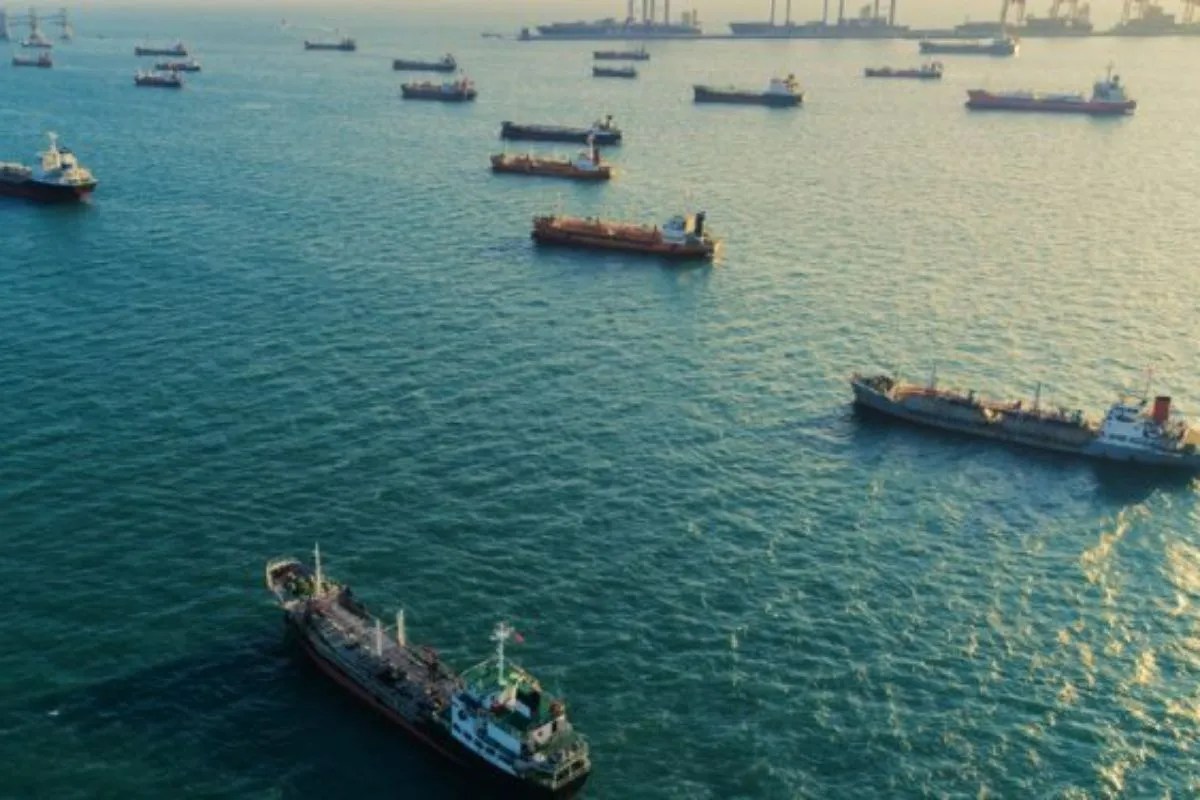
The steel hull of a massive oil tanker hums with a vibration that vibrates straight through the soles of your work boots. On the bridge of a vessel cutting through the narrowest choke point in global trade, the air smells faintly of salt, diesel, and high-stakes tension. To the left lies the jagged coastline of Iran. To the right, the rocky outposts of Oman. Between them is a strip of water just twenty-one miles wide.
This is the Strait of Hormuz. If you found value in this piece, you might want to check out: this related article.
For decades, captains navigating these waters worried about mines, drone strikes, or geopolitical posturing that could close the transit corridor entirely. Today, the anxiety has shifted from naval blockades to a ledger. Iran has decided to keep the strait open, but it is putting a price tag on every single wave a commercial ship crosses.
Imagine a toll booth, but instead of a highway exit in New Jersey, it sits at the throat of global energy supplies. A container ship carrying electronics destined for European shelves or a supertanker holding millions of barrels of crude oil for Asian markets can no longer just sail through. They have to pay. For another look on this development, see the latest coverage from USA Today.
The Throat of Global Commerce
To understand why this matters to someone buying groceries in London or pumping gas in Tokyo, look at a map. The Persian Gulf holds the lifeblood of the modern industrial economy. A quarter of the world’s liquefied natural gas and a fifth of its total oil consumption pass through this exact twenty-one-mile gap.
It is a geographic bottleneck.
When Tehran announces a new transit fee for all vessels passing through the strait, it isn't just an administrative update. It is a geopolitical pivot. The decision keeps the lanes open, preventing the catastrophic price spikes that a total military blockade would trigger. Yet, it introduces a permanent, compounding friction into global shipping.
Think of it like a sudden tax on the air a business breathes. Shipping companies operate on razor-thin margins and rigid schedules. They cannot simply choose a detour. Rounding the Cape of Good Hope adds thousands of miles, weeks of travel time, and millions of dollars in fuel costs to a single journey.
The strait remains the only viable path. Iran knows this.
The Ledger of the High Seas
Let us look at a hypothetical scenario to see how this plays out on the ground—or rather, on the water.
Meet Captain Marcus, a veteran merchant mariner who has spent thirty years navigating international trade lanes. In the past, his primary concern when approaching Hormuz was security alerts. His crew would prep fire hoses, look out for fast-attack craft, and monitor naval radio frequencies.
Now, his chief mate hands him a spreadsheet.
Before the ship enters the designated transit zone, wire transfers must clear. Documentation must be validated by authorities across the water. If the fee isn't processed, the vessel faces detention. For a shipping line, a delayed ship is a bleeding wound. Every hour an ocean liner sits idle costs tens of thousands of dollars in charter fees, crew wages, and port penalties.
The compliance costs alone require entirely new departments within maritime logistics firms. This is the new reality of the ocean. The ocean used to be a global common, a space defined by freedom of navigation. Now, it is increasingly carved up into sovereign toll roads.
The legal justification offered for these fees usually centers on environmental maintenance, security provisioning, and maritime safety infrastructure. Managing one of the busiest shipping lanes on earth isn't free. Debris must be cleared, navigation aids must be maintained, and emergency response teams must be kept on standby.
But beneath the administrative rationale lies a harder truth about leverage.
The Ripple Effect on the Horizon
What happens when a single nation decides to monetize a global choke point? The consequences do not stay in the Gulf. They cascade down the supply chain in ways that are often invisible until you look at the final receipt.
Consider the journey of a single barrel of crude oil.
- The Origin: Pumped from a field in Saudi Arabia or Kuwait.
- The Transit: Loaded onto a Very Large Crude Carrier (VLCC) heading through the Strait of Hormuz, where the new transit fee is levied.
- The Refinement: Unloaded at a refinery in South Korea or India, where the extra cost of the toll is factored into the processing margin.
- The End User: Distributed as diesel to a trucking fleet or plastic polymers to a consumer goods factory.
By the time that oil becomes a product on a shelf, the price has absorbed the toll, the legal compliance fees, and the increased insurance premiums triggered by the changing regulatory environment.
The friction is cumulative.
The real vulnerability in modern global trade is how fragile our hyper-optimized systems actually are. We rely on just-in-time logistics. Components arrive at a factory exactly when they are needed to go onto the assembly line. There is no warehouse full of spare parts. There is no massive cushion of extra oil sitting in reserve.
When a choke point gets more expensive, the entire network flinches.
Navigating the Uncharted
We often view international relations through the lens of treaties, speeches, and military deployments. But the most profound shifts frequently happen in the mundane world of maritime law and commercial tariffs.
The decision to keep the Strait of Hormuz open while imposing a transit fee is a masterclass in grey-zone strategy. It achieves an economic objective without crossing the red lines that would trigger an international military response. It avoids the chaos of a shutdown while quietly altering the economic balance of power in the region.
For the crews aboard the tankers tracking the shoreline of the Gulf, the sky looks the same. The water is still an intense, deep blue. But the invisible lines drawn across the waves have just grown significantly heavier.
The world will keep moving. The ships will keep sailing. But the cost of keeping the lights on just went up, one vessel at a time.