Salt crusts on the collar of a cotton shirt within twenty minutes of stepping onto the pier at Paradip. You can taste the diesel before you see the hulls, a heavy, metallic tang that hangs low over the Bay of Bengal at dawn.
Three thousand miles to the west, in the dry heat of Mina Al Ahmadi, the air smells entirely different. It carries the sharp, sweet bite of sulfur and crude, baked under a sky bleached white by the Persian Gulf sun. Building on this theme, you can find more in: The Quad Alignment Architecture Why Four Leaders Converging on the Indo-Pacific Signals Structural Deterrence.
Between those two ports stretches a ribbon of blue water that most people only notice when the price of gasoline jumps at their local corner station, or when a container ship runs sideways in a canal and suddenly there are no bicycles in the stores. We treat global diplomacy like weather reports from distant planets. A headline scrolls past on a Tuesday morning: India and Kuwait mark 65 years of diplomatic ties; BIMSTEC members discuss maritime security cooperation.
You blink. You sip your coffee. You scroll to the sports scores. Experts at USA Today have provided expertise on this matter.
Stop. Look closer at that sentence. Hidden inside those twelve dry, bureaucratic words is the exact machinery that keeps hospitals powered, kitchens fed, and millions of families from slipping back into poverty.
The Currency of Memory and Crude
Let us imagine a man named Rajesh, a hypothetical composite of the roughly one million Indian expatriates who call Kuwait home today. Rajesh arrived in Kuwait City in 1998 with two suitcases, a mechanical engineering degree from Kerala, and a mother waiting by a landline telephone back in Kochi.
When diplomatic cables celebrate sixty-five years of relations between New Delhi and Kuwait City, they are really talking about Rajesh. They are talking about the Indian rupee, which actually served as Kuwait's official legal tender until 1961, the very year Kuwait gained independence and formal diplomatic relations began. For decades before formal embassies existed, pearl divers and spice merchants carried silver rupees across the Arabian Sea, binding the two coastlines together with clinking metal and handwritten ledgers.
Today, that ancient rhythm has scaled into an economic lifeline that defies easy comprehension. Indians form the largest expatriate community in Kuwait, making up nearly a fifth of the entire country's population. Every month, workers like our hypothetical Rajesh wire money home—billions of dollars annually in remittances that build concrete houses in rural villages, pay college tuition for younger siblings, and stabilize India's foreign exchange reserves.
And what flows back the other way? Energy. Pure, non-negotiable kinetic survival.
Kuwait consistently ranks among India's top suppliers of crude oil and liquefied petroleum gas. Without those tankers navigating the Strait of Hormuz and crossing the Arabian Sea, the grid flickers. Factories in Gujarat stall. Commuter trains in Mumbai slow to a crawl. Bilateral trade between the two nations hovers comfortably in the double-digit billions of dollars, anchored by hydrocarbons on one side and everything from basmati rice and textiles to engineering goods and pharmaceuticals on the other.
Sixty-five years is not an anniversary of polite handshakes at cocktail receptions. It is a marriage of mutual necessity. Kuwait needs Indian labor, food security, and medical expertise—remember when India dispatched rapid-response medical teams and vaccines to Kuwait during the darkest months of the pandemic? India needs Kuwaiti oil, sovereign wealth investment, and a safe harbor for its diaspora.
Yet, a ship loaded with Kuwaiti crude or Indian grain is only as safe as the water beneath its keel.
Where the Map Bleeds Blue
Shift your gaze east from the Arabian Sea, past the southern tip of Sri Lanka, into the triangular basin of the Bay of Bengal.
If you look at a standard wall map, the Bay of Bengal looks like a quiet cul-de-sac tucked between India, Bangladesh, Myanmar, and Thailand. That map is lying to you.
In reality, the Bay of Bengal is one of the busiest, most contested maritime highways on earth. Nearly a quarter of the world's population lives in the seven countries bordering or connected to it—Bangladesh, Bhutan, India, Myanmar, Nepal, Sri Lanka, and Thailand. Together, they form BIMSTEC, the Bay of Bengal Initiative for Multi-Sectoral Technical and Economic Cooperation.
For years, critics dismissed BIMSTEC as a diplomatic waiting room. Formed in 1997, it was supposed to be the bridge between South Asia and Southeast Asia, a nimble alternative to the paralyzed South Asian Association for Regional Cooperation, which had been frozen solid by hostilities between India and Pakistan. Instead, BIMSTEC moved at the speed of wet cement. Summits were delayed. Charters went unsigned. Bureaucrats drafted memos while cyclones battered the coasts and smuggling syndicates carved up the sea lanes.
Not anymore.
When BIMSTEC members gather now to hammer out frameworks for maritime security cooperation, the urgency in the room has nothing to do with diplomatic vanity. Everything has changed on the water.
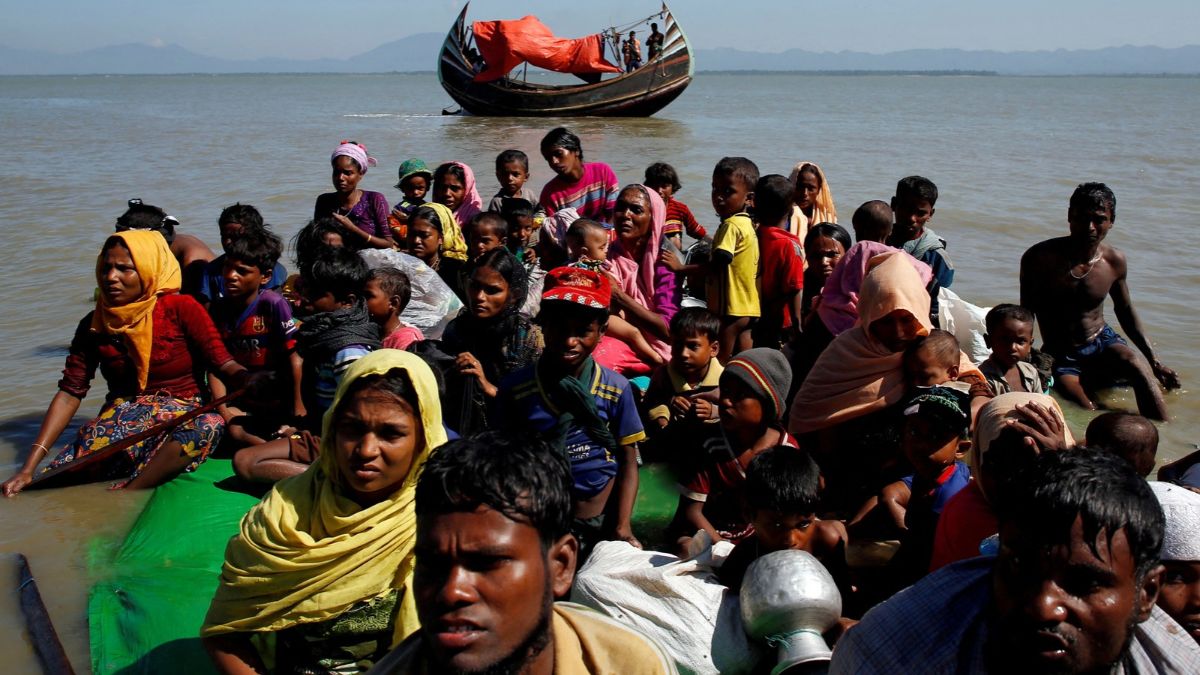
Think of the ocean not as an empty blue expanse, but as an unguarded highway running through a neighborhood where the streetlights just went out. Without coordinated policing, the Bay of Bengal becomes a playground for transnational crime. Illegal, unreported, and unregulated fishing fleets strip coastal waters bare, starving local fishermen in Tamil Nadu and Chittagong of their livelihoods. Narcotics traffickers move methamphetamines and heroin along maritime routes from the Golden Triangle toward global markets. Human smugglers pack desperate refugees onto unseaworthy wooden trawlers, abandoning them to the monsoon swells.
Then there is the elephant in the deep water: geopolitical competition.
Over the past decade, submarine deployments, port acquisitions, and naval patrols by extra-regional powers—most notably China—have turned the Indian Ocean region into a chessboard. Every deep-water port built from Myanmar's Kyaukpyu to Sri Lanka's Hambantota alters the strategic geometry. For India, which sits like a giant peninsula jutting straight into the heart of these shipping lanes, instability in the Bay of Bengal is an existential headache.
The Anatomy of a Maritime Blind Spot
To understand why maritime security cooperation is so agonizingly difficult, you have to understand how blind a single nation actually is at sea.
Imagine trying to monitor a dark, thousand-acre forest with a single flashlight. You can see the trees directly in front of you with crystal clarity, while someone walks right behind your back completely unseen.
A single country's navy or coast guard operates the exact same way. India possesses a formidable navy, complete with aircraft carriers, long-range maritime patrol aircraft, and coastal radar chains. Yet the moment a suspicious vessel slips across a maritime boundary into the exclusive economic zone of a neighbor with fewer patrol boats or older radar systems, that vessel effectively vanishes from the screen.
Smugglers know these jurisdictional seams better than anyone. They exploit the gaps between national databases, switching off their Automatic Identification System transponders, repainting hulls, and hopping across invisible maritime borders where one coast guard must legally stop and another lacks the fuel to pursue.
This is what BIMSTEC's push for maritime security cooperation is actually trying to fix. Beneath the diplomatic jargon—terms like "maritime domain awareness," "white shipping agreements," and "joint humanitarian assistance and disaster relief"—lies a remarkably practical goal: turning seven separate flashlights into a single floodlight.
When coastal nations share real-time radar feeds, vessel tracking data, and coast guard protocols, the blind spots shrink. A suspicious trawler spotted leaving a port in Thailand can be tracked seamlessly as it crosses near Myanmar, passes the Andaman and Nicobar Islands, and approaches the eastern coast of India.
It also saves lives when the weather turns violent. The Bay of Bengal is a notorious cradle for tropical cyclones. When a storm surge slams into the Sundarbans or the coast of Odisha, minutes matter. Coordinated maritime protocols allow naval vessels from neighboring countries to cross borders immediately with fresh water, field hospitals, and heavy-lift helicopters, cutting through the red tape that used to trap relief supplies on docks while people drowned.
Two Halves of One Lifeline
At first glance, celebrating sixty-five years of India-Kuwait friendship and negotiating BIMSTEC maritime security protocols look like two completely unrelated news items stitched together by an editor short on column inches.
Look again. They are two halves of the exact same story.
Let us return to our hypothetical engineer, Rajesh, in Kuwait City, and trace the invisible thread connecting his life to a coast guard radar operator sitting in Visakhapatnam on India's eastern shore.
India's economic rise—and by extension, its ability to remain a stable partner for Gulf nations like Kuwait—depends entirely on uninterrupted maritime trade. More than ninety percent of India's trade by volume, and roughly seventy percent by value, travels by sea. Energy flows in from the west, across the Arabian Sea from Kuwait and its Gulf neighbors. Manufactured goods, refined petroleum products, and raw materials flow out to the east, through the Bay of Bengal and the Malacca Strait toward the booming economies of Southeast Asia and the Pacific.
If the eastern flank of the Indian Ocean descends into piracy, smuggling, or naval brinkmanship, the shockwaves hit the entire system. Insurance premiums on cargo ships spike. Tankers carrying Kuwaiti crude face delays and rerouting costs. Food exports from Indian ports rot in containers waiting for naval escorts.
Conversely, when India strengthens maritime security with its BIMSTEC neighbors, it secures the eastern gateway of the Indo-Pacific. It proves that regional nations can police their own waters without inviting outside superpowers to turn their coastline into a military garrison. That stability reassures sovereign wealth funds in Kuwait City looking to invest billions of dollars into Indian infrastructure, ports, and renewable energy projects.
Diplomacy is rarely dramatic when it works. Drama means a blockade. Drama means a hijacked tanker, a diplomatic expulsion, a sudden spike in fuel prices that forces a family in Delhi or Kuwait City to choose between paying rent and buying groceries.
Success looks boring. Success looks like a sixty-five-year-old partnership surviving oil shocks, regional wars, and global pandemics without breaking stride. Success looks like seven naval officers from seven different countries sitting around a table in Dhaka or Bangkok, arguing over radio frequencies and search-and-rescue grids so that a cargo ship nobody will ever read about arrives at its dock on time.
Down on the pier at Paradip, the morning sun finally burns through the diesel haze. A crane swings out over the water, lowering a forty-foot steel container onto the deck of a waiting freighter. Somewhere inside are sacks of grain, boxes of generic antibiotics, and crates of precision auto parts. The ship blows its horn—a low, vibrating note that rattles the fillings in your teeth—and turns its bow toward the open sea, trusting that the water ahead belongs to everyone, and to no one at all.