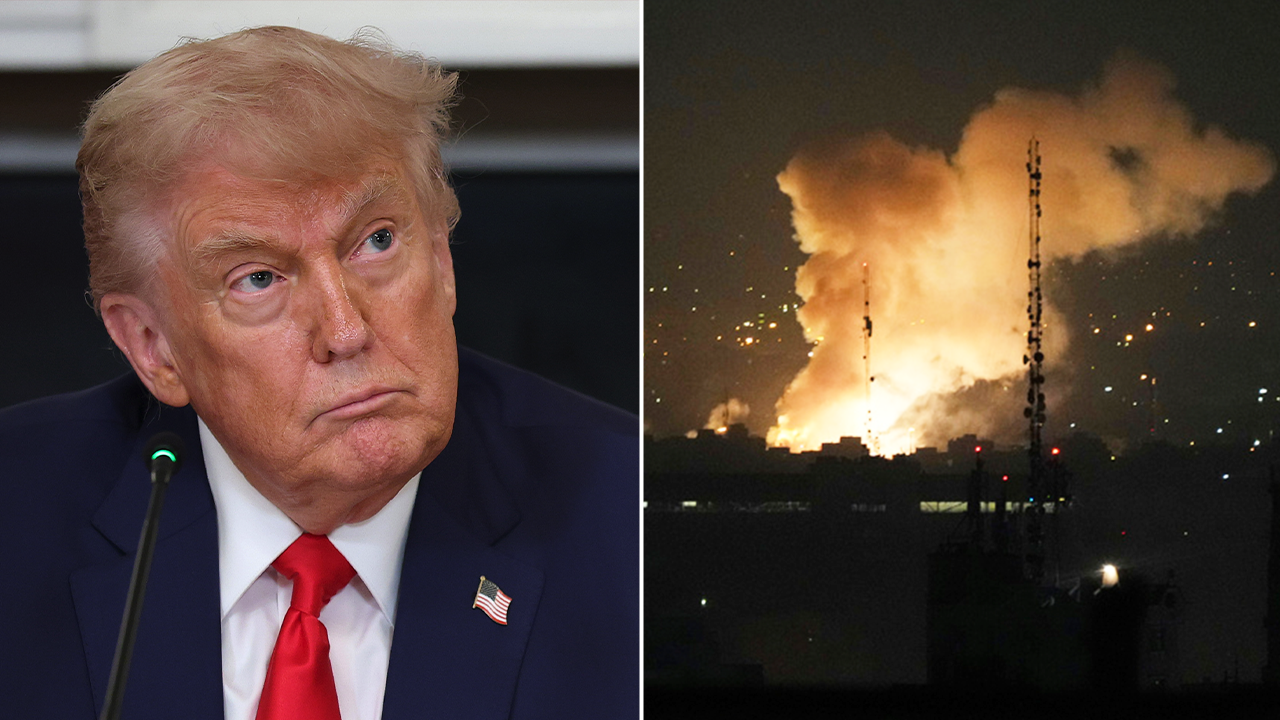
The air in a high-stakes diplomatic briefing room usually tastes like stale coffee and ozone. It is a room of heavy drapes and heavier silences. When Abbas Araghchi, Iran’s Foreign Minister, speaks about an investigative committee, he isn't just offering a bureaucratic solution to a geopolitical stalemate. He is laying a hand on a table that most of the world believes has already been flipped over.
Diplomacy is often viewed as a chess match played by titans in suits. We see the headlines about enrichment levels, sanctions, and "red lines." But we rarely see the human exhaustion that fuels these maneuvers. Imagine a mid-level technical expert in Tehran or Vienna. This person has spent twenty years studying the arc of a centrifuge. They have children who ask why the medicine at the local pharmacy is suddenly triple the price. They have a mortgage. They have a country they love and a world they fear. When Araghchi speaks of a committee, he is speaking to the lives of these people. He is attempting to build a bridge out of paper and ink across a canyon of deep-seated mistrust.
The proposal for an investigative committee is a pivot. It is a move from the abstract "we are right" to the practical "let us look together." It sounds dry. It sounds like something that will die in a folder on a mahogany desk. Yet, in the lexicon of international relations, "let us look" is a radical admission. It suggests that facts might still matter in an era where narratives have become weapons.
The Weight of the Past
To understand why this matters, you have to look at the scars. Iran’s relationship with the West is not a clean slate; it is a palimpsest of broken promises and sudden exits. The 2015 nuclear deal—the JCPOA—was the high-water mark of a certain kind of optimism. When the United States walked away from that table in 2018, the vacuum left behind wasn't just political. It was psychological.
Trust is a fragile currency. Once devalued, it takes decades to earn back a single cent of it. Araghchi’s offer to form a committee is an attempt to mint a new, smaller coin. He is signaling that Tehran is willing to invite the eyes of the world back into the room, provided those eyes are looking for truth rather than an excuse for escalation.
Consider the alternative. The alternative is a blind march toward a horizon that glows with a light no one wants to see. When communication breaks down entirely, the only thing left is a calculation of force. We have seen this movie before. It ends in wreckage and the long, slow realization that the cost of talking was much lower than the cost of silence.
The Mechanics of Credibility
An investigative committee is only as good as its access. If you tell someone they can inspect your house but lock three of the bedroom doors, they will naturally assume those rooms contain something illicit. This is the tightrope Araghchi is walking. He must satisfy a domestic audience that demands sovereignty and a global audience that demands transparency.
There is a specific kind of tension in these negotiations. It is the tension of the "known unknown." The West suspects hidden agendas; Tehran suspects hidden traps.
The "human element" here is the burden of proof. It is an exhausting weight to carry. Every statement is parsed for a double meaning. Every gesture is filmed and analyzed by intelligence agencies across three continents. Underneath the suit, the Foreign Minister is a man trying to navigate a minefield while wearing a blindfold. By proposing a committee, he is asking for the blindfold to be loosened.
The Ghost at the Feast
There is another character in this story: the average citizen.
Let’s call her Maryam. She is a chemistry teacher in Isfahan. She doesn't follow the minute-by-minute updates of the IAEA. She cares about whether her students can afford textbooks and whether the currency will stabilize enough for her to retire one day. For Maryam, the "investigative committee" is a signal of stability. It represents the possibility that the world might stop screaming at her country and start speaking to it.
Geopolitics is often treated as a game of Risk played on a board. But for the Maryams of the world, the board is their kitchen table. The stakes are not "influence in the region"; the stakes are the price of eggs and the availability of cancer medication. When Araghchi stands at a podium and offers a path toward verification, he is, perhaps inadvertently, fighting for Maryam’s right to a boring life. A life where the news doesn't determine her grocery list.
The Language of the Possible
The shift in tone is subtle. It isn't a surrender, and it isn't a victory. It is a recalibration. By focusing on an investigative body, the Iranian leadership is moving away from the grand, sweeping rhetoric of the past and toward the granular reality of the present.
Precision is the enemy of propaganda. If you can measure something, you can talk about it. If you can talk about it, you can negotiate it.
The committee is intended to be a filter. It is designed to strip away the noise of the hawks and the grandstanding of the politicians, leaving behind a set of data points that both sides can agree are real. It is an attempt to create a shared reality in a world that is rapidly fracturing into silos of "alternative facts."
The Invisible Stakes
Why should a reader in London, New York, or Tokyo care about a committee in Tehran?
Because the world is a closed system. The ripples of a failed negotiation in the Middle East do not stop at the borders of the region. They manifest in energy prices, in refugee flows, and in the general temperature of global anxiety. We are all connected by the same fragile threads of trade and security.
When one of those threads snaps, we all feel the jerk.
Araghchi’s statement is a hand reaching for a thread. It is a moment of potential. It could lead to a breakthrough, or it could be another footnote in a long history of "what ifs." The tragedy of diplomacy is that we only notice it when it fails. When it works, nothing happens. No bombs fall. No borders change. People just go about their lives, unaware of the catastrophe that was avoided over a plate of cookies in a room with heavy drapes.
The real story isn't the committee itself. It is the quiet, desperate hope that such a committee represents. It is the belief that even after decades of animosity, humans can still sit down and agree on the color of the sky. It is the gamble that transparency is a better shield than secrecy.
The room is silent again. The cameras have been turned off. The microphones are dead. But the offer remains on the table, a small, white piece of paper in the middle of a vast, dark room. It is waiting for someone else to pull up a chair.