The ink on a treaty doesn’t make a sound. When representatives from thirty-two nations sit in a climate-controlled room, shuffling papers and adjusting microphones, the atmosphere carries the dry weight of bureaucracy. But outside those walls, in the damp border forests of Estonia or the quiet coastal towns of Norway, that silent ink is the only thing keeping the wolves at bay.
For decades, the North Atlantic Treaty Organization has existed for the average citizen as a background detail. It is a chapter in a high school history textbook, an acronym deployed by news anchors during late-night broadcasts, or a line item in a national budget that feels entirely disconnected from the price of groceries. We have lived in the luxury of forgetting what it is for.
That luxury is gone.
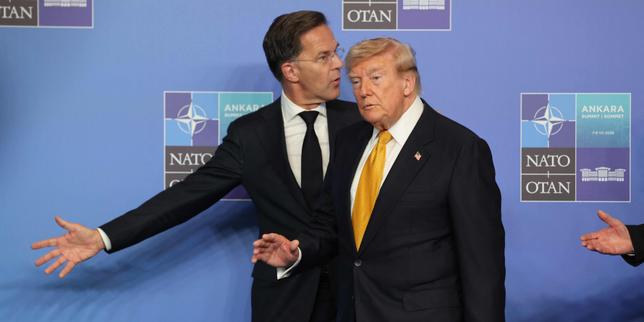
When the leaders of NATO, including the United States, recently stood before the world to reaffirm their "unyielding" commitment to their mutual assistance clause, it wasn't just another routine political photo-op. It was a high-stakes reassurance directed at a deeply anxious world. To understand why this matters, we have to look past the grand podiums and look at the flesh-and-blood reality of what an alliance actually means when the horizon starts to darken.
The Weight of Three Words
At the heart of this entire geopolitical apparatus lies a single, terrifyingly simple concept: Article 5.
It states that an attack on one is an attack on all.
Think about that. It means if a single foreign boot steps aggressively across a line in the dirt in a small Baltic village, the entire military apparatus of the Western world is legally and morally obligated to treat it as an invasion of Washington, London, and Paris.
To grasp the magnitude of this, imagine a neighborhood. It is a quiet street, but a dangerous element has moved into the woods just beyond the cul-de-sac. The families on this street are entirely different from one another. Some are wealthy; some are struggling. Some have historic grudges against their neighbors that stretch back generations. Yet, they have all signed a pact. If a thief breaks into the smallest, most fragile house at the end of the road, every single neighbor will sprint out of their front doors with baseball bats, ready to fight to the death.
That is not a casual agreement. It is an existential gamble.
For the smaller nations sitting on the geographic edge of the alliance, Article 5 is not an abstract legal theory. It is air. It is the reason a parent in Vilnius can tuck their child into bed without staring out the window, watching for the headlights of tanks.
The Fractures in the Armor
But a promise is only as good as the shadow it casts. Lately, that shadow has looked flickering and uncertain.
Public doubt has been creeping into the architecture of the West. For years, political rhetoric in the United States shifted toward skepticism. Leaders openly questioned why American taxpayers should foot the bill for the defense of countries thousands of miles away. European nations, lulled into a coma of peace by decades of stability, allowed their own military readiness to wither. They let their ammunition stockpiles dwindle. They treated security as a guaranteed inheritance rather than a rented property requiring constant upkeep.
The rest of the world watched this internal bickering. Aggressors don't need to launch a missile to test an alliance; they just need to watch how its members talk to each other. When a superpower hints that its protection might be conditional—that it might depend on whether a smaller nation has paid its "bills"—the invisible shield begins to crack.
The recent collective declaration of an ironclad commitment was designed to weld those cracks shut. The language coming out of the latest summits wasn't just meant for domestic voters; it was a direct message signaled to Moscow and Beijing. The message was clear: do not mistake our domestic political theater for a lack of resolve.
The Human Cost of a Line in the Dirt
Let’s step away from the map rooms and consider a hypothetical person named Lukas.
Lukas runs a small bakery in a town just a few kilometers from the eastern border of Poland. He worries about regular things. He worries about the rising cost of flour, the temperamental oven in his kitchen, and whether his daughter will get into a good university. But because of where he lives, Lukas also has a mental map of the closest bomb shelters. He knows the distinct sound of fighter jets patrolling the airspace above his roof.
If Article 5 is perceived as weak, Lukas’s world changes instantly.
When the guarantee of mutual defense wavers, capital flees. Foreign investors pull their money out of border countries. Banks stop lending. The local economy suffocates long before a single shot is fired. Security is the invisible infrastructure upon which all human prosperity is built. Without it, you cannot plan for next year, let alone the next generation.
When the United States and its allies loudly double down on their commitment to mutual assistance, they are trying to ensure that Lukas can keep buying flour, keeping his shop open, and focusing on his daughter’s education without the paralyzing fear that his homeland will become a buffer zone in a global conflagration.
The Paradox of Power
The supreme irony of a mutual defense treaty is that its ultimate goal is to never be used.
It functions entirely on the psychology of deterrence. A bully will happily pick on a lone kid in the schoolyard. That same bully will hesitate if that kid is standing shoulder-to-shoulder with thirty of his biggest friends. The alliance works precisely because the cost of challenging it is calculated to be completely ruinous.
But maintaining that deterrence requires an agonizingly high price. It requires nations to divert billions of dollars away from healthcare, education, and infrastructure into weapons of war. It forces sovereign countries to subvert a portion of their independence to a collective command structure. It demands that a voter in Ohio care deeply about the sovereignty of Montenegro.
It is a fragile, unnatural arrangement. History shows us that alliances usually fall apart the moment the immediate threat seems to fade. Humans are notoriously bad at maintaining sacrifices for preventative measures. We wait for the heart attack before we change our diet. We wait for the flood before we reinforce the levee.
The reaffirmed commitment from the transatlantic partners is a rare moment of collective foresight. It is an acknowledgment that the storm clouds are no longer a distant possibility—they are hovering right at the perimeter. The leaders are trying to convince their own skeptical populations that the cost of preventing a war today is infinitely cheaper than the cost of fighting one tomorrow.
The Quiet Reality
We often view history as a series of grand, inevitable events. We look back at maps with shaded empires and think it could have gone no other way.
But history is actually made of choices, fragile agreements, and the collective willpower of flawed individuals trying to hold back chaos. The mutual assistance clause is not a magic spell. It is a human promise. And like all promises, its value is entirely dependent on the honor of those who make it.
As the political speeches fade and the diplomats board their planes back to their respective capitals, the true test begins. It won't be measured in the grand statements read from teleprompters. It will be measured in the factory lines producing artillery shells, the naval exercises in the freezing waters of the North Sea, and the quiet determination of nations to stand by one another when the political winds tempt them to pull inward.
The shield remains in place, held aloft by the hands of thirty-two nations. For now, the line holds. Lukas can light his ovens for another morning, baking bread under a sky that remains peaceful, protected by a silent, invisible guarantee that the rest of the world has sworn to defend.