The air in the control room always smells of hot dust and stale tea. I remember watching the amber glow of the monitors flicker against the concrete walls, casting long, fractured shadows across the men who held the world’s quietest switches. Thousands of miles away, an ocean away, a valve turns. A pressure gauge drops. And somewhere in the quiet predawn hours, the price of a gallon of milk, a tank of gas, and a family's fragile peace shifts without warning.
We talk about war as lines on a map. We speak of red lines, strategic chokepoints, and retaliatory strikes as if they were pieces on a polished wooden board. But war is not geometry. War is a physical weight. It is the sudden, breathless silence that settles over a cargo ship crew when the radar screen blips red in the middle of the Red Sea. It is the acrid smell of burning sulfur drifting across a refinery horizon before the sirens even have time to scream.
Look closer at the map. Trace the water from the narrow straits where container ships queue like cattle waiting for a gate, all the way north to the landlocked, stillness of the Caspian Sea. It looks vast, safe, and distant. It is not. Every drop of oil, every whisper of digital fiber optic cable, every ripple of tension connects these waters into a single, trembling nervous system. When the tremors start in the south, the glass rattles in the north.
Consider what happens when the invisible thread snaps.
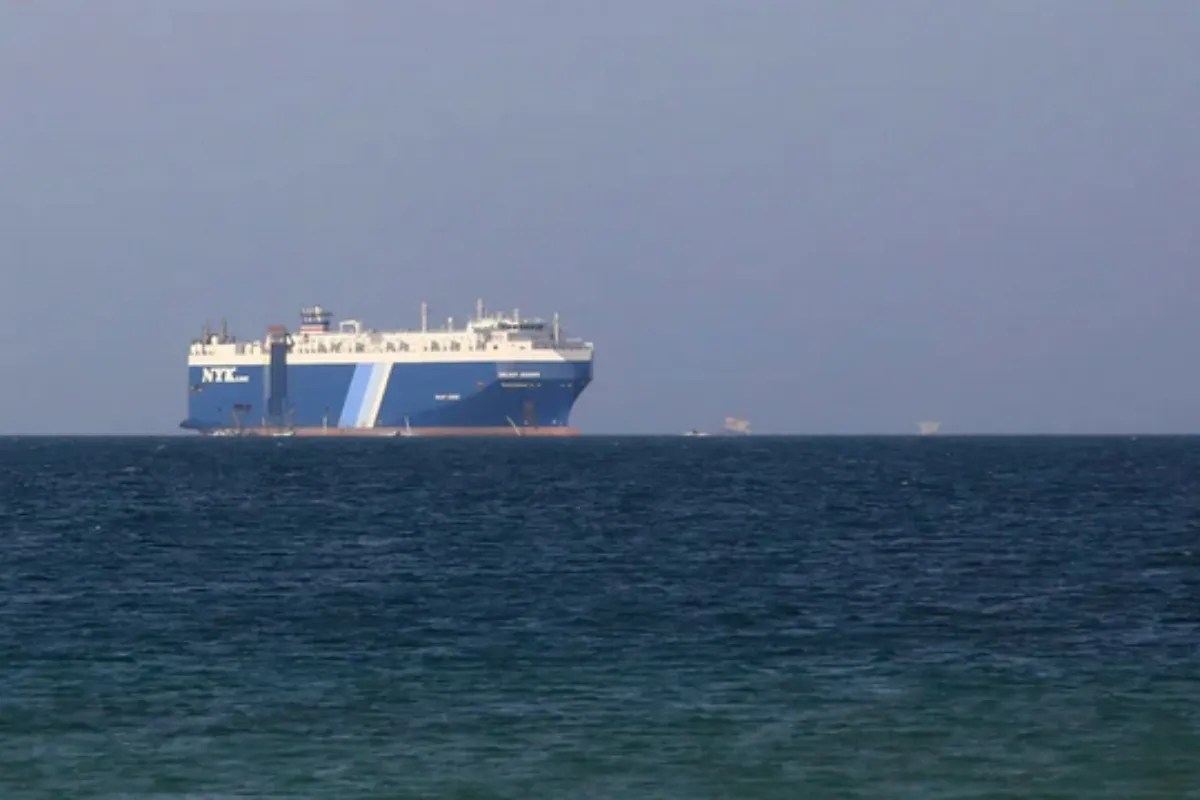
In the southern reaches, near the Bab el-Mandeb strait, the water belongs to the shadows. Ships that carry the goods filling our shelves—shoes, electronics, grain, the quiet commerce of daily life—must navigate a gauntlet. The Houthi movement, operating from the scorched coastlines of Yemen, does not need a massive navy to choke global trade. They need only a handful of drones, cheap and persistent, buzzing across the dark water like hornets.
Imagine standing on the bridge of a massive, twelve-hundred-foot container vessel. To you, it feels like an island of steel. But to the missile battery waiting on the shore, you are a lumbering target. When the explosion hits the water fifty yards off the starboard bow, the sound does not register as a bang first. It registers as a physical blow to the chest, a deep, concussive thud that rattles the teacups in the galley and stops the heart for half a beat.
This is the Red Sea today. A highway turned into a shooting gallery.
And yet, the shockwaves travel. They do not stay contained within the salt spray and the burning hulls of cargo vessels. Follow the energy north, past the deserts, past the ancient trade routes, straight into the heart of the Arabian Peninsula.
Saudi Arabia’s Abqaiq processing facility is the beating heart of global petroleum. If you have never stood near an oil installation of that scale, let me give you the scale of it: it looks less like a factory and more like a silver city dropped into the yellow sand. Pipe networks stretch for miles, humming with the terrifying, contained fury of millions of barrels of pressurized crude.
When the drones arrive here—launched from proxies, guided by invisible hands, carrying the unmistakable signature of the broader regional conflict—they are not aiming at metal. They are aiming at stability.
I remember the morning after one such strike years ago. The satellite imagery did not capture the human element; it only showed the black plumes of smoke blotting out the desert sun. But I spoke with a technician who had been inside the perimeter when the blast hit. He did not talk about geopolitics. He talked about the sound of escaping gas, a high-pitched, deafening scream that sounded like a dying jet engine, and the immediate, terrifying scramble to shut down valves manually before the fire found the main feed lines.
That is what an Iranian-backed proxy war looks like up close. It is a man in a greasy jumpsuit running toward a wall of fire because if he fails, the lights go out on half the planet.
We often comfort ourselves with the fiction that these conflicts are regional. We look at the headlines—skirmishes in the Persian Gulf, missile intercepts over the Red Sea, naval drills in the Caspian—and we file them away under foreign affairs. We treat them like weather reports from a country we will never visit.
That is a dangerous illusion.
The Caspian Sea, cradled between Europe and Asia, tells the other half of this story. While the south burns with kinetic energy—drones, missiles, burning tankers—the north moves with the cold, calculated patience of logistics. Here, Russian and Iranian naval vessels share cold waters, coordinating supply chains, testing the boundaries of sanctions, and building a secure corridor that bypasses the traditional Western-controlled shipping lanes.
Think of it as an underground railroad made of water. When the southern routes become too hot, too contested by Western warships, the flow shifts inward. The Caspian becomes the quiet backroom where alliances are forged and military hardware changes hands under the cover of fog and diplomatic immunity.
It is a closed loop. The oil that flows past the threatened chokepoints of the south fuels the economies that sustain the alliances in the north. The political friction in Tehran creates ripples that hit insurance markets in London, grain silos in Egypt, and fuel pumps in Chicago within twenty-four hours.
We are living inside a closed ecosystem of consequence.
Why does this matter to the person sitting in a quiet suburban kitchen, thousands of miles away from the smell of burning crude or the hum of a warship's radar? Because safety is an imported commodity. We imagine that our borders are thick enough to keep the chaos out. We believe that distance is a shield.
History teaches us otherwise. Every major economic shock of the last half-century started as a localized spark in a dry place. A shot in Sarajevo. A nationalized canal in Suez. A revolution in Tehran. Each time, the experts said the fire would burn itself out. Each time, it reached across the oceans and touched the grocery bill, the retirement account, and the sense of morning security we take for granted.
The conflict stretching from the Red Sea to the Caspian is not a series of isolated incidents. It is the sound of an old order breaking down and a new, more volatile reality taking its place. It is a world where geography no longer protects us from our interdependence.
The control room monitors are still glowing in the dark. The tea is getting cold. Somewhere out on the black water, a radar operator is watching a tiny, blinking green dot approach the edge of his screen, wondering if this is the one that changes everything. And back home, the coffee pot clicks off, the morning news flickers on, and we take our first breath of a day shaped by fires we cannot see.