The coffee in a Tokyo boardroom tastes exactly like the fuel prices in a fishing village in Hokkaido. It is a bitter, inescapable connection. When a tanker slows down ten thousand miles away, the ripples eventually hit the shore of every Japanese household. You don't see the tension, but you feel it when you pay your utility bill or watch the price of imported fruit climb another notch.
The Strait of Hormuz is a choke point. That is the clinical term. In reality, it is a narrow, saltwater throat through which the lifeblood of the Japanese economy must pass. If that throat constricts, the country gasps. For decades, the logic of global security dictated a simple response: if the passage is dangerous, send the grey hulls. Send the destroyers. Show the flag.
But Prime Minister Sanae Takaichi has looked at the map and decided to keep the swords sheathed. Japan will not be joining the escort missions in the Strait. It is a decision that feels counterintuitive, perhaps even risky, until you look at the ghosts of history and the delicate architecture of Middle Eastern diplomacy.
The Weight of the Grey Hull
Picture a young ensign on the deck of a Japanese Maritime Self-Defense Force (MSDF) vessel. The sun is a white hammer over the Persian Gulf. He is trained, his equipment is world-class, and his mission is nominally "research and information gathering." He is there to watch, not to fight. But the line between watching and intervening is as thin as a razor's edge.
If a Japanese tanker is harassed by a fast-attack craft, what does that ensign do? If he fires, he breaks a pacifist constitution that has defined his nation’s identity since 1947. If he stays silent, he watches his countrymen’s livelihood burn. By choosing not to join a formal, multi-national escort mission, Takaichi isn't just making a military calculation. She is protecting the soul of a nation that has spent seventy years trying to prove it can exist without the machinery of war.
The decision is a masterclass in the art of the "Third Way."
To join the United States-led coalition would be a clear signal of solidarity with an ally. It would also, however, be a neon sign to Tehran that Japan has picked a side. Japan occupies a unique space in the Middle East. It is a massive consumer that carries no colonial baggage in the region. It is a friend to Washington, yet it maintains a working, respectful dialogue with Iran. That bridge is made of paper and hope, and a single naval skirmish would burn it to the ground.
The Logistics of Silence
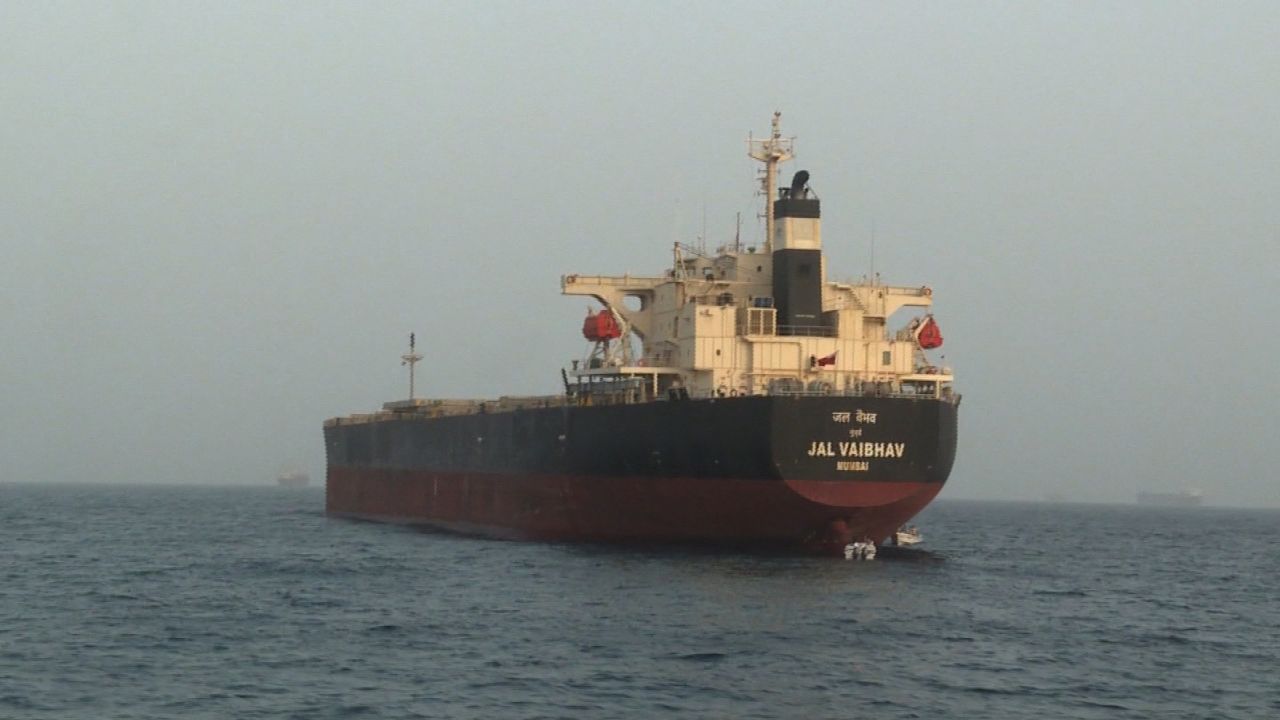
Consider the sheer volume of trade. Roughly 80% of Japan’s crude oil flows through that twenty-one-mile-wide strip of water. It is a staggering dependency. We often talk about energy security as if it were a graph on a screen, but it is actually a line of ships.
- The VLCC (Very Large Crude Carrier): These are the giants. They carry two million barrels of oil. They are slow, cumbersome, and incredibly vulnerable.
- The Insurance Premium: The moment a region is declared a "conflict zone," the cost of insuring these giants skyrockets.
- The Consumer Impact: Those insurance costs aren't swallowed by the shipping companies. They are passed down. They become the extra five yen on a liter of gas.
Takaichi’s refusal to send an escort mission is a bet. She is betting that Japan's "independent diplomacy" is a stronger shield than a five-inch deck gun. It is the belief that by remaining a neutral, non-threatening entity, Japanese-flagged vessels are less likely to be targeted than those sailing under the protection of a Western military coalition.
It is a gamble played with the thermostat of every apartment in Osaka.
The Ghost of 1973
To understand the fear behind this decision, you have to remember the first Oil Shook. In 1973, when the taps were turned off, Japan realized it was a giant with feet of clay. The nation panicked. Toilet paper disappeared from shelves. The "Miracle Economy" seemed to vanish overnight.
Modern Japan is more efficient, but the fundamental fragility remains. The country has almost zero natural resources of its own. It survives on its ability to process, manufacture, and trade. For Takaichi, the Strait of Hormuz isn't a theater of war; it’s a logistics problem that requires a diplomatic solution.
If she sends the ships, she risks being dragged into a conflict that is not her own. The Middle East is a complex web of ancient grievances and modern power plays. For a Japanese Prime Minister, entering that web with a military escort is like trying to fix a Swiss watch with a sledgehammer. You might hit the right spot, but you’ll probably shatter the mechanism.
The Human Stakes of Neutrality
There is a specific kind of bravery in doing nothing when everyone is shouting for action. Takaichi faces pressure from domestic hawks who want a "normal" military and from international allies who want more "burden sharing."
But think of the merchant sailors. These are civilians. They are men and women from the Philippines, India, and Japan who spend months at sea. To them, an escort mission is a double-edged sword. Yes, it provides protection. But it also turns their ship into a participant in a geopolitical drama. A lone tanker is a target of opportunity; a tanker in a convoy is a target of intent.
By opting out, Japan is asserting a quiet kind of power. It is the power of the customer who refuses to join the fight in the parking lot.
The strategy relies on a specialized MSDF presence that already exists—a lone vessel and a patrol plane operating independently of the U.S. coalition. It is a "look but don't touch" policy. It allows Japan to say to its allies, "We are helping," while saying to the region, "We are not your enemy."
It is a delicate, agonizingly precise dance.
The Cost of a Wrong Turn
What if the gamble fails? If a Japanese ship is seized or struck, the political fallout will be seismic. Takaichi will be accused of negligence. The calls for a full military buildup will become a roar. The "Third Way" will be seen as a path to nowhere.
But for now, the ships keep moving. They pass through the narrow strait under the hazy sun, their hulls deep in the water, carrying the heat and light for a nation thousands of miles away. There are no sirens. There are no fighter jets screaming overhead. There is only the steady thrum of the engines and the silent hope that diplomacy is worth more than a fleet of destroyers.
The real security isn't found in the caliber of a gun, but in the strength of a relationship. Japan is choosing to be the one nation that everyone can still talk to. In a world of hardening borders and rising tensions, that bridge might be the most valuable piece of territory in the world.
The lights stay on in Tokyo. For another night, the silence in the Strait is the most beautiful sound in the world.