The air in the clinic smelled of wet cement, sweat, and the specific brand of bleach that tells you life is currently suspended.
I remember the heat pressing against the corrugated tin roof like a heavy hand. Outside, the red dirt road of Equateur Province blurred under a relentless equatorial sun. Inside, the silence was worse than any noise. It was the quiet of waiting. In outbreaks like this, waiting is the hardest part of the anatomy of an epidemic. It is the agonizing gap between the moment a person feels a sudden, unshakeable shiver and the moment a syringe crosses the threshold to stop it.
Right now, that gap is closing faster than medical history has ever recorded.
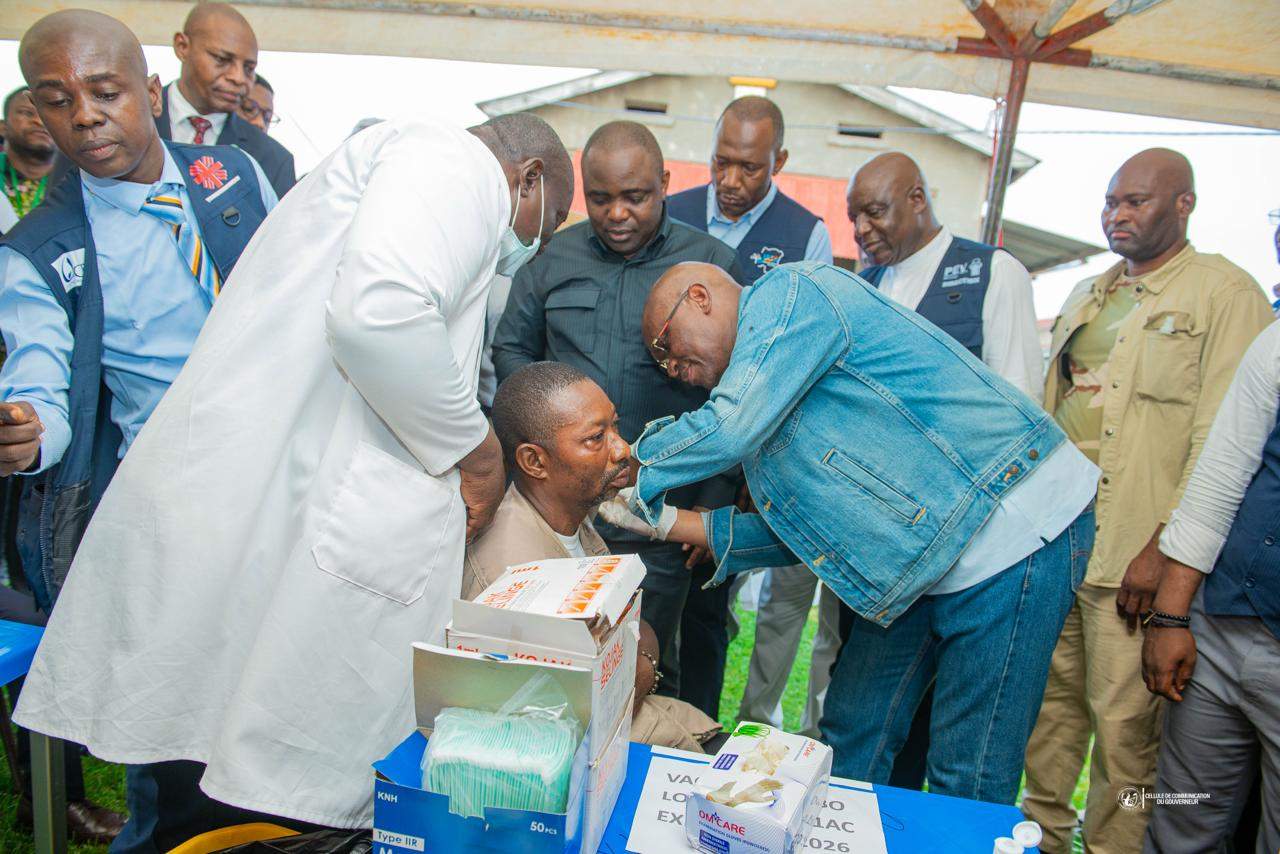
Congo has officially begun rolling out vaccinations against the fastest-growing Ebola outbreak the world has ever tracked.
Let that settle. The fastest-growing.
We are not talking about a slow creep through rural hamlets over the course of years, the kind of crawl that allows epidemiologists to draw neat maps and leisurely distribute flyers. We are talking about a sprint. A microscopic fire that jumps from settlement to settlement along jungle rivers and trading routes before local health workers even have time to sharpen their pencils.
To understand why this matters, you have to throw away the sterile textbook definition of a virus and picture an invisible wildfire. Ebola does not announce itself with a trumpet. It starts quietly. A headache. A fever that feels like the flu. A general sense that your body has turned against you. Within days, the vascular system begins to break down. The terror of the disease is matched only by its speed. When a strain moves with the blistering velocity currently tearing through parts of the Democratic Republic of Congo, traditional containment measures—contact tracing, quarantine, isolation—feel like trying to bail out the Titanic with a teaspoon.
Enter the needle.
To watch a vaccination team move through a high-risk zone is to witness a strange, high-stakes choreography. These are not bureaucrats in crisp suits. They are local nurses, logicians, and community mobilizers who walk for miles through dense brush, carrying thermoses filled with life-saving vials that must be kept at sub-zero temperatures. Imagine trying to transport delicate biological ice cubes across muddy riverbanks while navigating the very real social friction of fear and mistrust.
For the uninitiated, the vaccine being deployed isn't just medicine; it is a shield forged in the fires of past heartbreak. Built on years of trial and agonizing error from previous outbreaks in West Africa and earlier Congolese flare-ups, the Ervebo vaccine—and the complementary regimens now being pressed into service—acts as a biological tripwire. When administered to contacts of confirmed cases and the frontline workers tending to them, it builds an immune response with astonishing swiftness. It creates a ring of protection around the virus, a literal firewall of immunity that stops the pathogen in its tracks before it can find its next host.
As a hypothetical village elder named Jean-Paul might tell you if he were sitting across from this desk, fear is always the first symptom of an outbreak. Long before the virus mutates within a community, rumor does. People remember past medical interventions that went wrong, or they listen to whispers carried on the wind about foreign treatments. The real genius of the current vaccination campaign isn't just logistical; it is deeply human. The teams administering these shots are spending hours sitting under mango trees, drinking tea with village elders, answering raw, unfiltered questions about side effects, mortality, and why this time is different.
Trust is the ultimate cold chain. If it breaks, the vaccine spoils, no matter how low the temperature in the cooler box.
The sheer scale of the logistical hurdle is staggering. Congo is vast. Much of the terrain lacks paved roads, stable electricity, or reliable cellular networks. To get a vaccine that requires ultra-cold storage from a tarmac runway in Kinshasa to the remote pulse of an active transmission zone requires a relay race of motorcycles, canoes, foot power, and sheer grit.
Yet, the rollout has begun.
This is where the narrative shifts from tragedy to defiance. Every vial emptied into a nurse's arm, every contact traced before they show symptoms, represents a mathematical defeat for the virus. Ebola relies on our hesitation. It thrives when we argue about jurisdiction, when funding stalls, when international aid arrives two weeks too late. By accelerating this vaccination campaign into the teeth of the fastest-growing surge on record, public health officials are attempting something radical: they are trying to outrun the fire.
We often look at global health crises through the lens of cold numbers. We tally cases, calculate fatality rates, and graph curves on news segments. But numbers don't sweat. Numbers don't weep behind plastic face shields or wonder if they will wake up with a fever tomorrow.
Behind every data point in this outbreak is a mother holding a child, a market vendor wondering if she should close her stall, a young vaccinator lacing up his worn boots before dawn. They are living on the razor's edge of history.
The needle is small. The virus is ancient and ruthless. But the human refusal to surrender to the inevitable is older still. The race is on, and the finish line is written in every single arm offered up to the cold steel of the syringe.