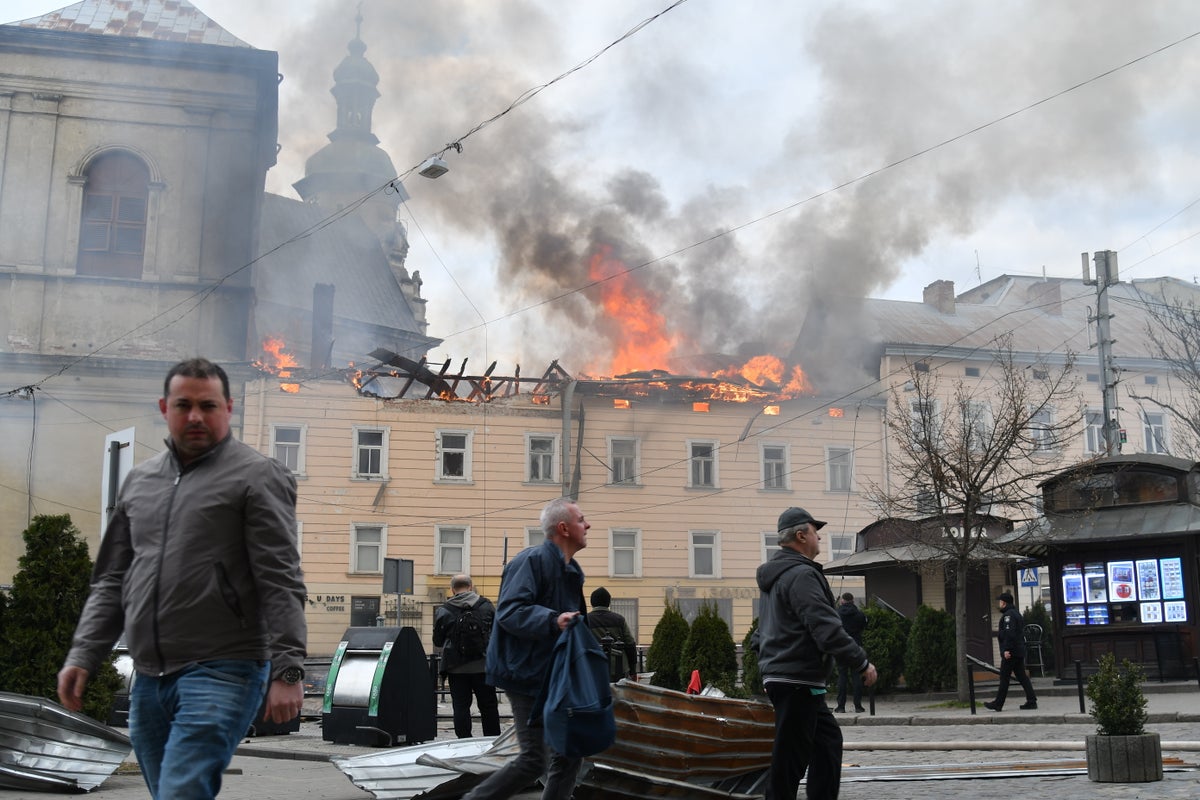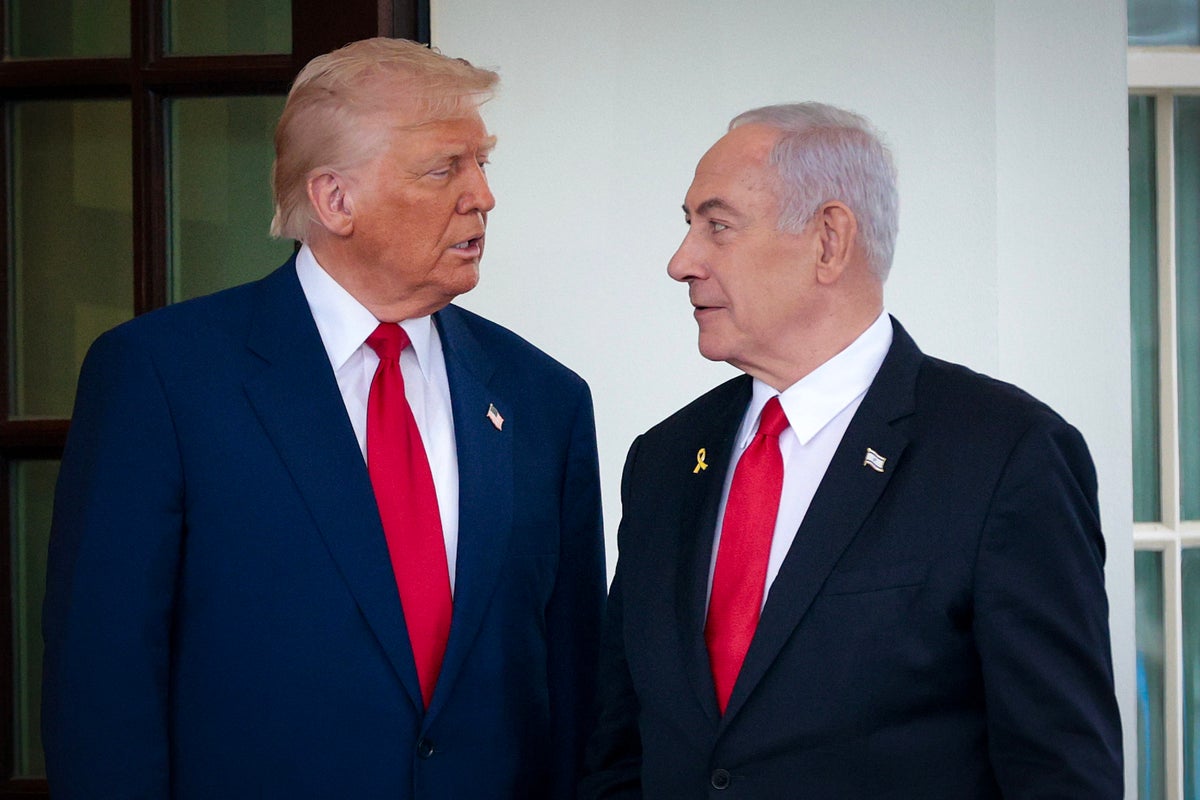
In a windowless room deep within the heart of the Capitol, the air always smells slightly of old paper and filtered oxygen. It is a sterile environment where words are weighed like precious metals. Here, the Speaker of the House, Mike Johnson, stands before a bank of microphones, his expression a practiced mask of southern composure. He speaks of "deterrence" and "strategic positioning." He insists, with a firm set to his jaw, that the United States is not at war with Iran.
But a few thousand miles away, in a place where the air smells of dust and diesel fuel, a twenty-year-old specialist from Ohio is currently bolting a ballistic plate into his carrier. He isn't thinking about the nuances of international law or the precise definitions of kinetic conflict. He is thinking about the low, rhythmic hum of a one-way attack drone—a sound that has become the soundtrack to his nights.
There is a profound disconnect between the podium in Washington and the sandbags in Jordan, Iraq, and Syria. It is a gap filled with the most dangerous kind of ambiguity.
The Geography of Denial
When a politician says we are not at war, they are usually leaning on a technicality. They mean that Congress hasn't issued a formal declaration. They mean the "boots on the ground" are technically there for "advise and assist" missions. It’s a linguistic comfort blanket.
But look at the map. Look at the pins dropped in places like Tower 22 or the Al-Asad Airbase. These aren't just dots; they are targets. Since late 2023, these outposts have been pelted with rockets and drones launched by Iranian-backed militias. Each impact is a roll of the dice. If a rocket hits an empty mess hall, it’s a "provocation." If it hits a sleeping quarter, it’s a tragedy that demands a funeral.
Consider the sheer scale of the movement. The Pentagon has shifted thousands of troops, carrier strike groups, and advanced missile defense systems into the region. In the logic of the Beltway, this is "posturing" to prevent a wider conflagration. It is meant to be a stop sign. Yet, for the families watching the news in living rooms across America, a stop sign made of three thousand soldiers looks a lot like a deployment for a war that hasn't been given a name yet.
The Cost of the Gray Zone
We live in the era of the "Gray Zone." It is a space where conflict is constant but never quite reaches the threshold of total mobilization. It is a ghost war.
In this space, the currency isn't just ammunition; it’s deniability. Iran uses its proxies—the "Axis of Resistance"—to strike at American interests while keeping its own hands officially clean. In return, Washington responds with "precision strikes" against warehouses and command centers, carefully calibrated to hurt but not to ignite the entire forest.
It is a high-stakes game of chicken played with human lives.
Imagine a hypothetical father, let’s call him Elias, living in a village near the border. He sees the American convoys roll past. He sees the militia trucks parked in the orchards. For him, the distinction between "hostilities" and "strategic deterrence" is nonexistent. His reality is defined by the sudden, bone-shaking thump of an airstrike at 3:00 AM. He doesn't care if the strike was authorized under Article II of the Constitution or a specific Authorization for Use of Military Force. He only knows that the sky is falling.
This is the invisible stake: the erosion of the boundary between peace and chaos. When the Speaker says we aren't at war, he is trying to manage the political temperature at home. He is trying to avoid the "forever war" label that has haunted the last two decades of American foreign policy. But by refusing to call it what it is, he risks leaving the public—and the soldiers—unprepared for the inevitable moment when the Gray Zone turns red.
The Ghost in the Machine
The technology of this undeclared conflict has changed the emotional weight of the fight. In previous generations, war meant a clear front line. Today, the front line is everywhere a drone can fly.
These drones, often built with off-the-shelf components and costing less than a used car, have neutralized the advantage of massive, billion-dollar installations. They are the ultimate tools of the gray war. They allow an adversary to bleed a superpower without ever having to face them on a traditional battlefield.
When a drone successfully penetrates a base's defenses, the fallout is catastrophic. It isn't just the physical damage; it’s the psychological toll of knowing that the shield has a hole in it. For the leadership in Washington, this is a data point to be discussed in a classified briefing. For the person on the ground, it is a reminder that their life is being spent to maintain a status quo that nobody wants to define.
The Logic of the Unspoken
Why the insistence on the "not at war" narrative?
Politics is often the art of avoiding the inevitable. If Speaker Johnson or the administration were to admit that the U.S. is in a state of active conflict with Iran, the legal and political machinery of the country would have to shift. There would be debates over funding, over the mission's end goal, and over the ultimate price the country is willing to pay.
By keeping it in the shadows, they maintain flexibility. They can escalate or de-escalate without the "interference" of a public debate. It is efficient, but it is also deeply lonely for those caught in the gears.
Think of the military families. They operate in a strange limbo. Their loved ones are in a "non-combat" zone, yet they are receiving "imminent danger pay." They are told their mission is defensive, yet they watch the news and see their partners being flown home in flag-draped coffins. The cognitive dissonance is a heavy burden to carry. It creates a sense of being forgotten, as if their sacrifice doesn't count because it doesn't fit into a tidy historical category.
The Fragile Thread
History tells us that wars rarely start with a flourish of trumpets. They start with a series of small, ignored escalations. They start when one side decides that "just one more strike" won't tip the balance, and the other side decides that "just one more deployment" is the only way to stay safe.
We are currently walking a tightrope stretched across a canyon of fire. On one side is the desire to avoid another massive Middle Eastern entanglement. On the other is the reality that American assets and lives are being targeted daily.
Speaker Johnson's rhetoric is a reflection of a nation that is tired of fighting but finds itself unable to leave the arena. It is a narrative of avoidance. We are told that as long as we don't call it a war, we can pretend the rules of war don't apply. We can pretend that the stakes are lower than they are.
But the rockets don't care about the nomenclature. The drones don't check the Congressional Record before they impact.
At the end of the day, the truth isn't found in the polished hallways of the Capitol or the carefully worded press releases of the Pentagon. The truth is found in the dirt, in the dark, and in the eyes of those who have been sent to hold a line that the world says isn't there.
The line is there. It is made of heat, steel, and the quiet breath of soldiers waiting for a sound in the night. We can call it deterrence, we can call it positioning, or we can call it a "non-war." But the fire is real, and it is burning closer to the powder keg every single day.
One night, the hum of the drone will not be met by a defense system. It will be met by silence. And in that silence, the carefully constructed phrases of the politicians will finally, irrevocably, turn to ash.